 Indietro
Genetics: Copy, Shuffle, Select – Foundations of Information Flow and Cell Division
Guida di studio - Note intelligenti
 Appunti personalizzati basati sui tuoi materiali, ampliati con definizioni chiave, esempi e contesto.
Genetics: Copy, Shuffle, Select
Introduction to Genetics and Information Flow
Genetics is a central theme in biology, focusing on the flow of information within and between cells, organisms, and generations. The study of genetics encompasses how DNA is copied, shuffled, and selected, forming the basis for inheritance, variation, and evolution.
Genetics is the study of information flow between cells and across generations.
DNA is the primary carrier of genetic information.
Biology investigates the flow of information and energy at molecular, cellular, and organismal levels.
Genetics is crucial for understanding evolution, forensics, and societal impacts.
Scale and Structure of DNA
The scale of DNA in living organisms is vast, both within individual cells and across the biosphere. DNA is organized into chromosomes, which package genetic material for inheritance and function.
Each human cell contains approximately 2 meters of DNA.
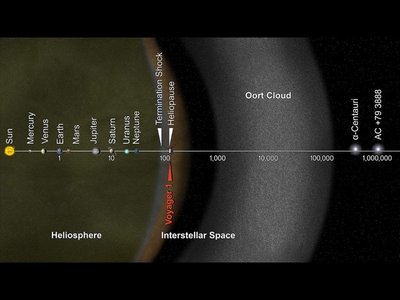
The total DNA in the human body can span light-years when multiplied by the number of cells and cell turnovers.
Bacterial DNA on Earth vastly exceeds the observable universe in length.
Example: The length of DNA in one bacterium is about 1 cm, and with 5 x 1030 bacteria on Earth, the total length is approximately 5 x 1028 meters.
The Eukaryotic Cell Cycle
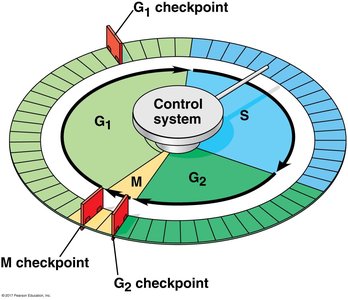
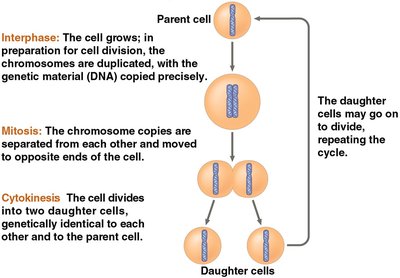
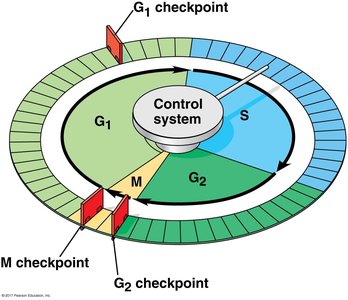
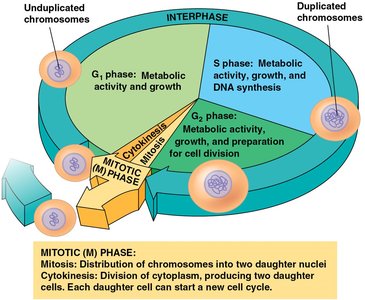
The cell cycle is the sequence of events that cells undergo to grow, replicate DNA, and divide. It consists of four main phases: G1, S, G2, and M. Accurate DNA replication and segregation are essential for maintaining genetic integrity.
G1 phase: Growth and preparation before DNA synthesis.
S phase: DNA synthesis, producing sister chromatids.
G2 phase: Preparation after S phase and before mitosis.
M phase: Mitosis and usually cytokinesis, separating chromosomes and dividing the cell.
G0 phase: A nondividing state entered f
Cell Cycle Checkpoints and Errors
Cell-cycle checkpoints are control mechanisms that ensure the fidelity of cell division. They reduce errors by pausing the cycle for repair or correction. Failure of these checkpoints can lead to diseases such as cancer.
G1 checkpoint: Checks for DNA damage and sufficient nutrients.
G2 checkpoint: Ensures DNA replication is complete and damage is repaired.
Spindle assembly checkpoint: Verifies proper attachment of kinetochores before anaphase.
Failed checkpoints can result in chromosome mis-segregation and cancer.
Mitosis: Chromosome Segregation
Mitosis is the process by which eukaryotic cells divide, ensuring that each daughter cell receives an identical set of chromosomes. Chromosomes condense, replicate, and are segregated through five stages: prophase, prometaphase, metaphase, anaphase, and telophase.
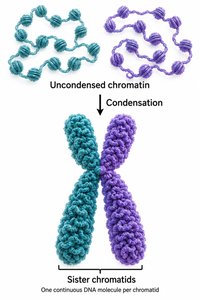
Chromosomes condense and become visible during mitosis.
Each chromatid contains a long DNA molecule packaged with proteins.
DNA replication during S phase produces two sister chromatids per chromosome.
Cohesin proteins hold sister chromatids together until separation.
Meiosis: Chromosome Reduction and Variation
Meiosis is a specialized cell division process that reduces the chromosome number by half, producing haploid gametes. It introduces genetic variation through independent assortment and crossing over.
Meiosis consists of two divisions following one round of DNA replication.
Meiosis I separates homologous chromosomes; Meiosis II separates sister chromatids.
Four haploid products result, each with unreplicated chromosomes.
Genetic variation arises from mutation, recombination, and independent assortment.
Chromosomes, Genes, and Alleles
Chromosomes are DNA-protein structures carrying many genes. Genes are regions of DNA whose expression produces functional RNA or protein. Alleles are sequence variants at the same locus, contributing to genetic diversity.
Haploid: Single set of chromosomes (gametes).
Diploid: Two sets of chromosomes, usually one from each parent.
Homologous chromosomes: Carry corresponding genes at the same loci, may have different alleles.
Genotype and Phenotype
The genotype is the combination of alleles inherited from the parents, while the phenotype is the observable trait resulting from the interaction of genotype, environment, and development.
Phenotype reflects genotype, environment, and developmental processes.
The same genotype can produce different outcomes in different environments.
Chromosome Comparisons Across Species
Chromosome number and structure vary among species and do not directly measure biological complexity. Shared chromosome segments reveal common ancestry, and changes in chromosome organization drive evolution.
Humans have n=23 chromosomes, displayed via karyotype.
Chromosome count does not measure complexity; e.g., Adder’s-tongue fern has n=720.
Fusions, fissions, duplications, and losses change genome organization.
Selection and Artificial Breeding
Selection changes the frequency of inherited variants. Artificial selection and domestication have shaped the traits of plants and animals, leading to the development of civilization and diverse breeds.
Mutation and recombination generate variation.
Selection acts on inherited variation, influenced by environmental conditions.
Artificial selection has produced domesticated species with desirable traits.
Genetics in Genealogy and Forensics
Genetic data is used to study family history, ancestry, and forensics. Pedigrees reveal inheritance patterns, while DNA analysis can identify specific variants and solve criminal cases.
Repeated mating among relatives increases homozygosity, exposing harmful recessive alleles.
Pedigrees estimate the likelihood of alleles being identical by descent.
DNA recovery and sequencing revolutionize forensics and genealogy.
Glossary of Key Terms
Adaptive Radiation: Diversification of a lineage into species occupying different ecological roles.
Alleles: Alternative sequence versions at a locus.
Cell cycle: Sequence of growth, DNA replication, chromosome segregation, and division.
Centromere: Specialized chromosome region for kinetochore assembly.
Chromatin: DNA with associated proteins, influencing access and packaging.
Chromosome: DNA–protein structure carrying many genes.
Cohesin: Protein complex holding chromatids together.
Diploid: Cell with two sets of chromosomes.
DNA replication: Template-directed DNA synthesis before division.
Gene: DNA region whose expression produces functional RNA or protein.
Genome: Complete DNA collection of a cell or organism.
Genotype: Genetic makeup of an organism.
Haploid: Cell with one complete set of chromosomes.
Homologous Chromosomes: Chromosome pairs with same genes at same locations.
Meiosis: Two divisions following one DNA replication, reducing chromosome-set number.
Mitosis: Nuclear chromosome segregation, preserving chromosome-set number.
Mutation: Change in DNA sequence, contributing to diversity and evolution.
Phenotype: Observable characteristics of an organism.
Selection: Process by which certain traits become more or less common.
Sister chromatids: Replicated copies of a chromosome, joined before separation.
Telomere: Chromosome-end structure protecting linear chromosomes.
Traits: Observable features shaped by genetic, developmental, and environmental influences.
Key Equations and Concepts
DNA Length Calculation:
Chromosome Number:
Meiosis Product:
Additional info: Academic context was added to clarify the cell cycle, chromosome structure, and the role of genetics in evolution, forensics, and society. Glossary terms were expanded for completeness.
