 Indietro
Genetics, Speciation, and Evolution: Study Guide for General Biology
Guida di studio - Note intelligenti
 Appunti personalizzati basati sui tuoi materiali, ampliati con definizioni chiave, esempi e contesto.
Chapter 14: Mendelian Genetics
Genetic Vocabulary
Understanding basic genetic terminology is essential for studying inheritance patterns. These terms describe the structure and function of genes and their observable effects.
Gene: A section of DNA that influences a trait.
Allele: A different version of a gene.
Genotype: The genetic makeup, such as AA, Aa, or aa.
Phenotype: The observable trait, such as brown eyes.
Homozygous: Two identical alleles (AA or aa).
Heterozygous: Two different alleles (Aa).
Dominant: An allele expressed when at least one copy is present.
Recessive: An allele expressed only when two copies are present.
Mendelian Laws
Mendel's laws describe how alleles are distributed during gamete formation and how traits are inherited.
Law of Segregation: Two alleles for a gene separate when gametes are produced. Each gamete receives only one allele.
Law of Independent Assortment: Alleles of different genes can separate independently during gamete formation, assuming the genes are not linked.
Post-Mendelian Genetics
Inheritance patterns can be more complex than simple dominance and recessiveness.
Complete Dominance: One allele completely masks the other; AA and Aa have the same phenotype.
Incomplete Dominance: The heterozygote has an intermediate phenotype (e.g., red × white → pink).
Codominance: Both alleles are expressed at the same time (e.g., AB blood type).
Pleiotropy: One gene affects multiple traits (e.g., sickle-cell disease).
Epistasis: One gene affects or masks the expression of another gene.
Multiple Alleles: A gene has more than two possible alleles in the population (e.g., ABO blood type).
Polygenic Inheritance: Many genes affect one trait (e.g., height, skin color).
Multifactorial Inheritance: A trait is influenced by multiple genes and environmental factors (e.g., blood pressure).
Pedigrees and Genetic Disorders
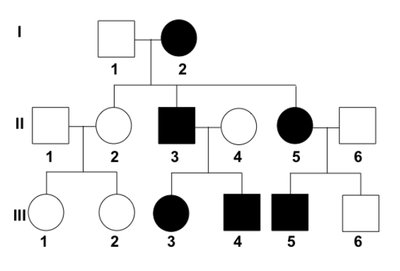
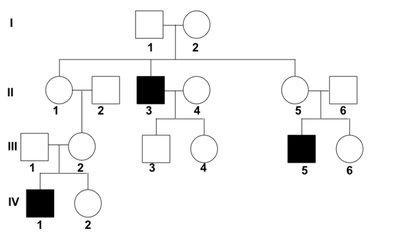
Pedigrees are diagrams that show inheritance patterns across generations. They help identify dominant, recessive, and X-linked traits.
Autosomal Dominant: Appears in every generation; affected individuals usually have an affected parent; males and females affected equally; AA or Aa = affected, aa = unaffected.
Autosomal Recessive: Can skip generations; two unaffected carriers can have an affected child; males and females affected equally; AA = unaffected, Aa = carrier, aa = affected.
X-linked Recessive: Males have only one X chromosome; XaY = affected male; father cannot pass X-linked trait to son.
Chapter 15: Chromosomal Basis of Inheritance
X-linked Inheritance and Linked Genes
Genes located on the X chromosome exhibit unique inheritance patterns. Linked genes are located close together on the same chromosome and tend to be inherited together.
X-linked Inheritance: The gene is located on the X chromosome; males are more likely to express recessive X-linked traits.
Linked Genes: Genes close together on the same chromosome; crossing over during meiosis can separate linked genes, increasing genetic variation.
Chromosome Abnormalities
Chromosome abnormalities can result from changes in chromosome number or structure.
Trisomy: One extra chromosome (2n + 1); e.g., Down syndrome (Trisomy 21).
Monosomy: Missing one chromosome (2n − 1).
Deletion: A section of a chromosome is lost.
Duplication: A section of a chromosome is copied.
Inversion: A chromosome segment breaks off and is reinserted backward.
Translocation: A chromosome segment moves to a different chromosome.
Chapter 24: The Origin of Species
Macroevolution and Speciation
Macroevolution refers to evolutionary changes at or above the species level, including speciation and adaptive radiation.
Speciation: Formation of new species through reproductive isolation.
Adaptive Radiation: Rapid evolution of diversely adapted species from a common ancestor.
Reproductive Isolation
Reproductive barriers prevent gene flow between populations, leading to speciation.
Prezygotic Barriers: Prevent fertilization (habitat, temporal, behavioral, mechanical, gametic isolation).
Postzygotic Barriers: Affect hybrid offspring (hybrid inviability, hybrid sterility, hybrid breakdown).
Allopatric vs. Sympatric Speciation
Allopatric Speciation: Geographic separation leads to genetic divergence.
Sympatric Speciation: Occurs without geographic separation; often involves polyploidy in plants.
Polyploidy
Autopolyploid: Chromosome duplication within one species.
Allopolyploid: Chromosomes from two different species.
Punctuated Equilibria vs. Gradual Change
Punctuated Equilibria: Rapid periods of change followed by long periods of little change.
Gradual Change: Slow and continuous change.
Chapter 25: The History of Life on Earth
Plate Tectonics and Continental Drift
Earth's outer layer is divided into moving plates, causing geographic isolation, new habitats, climate changes, extinction, and speciation.
Continental Drift: Explains why organisms on different continents can be very different.
Mass Extinction and Adaptive Radiation
Mass Extinction: Large percentage of Earth's species become extinct over a short period.
Adaptive Radiation: Surviving organisms rapidly evolve to fill ecological niches.
Protocells and Early Atmosphere
Protocell: Simple membrane-bound structure resembling an early stage in the development of life; lab-created protocells have membrane-like boundaries and internal environments.
Early Atmosphere: Very little free oxygen, more volcanic gases, different chemical conditions compared to today.
Fossilization and Land Colonization
Fossilization: Organisms with hard body parts (bones, teeth, shells) are more likely to become fossils.
Land Colonization: Adaptations needed include air breathing, support against gravity, movement, protection against drying out, and reproduction less dependent on water.
Endosymbiotic Theory
Endosymbiotic Theory: Explains the origin of mitochondria and chloroplasts; ancestral cell engulfed bacteria, which became organelles.
Chapter 26: Phylogeny & the Tree of Life
Phylogeny and Evolutionary Relationships
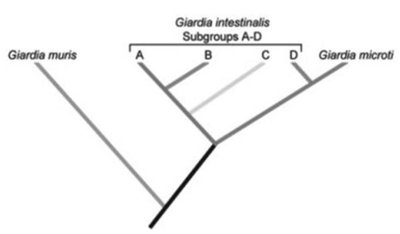
Phylogeny is the evolutionary history of a species or group. Phylogenetic trees show proposed evolutionary relationships.
Homology: Similarity due to common ancestry (e.g., human arm, bat wing, whale flipper).
Analogy: Similar function but not from the same ancestral structure (e.g., bird wing and insect wing).
Convergent vs. Divergent Evolution
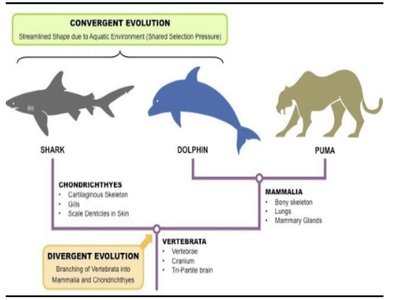
Convergent Evolution: Organisms not closely related independently develop similar characteristics (e.g., shark and dolphin streamlined bodies).
Divergent Evolution: Organisms with a common ancestor become increasingly different (e.g., mammals diverging into whales, bats, humans, rodents).
Phylogenetic Tree Classification
Monophyletic: Common ancestor and all descendants.
Paraphyletic: Common ancestor and some descendants.
Polyphyletic: Organisms from different branches, not including their most recent common ancestor.
Examples of Convergent Evolution
Bat wings vs insect wings: analogous structures.
Shark vs dolphin body shape: analogous structures.
Vertebrate vs cephalopod eyes: analogous structures.
Additional info: The study notes include expanded explanations, definitions, and examples to ensure completeness and academic quality for exam preparation.
