 Indietro
Genetics: The Science of Inheritance – Mendelian and Non-Mendelian Patterns
Guida di studio - Note intelligenti
 Appunti personalizzati basati sui tuoi materiali, ampliati con definizioni chiave, esempi e contesto.
Genetics: The Science of Inheritance
Introduction to Genetics
Genetics is the scientific study of heredity and variation in living organisms. Heredity refers to the transmission of traits from one generation to the next, while variation describes the differences in appearance that offspring show from parents and siblings.
Heredity: Transmission of genetic traits from parents to offspring.
Variation: Differences in traits among individuals of the same species.
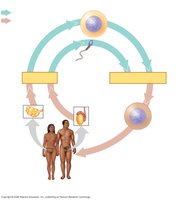
Key Terminology in Genetics
Somatic cell: Any cell of the body except gametes; does not participate in sexual reproduction.
Germ cell: Cells that give rise to gametes through meiosis.
Gamete: A haploid reproductive cell (sperm or egg).
Diploid (2n): Cells with two sets of homologous chromosomes.
Haploid (n): Cells with one set of chromosomes.
Modes of Reproduction
Asexual Reproduction
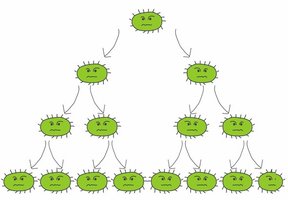
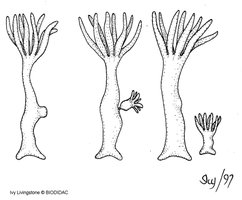
Asexual reproduction involves a single parent and results in offspring that are genetically identical to the parent, known as clones. This process occurs via prokaryotic fission in bacteria and mitosis in eukaryotes.
Produces genetically identical offspring (clones).
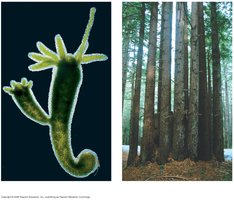
Common in unicellular organisms and some multicellular organisms (e.g., hydra, redwood trees).
Sexual Reproduction
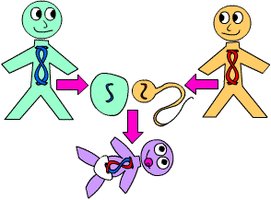
Sexual reproduction involves two parents, each contributing a gamete. The fusion of gametes (fertilization) produces offspring with unique combinations of genes, increasing genetic diversity.
Involves meiosis (formation of haploid gametes) and fertilization (fusion of gametes).
Results in genetic variability among offspring.
Chromosomes and Genetic Terminology
Chromosomes and Karyotypes
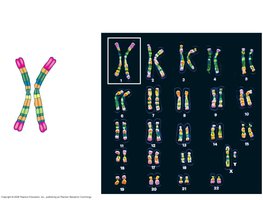
Chromosomes are structures that organize DNA within the cell. A karyotype is a visual display of an individual's chromosomes, arranged in homologous pairs.
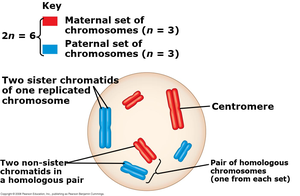
Homologous chromosomes: Chromosome pairs with similar shape and gene content, one from each parent.
Sister chromatids: Identical copies of a chromosome, joined at the centromere.
Genes, Alleles, and Loci
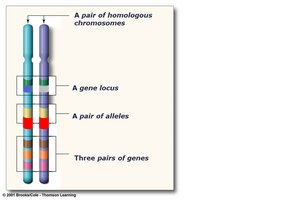
Gene: A segment of DNA that codes for a specific protein or trait.
Allele: Alternative forms of a gene at a specific locus.
Locus: The specific location of a gene on a chromosome.
Dominance Relationships
Dominant allele: Expressed in the phenotype even if only one copy is present (e.g., A).
Recessive allele: Expressed only when two copies are present (e.g., a).
Homozygous: Two identical alleles at a locus (AA or aa).
Heterozygous: Two different alleles at a locus (Aa).
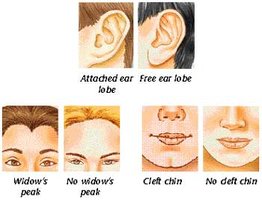
Genotype and Phenotype
Genotype: The genetic makeup of an individual (e.g., Aa, aa).
Phenotype: The observable traits resulting from the genotype (e.g., attached or unattached earlobes).
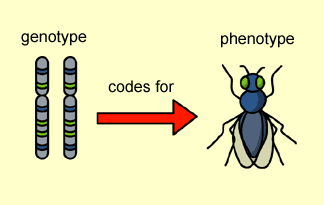
Mendelian Genetics
Gregor Mendel and His Experiments
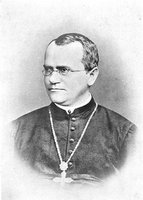
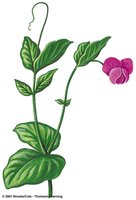
Gregor Mendel, the father of genetics, used pea plants to study inheritance. He discovered the basic principles of heredity by analyzing the patterns of trait transmission across generations.
Used true-breeding pea plants with distinct traits.
Controlled pollination to study inheritance patterns.
Mendel's Laws
Law of Segregation: Each individual has two alleles for each gene, which segregate during gamete formation so that each gamete receives only one allele.
Law of Independent Assortment: Genes for different traits assort independently during gamete formation if they are on different chromosomes.
Punnett Squares and Genetic Crosses
Punnett squares are diagrams used to predict the outcome of genetic crosses. They show all possible combinations of alleles from the parents.
Monohybrid cross: Involves one gene with two alleles (e.g., Aa x Aa).
Dihybrid cross: Involves two genes, each with two alleles (e.g., AaBb x AaBb).

Non-Mendelian Inheritance Patterns
Incomplete Dominance
In incomplete dominance, the heterozygote displays a phenotype intermediate between the two homozygotes (e.g., red x white = pink flowers).
Neither allele is completely dominant over the other.
Example: Flower color in snapdragons (w1w1 = white, w2w2 = red, w1w2 = pink).
Codominance
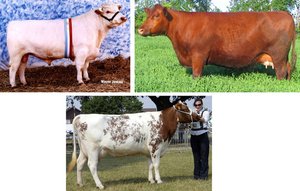
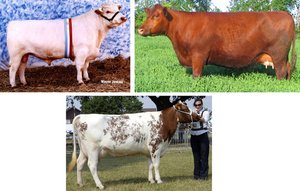
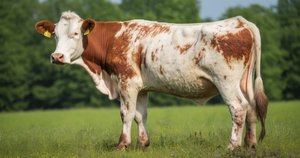
In codominance, both alleles in the heterozygote are fully expressed, resulting in a phenotype that shows both traits distinctly (e.g., red and white spotted cattle).
Example: Coat color in cattle (GAGA = red, GBGB = white, GAGB = roan).
Multiple Alleles
Some genes have more than two alleles in the population, leading to multiple possible genotypes and phenotypes. An example is coat color in rabbits, which is determined by four alleles with a dominance hierarchy.
Possible genotypes and phenotypes increase with the number of alleles.
Formula for number of genotypes: , where n is the number of alleles.
Lethal Alleles
Lethal alleles are mutations in essential genes that can cause death when present in certain genotypes. They can be dominant or recessive and may affect survival at different life stages.
Recessive lethal: Lethal only in homozygous recessive state (e.g., sickle-cell anemia).
Dominant lethal: Lethal in both heterozygous and homozygous dominant states (rare).
Dihybrid and Mixed Crosses
Dihybrid Crosses
Dihybrid crosses involve two genes, each with two alleles. The classic phenotypic ratio for a dihybrid cross with complete dominance is 9:3:3:1.
Number of gametes produced: (n = number of gene pairs).
Number of genotypic classes: .
Number of phenotypic classes: .
Law of Multiplicative Probabilities
The probability of two independent events occurring together is the product of their individual probabilities.
Example: Probability of getting heads on two coins = .
Mixed Dihybrid Crosses
When one or both genes in a dihybrid cross do not follow complete dominance, the phenotypic ratios deviate from the classic 9:3:3:1. Examples include combinations of complete dominance, incomplete dominance, codominance, and lethal alleles.
Summary Table: Mendelian Traits in Pea Plants
Character | Dominant Trait | Recessive Trait | F2 Generation Ratio |
|---|---|---|---|
Flower color | Purple | White | 3:1 |
Seed color | Yellow | Green | 3:1 |
Seed shape | Round | Wrinkled | 2.96:1 |
Pod shape | Inflated | Constricted | 2.95:1 |
Pod color | Green | Yellow | 2.82:1 |
Flower position | Axial | Terminal | 3.14:1 |
Stem length | Tall | Dwarf | 2.84:1 |
Additional info: These notes cover the foundational concepts of Mendelian and non-Mendelian inheritance, including key terminology, genetic crosses, and probability calculations, suitable for General Biology college students.
