 Indietro
Global Climate Change: Ecosystem Processes and Human Impact
Guida di studio - Note intelligenti
 Appunti personalizzati basati sui tuoi materiali, ampliati con definizioni chiave, esempi e contesto.
Global Climate Change
Introduction to Ecology and Ecosystems
Ecology is the scientific study of interactions between organisms and their environment. An ecosystem consists of all the biotic (living) and abiotic (non-living) components in a particular environment, functioning together as a unit.
Ecology: Examines relationships among organisms and their surroundings.
Ecosystem: Includes both biotic (plants, animals, microbes) and abiotic (water, sunlight, soil, temperature) factors.
Example: A forest ecosystem includes trees, animals, soil, water, and sunlight.

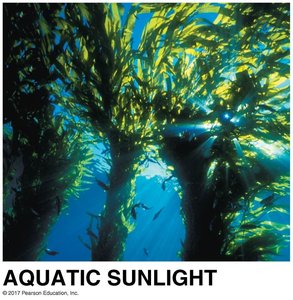
Biotic and Abiotic Factors
Biotic factors are living components, while abiotic factors are non-living elements that influence life within an ecosystem.
Biotic factors: Plants, animals, fungi, bacteria.
Abiotic factors: Sunlight, temperature, water, soil, air.
Example: Sunlight is an abiotic factor essential for photosynthesis in plants.
Ecosystem Processes: Energy Flow
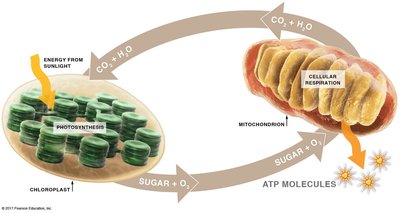
Energy flows through ecosystems, entering as sunlight and leaving as heat. Producers convert solar energy into chemical energy, which is then transferred through consumers and decomposers.
Energy enters: As sunlight.
Producers: Convert solar energy to chemical energy via photosynthesis.
Consumers: Use chemical energy from food.
Energy leaves: As heat.
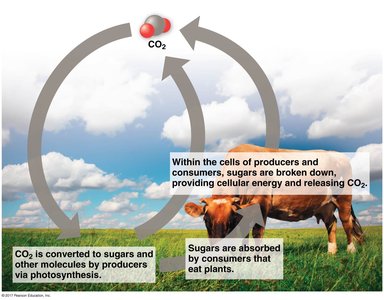
Ecosystem Processes: Biogeochemical Cycling
Biogeochemical cycles move elements and nutrients through biotic and abiotic components of ecosystems. The carbon cycle is a key example, involving photosynthesis, respiration, and human activities.
Biogeochemical cycling: Movement of elements (carbon, nitrogen, water) through living and non-living systems.
Carbon cycle: CO2 is absorbed by plants during photosynthesis and released by respiration and combustion.
Human impact: Fossil fuel burning and deforestation disrupt the natural balance.
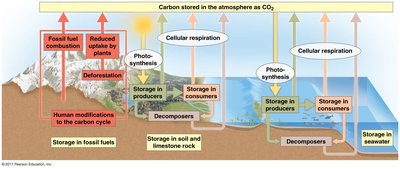

The Carbon Cycle
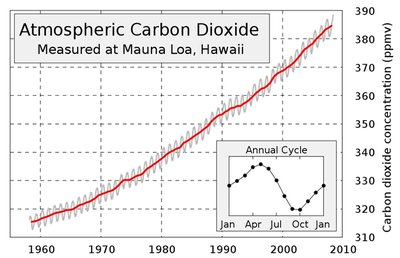
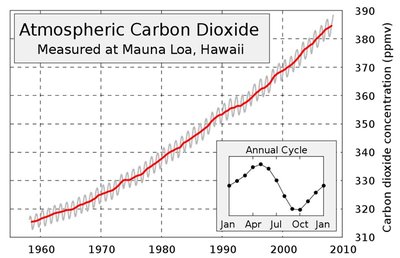
The carbon cycle describes the movement of carbon among the atmosphere, biosphere, hydrosphere, and geosphere. Human activities, such as burning fossil fuels and deforestation, have caused a major imbalance in this cycle.
Photosynthesis: Plants absorb CO2 and convert it to sugars.
Respiration: Organisms release CO2 back into the atmosphere.
Fossil fuels: Combustion releases stored carbon as CO2.
Greenhouse Gases and the Greenhouse Effect
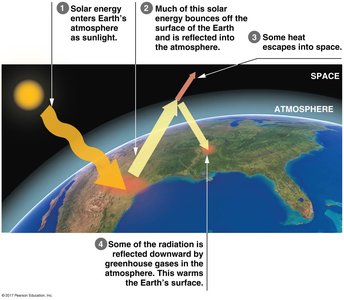
Greenhouse gases trap heat in the Earth's atmosphere, maintaining a habitable climate. However, increased concentrations of these gases lead to global warming and climate change.
Greenhouse gases: Carbon dioxide (CO2), methane (CH4), nitrous oxide (N2O), water vapor.
Greenhouse effect: Solar energy is absorbed and re-radiated by greenhouse gases, warming the Earth's surface.
Most common greenhouse gas: Carbon dioxide, primarily from fossil fuel combustion.
Climate Change vs. Climate Variability
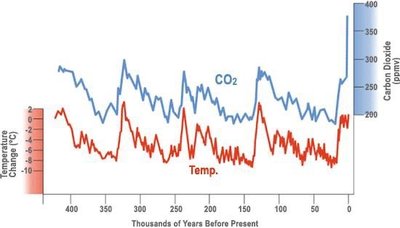
Climate change refers to long-term shifts in global or regional climate patterns, often driven by increased greenhouse gas emissions. Climate variability describes short-term fluctuations in climate, such as seasonal changes or year-to-year differences.
Climate change: Persistent alteration in average climate conditions.
Climate variability: Natural short-term changes in climate.
Example: A single cold winter does not disprove global warming.

Impacts of Climate Change
Global Temperature Rise
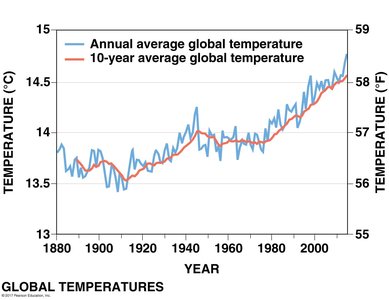
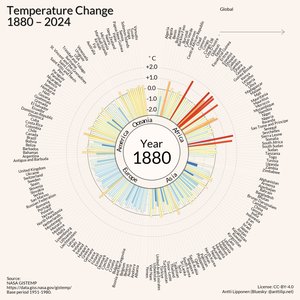
Global average temperatures have increased by approximately 1.62°C since the late 1800s, with most of the rise occurring in the last 35 years.
Warming Oceans
Oceans absorb much of the increased heat, leading to higher sea temperatures and affecting marine life and weather patterns.
Sea-Level Rise
Melting ice sheets, polar ice caps, and glaciers, along with thermal expansion of water, contribute to rising sea levels. Projections estimate a rise of 1-4 feet by 2100.
Extreme Weather Events
Climate change increases the frequency and intensity of extreme weather events, including hurricanes, droughts, heat waves, and wildfires.
Example: Hurricane Dorian in Florida, increased flooding, and wildfires.
Ocean Acidification
As oceans absorb more CO2, their pH decreases, making them more acidic. This threatens marine organisms, especially those with calcium carbonate shells or skeletons.
Impact: Acid dissolves calcium carbonate, affecting corals and shellfish.
Human Influence and the Importance of Reducing Emissions
Human activities, especially fossil fuel combustion and deforestation, have accelerated the rate of climate change. The residence time of CO2 in the atmosphere is long, meaning that even immediate reductions will take decades to stabilize concentrations.
CO2 residence time: 50-200 years; about half removed in 30 years, but some remains for thousands of years.
Goal: Limit warming to 2°C, but current trends suggest higher increases.
Biogeochemical Cycling of Water and Nutrients
Water and chemical nutrients cycle through ecosystems via processes such as evaporation, precipitation, and nutrient uptake by organisms.
Water cycle: Movement of water through evaporation, condensation, precipitation, and runoff.
Nutrient cycles: Include carbon, nitrogen, and phosphorus cycles.
Potential Impact of Rising CO2 on Ocean pH
Increasing atmospheric CO2 leads to greater absorption by oceans, resulting in lower pH and increased acidity. This can harm marine life and disrupt food webs.
Example: Coral reefs are particularly vulnerable to ocean acidification.
Summary Table: Key Concepts in Global Climate Change
Concept | Definition | Example |
|---|---|---|
Ecology | Study of organism-environment interactions | Forest ecosystem |
Ecosystem | Biotic and abiotic components of an environment | Lake ecosystem |
Biogeochemical Cycle | Movement of elements through living and non-living systems | Carbon cycle |
Greenhouse Gas | Gas that traps heat in the atmosphere | CO2, CH4 |
Climate Change | Long-term alteration in climate patterns | Global warming |
Ocean Acidification | Decrease in ocean pH due to CO2 absorption | Coral bleaching |
Key Equations
Photosynthesis:
Cellular Respiration:
Conclusion
Understanding ecosystem processes and the impact of human activities on global climate change is essential for developing effective solutions. Reducing greenhouse gas emissions and protecting natural cycles are critical steps in mitigating climate change and preserving biodiversity.
