 Indietro
Global Climate Patterns and Their Ecological Effects
Guida di studio - Note intelligenti
 Appunti personalizzati basati sui tuoi materiali, ampliati con definizioni chiave, esempi e contesto.
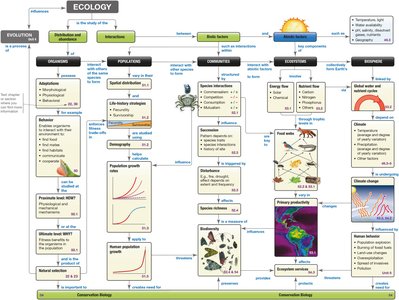
Ecology: The Big Picture
Overview of Ecology
Ecology is the study of interactions among organisms and their environment, encompassing both biotic (living) and abiotic (non-living) factors. Understanding ecological principles is essential for explaining patterns of species distribution, abundance, and the functioning of ecosystems.
Biotic factors: Interactions with living organisms, such as competition, predation, and symbiosis.
Abiotic factors: Non-living environmental components, including temperature, precipitation, sunlight, and soil.
Climate: Prevailing, long-term weather conditions in a region.
Weather: Short-term atmospheric conditions.
Global Climate Patterns
Seasonality and Earth's Tilt
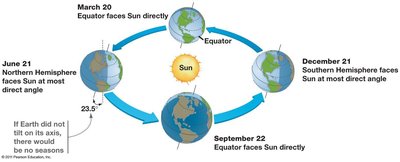
Seasonality refers to regular, annual fluctuations in temperature and precipitation. These patterns are primarily driven by Earth's 23.5º tilt on its axis, which causes varying angles of sunlight throughout the year.
Earth's tilt: Responsible for the existence of seasons.
Daylength and temperature: Vary with latitude and season, leading to high or low seasonality in different regions.
Equator: Experiences low seasonality; daylength and temperature remain relatively constant.
Poles: Experience high seasonality; extreme variations in daylength and temperature.
Latitudinal Variation in Temperature
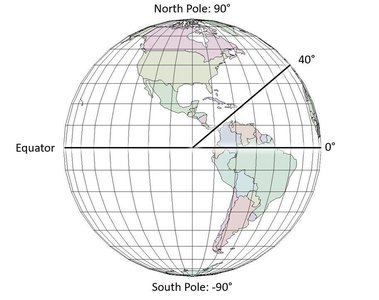
Temperature differences across the globe are largely due to the angle at which sunlight strikes the Earth's surface. The tropics are warm because sunlight hits them directly, while the poles are cold due to the low angle of incoming sunlight.
Sunlight intensity: Higher at the equator, lower at the poles.
Atmospheric thickness: Sunlight passes through more atmosphere at higher latitudes, reducing its intensity.
Patterns of Precipitation: Hadley Cells and Deserts
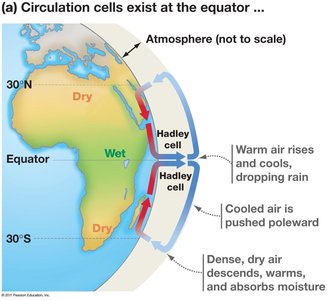
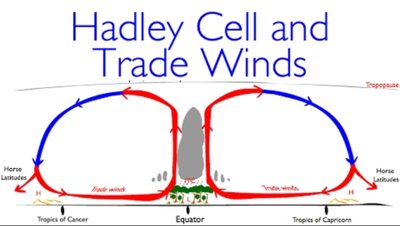
Global air circulation patterns, such as Hadley cells, play a crucial role in determining precipitation distribution. Areas along the equator receive the most moisture, while regions at about 30º N and 30º S latitude are typically dry, resulting in the formation of deserts.
Hadley cell: A major cycle in global air circulation responsible for wet tropics and dry subtropics.
Deserts: Commonly found at 30º N and 30º S due to descending dry air.
Rainfall: Highest at the equator, lowest at subtropical latitudes.
Wind Patterns and Climate Cycles
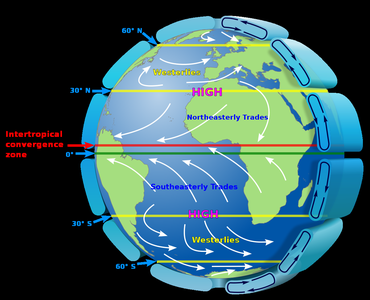
Wind patterns, including trade winds and westerlies, influence the distribution of precipitation and temperature. Cyclic events such as El Niño and La Niña further affect global climate by altering oceanic and atmospheric conditions.
Trade winds: Move air and moisture across the globe, affecting regional climates.
El Niño & La Niña: Climate patterns in the Pacific Ocean that impact weather worldwide.
Regional Climate Effects
Mountain Ranges and the Rain Shadow Effect
Physical features such as mountain ranges can produce extremes in precipitation through the rain shadow effect. Winds from the ocean cool and drop precipitation on one side of a mountain range, creating high deserts on the other side.
Rain shadow effect: Mountains block moist air, causing precipitation on the windward side and dry conditions on the leeward side.
Regional climate: Influenced by topography, proximity to oceans, and prevailing wind patterns.
Biomes and Climate
Definition and Distribution of Biomes
A biome is a large ecological community defined by its climate, geography, and dominant vegetation. Temperature, precipitation, and geography determine the location and characteristics of biomes across the planet.
Biomes: Include tundra, desert, rainforest, grassland, and others.
Climate factors: Temperature and precipitation are primary determinants.
Geography: Latitude, altitude, and proximity to water bodies influence biome distribution.
Summary Table: Global Climate Patterns and Their Effects
Factor | Effect on Climate | Example |
|---|---|---|
Earth's Tilt | Causes seasons | Summer and winter in temperate zones |
Latitude | Determines temperature | Warm tropics, cold poles |
Hadley Cells | Distributes precipitation | Wet tropics, dry deserts at 30º |
Wind Patterns | Influence precipitation | Trade winds, westerlies |
Mountain Ranges | Rain shadow effect | Deserts east of Sierra Nevada |
El Niño/La Niña | Alter global weather | Floods, droughts |
Key Terms and Concepts
Abiotic factors: Non-living environmental influences.
Biotic factors: Living organisms and their interactions.
Climate: Long-term atmospheric conditions.
Weather: Short-term atmospheric conditions.
Biome: Major ecological community type.
Hadley cell: Atmospheric circulation pattern.
Rain shadow: Dry area on leeward side of mountain.
El Niño/La Niña: Climate cycles affecting global weather.
Relevant Equations
Solar angle calculation:
Atmospheric thickness:
Example Application
Understanding global climate patterns helps explain why tropical rainforests are found near the equator, deserts at 30º latitude, and tundra at the poles. These patterns are essential for predicting species distributions and ecosystem functioning.
Additional info: Academic context was added to clarify the role of Hadley cells, wind patterns, and mountain ranges in shaping global and regional climate.
