 Indietro
Health Promotion, Prevention, and Ethical Principles: Mini-Textbook Study Notes
Guida di studio - Note intelligenti
 Appunti personalizzati basati sui tuoi materiali, ampliati con definizioni chiave, esempi e contesto.
Health Promotion and Prevention
Key Elements of a Health Promotion Approach
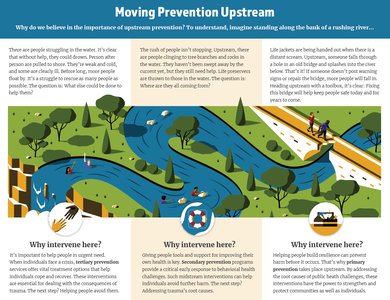
Health promotion focuses on primary prevention, aiming to prevent health problems before they occur. This approach is action-oriented and addresses both individual and population-level change. It relies on community engagement, policy interventions, and education to foster healthier environments and behaviors.
Primary Prevention: Prevents problems before they start by removing or reducing risk factors and enhancing protective factors.
Secondary Prevention: Early identification and treatment to stop or slow progression of the problem.
Tertiary Prevention: Treatment or rehabilitation for those who have experienced the problem.
Timing of Prevention
Prevention strategies are categorized based on when they are applied relative to the onset of disease or health issue:
Primary: Before the problem occurs.
Secondary: After the problem has started, but before it becomes severe.
Tertiary: After the problem has caused significant impact, focusing on rehabilitation.
Upstream vs. Downstream Interventions
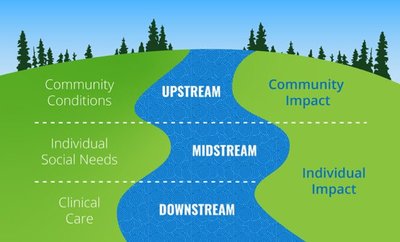
Upstream interventions address the root causes of health issues, such as social determinants and environmental factors, while downstream interventions focus on individual treatment and clinical care.
Upstream: Community conditions, policy, and prevention.
Midstream: Individual social needs and targeted interventions.
Downstream: Clinical care and rehabilitation.
The Health Impact Pyramid
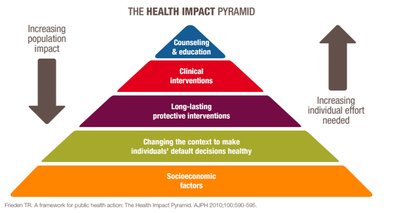
The Health Impact Pyramid illustrates the relative impact of different public health interventions. Interventions at the base (socioeconomic factors) have the greatest population impact, while those at the top (counseling and education) require more individual effort.
Socioeconomic Factors: Addressing poverty, education, and housing.
Changing Context: Making healthy choices the default.
Long-lasting Protective Interventions: Immunizations, screenings.
Clinical Interventions: Medical treatments.
Counseling & Education: Health education and behavior change support.
Mental Health Promotion
Concept and Importance
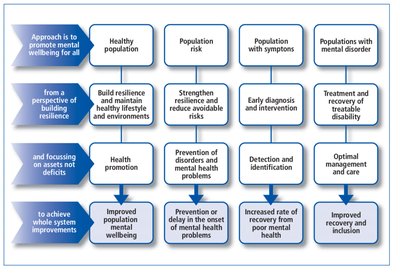
Mental health promotion aims to enhance emotional and social well-being, enabling individuals to manage stress, work effectively, and participate in their communities. Mental health is essential for overall health, and its promotion contributes to social and economic development.
Mental Health: A state of well-being where individuals realize their abilities and cope with normal stresses.
Mental Illness: Health conditions involving changes in emotion, thinking, or behavior, often associated with distress and impaired functioning.
Population Health Promotion Perspective
Promoting mental health requires a comprehensive public health approach, focusing on assets and resilience rather than deficits. Strategies should create the greatest mental health gain for the largest number of people.
Ethical Principles in Health Promotion
Ethical Values and Principles
Ethics in health promotion involves clarifying, prioritizing, and justifying actions based on principles such as autonomy, beneficence, non-maleficence, and justice. Decisions must respect the rights, dignity, and confidentiality of individuals and groups.
Autonomy: Respecting individuals' choices, rights, and dignity.
Beneficence: Acting to benefit others.
Non-maleficence: Doing no harm.
Justice: Equitable distribution of benefits and burdens.
Ethical Decision-Making
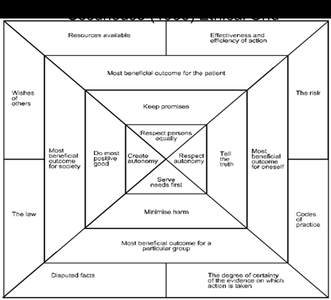
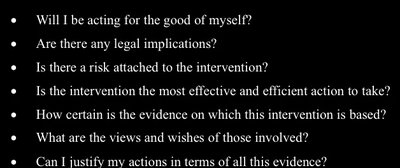
Ethical decisions in health promotion should balance competing principles and involve consultation with ethicists or committees when necessary. The ethical grid helps practitioners consider autonomy, truth, harm, and societal good.
Healthy Public Policy
Developing Healthy Public Policy
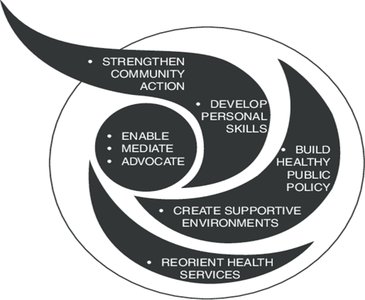
Healthy public policy aims to change environments to make healthy choices easier, reduce health inequities, and promote health as a human right. Policies can be implemented at all levels and may involve regulation, monetary incentives, or infrastructure development.
Policy: Statements of intent implemented as procedures, rules, or laws.
Healthy Public Policy: Explicit concern for health and equity in all areas of policy.
Stages in Policymaking
Policymaking involves multiple stages, including agenda setting, policy formulation, adoption, implementation, and evaluation.
Ladder of Intervention
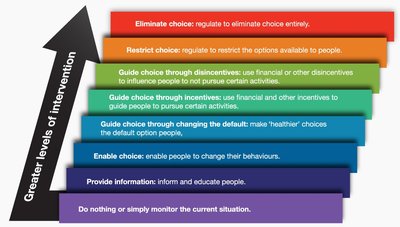
The ladder of intervention categorizes public health actions by their level of impact and restriction of individual choice, ranging from doing nothing to eliminating choice entirely.
Provide Information: Inform and educate people.
Enable Choice: Help people change behaviors.
Guide Choice: Use incentives or disincentives.
Restrict/Eliminate Choice: Regulate options or eliminate choice.
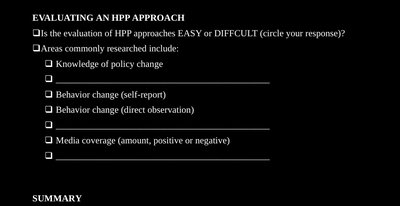
Evaluating Healthy Public Policy Approaches
Evaluation of healthy public policy approaches can be challenging and typically involves assessing knowledge of policy change, behavior change (self-report and direct observation), and media coverage.
Theories of Health Behavior
Role of Theory in Health Promotion
Theories help explain, predict, and analyze health behaviors, providing a systematic approach to designing interventions. They draw on multiple disciplines and focus on psychosocial constructs such as attitudes, beliefs, and social factors.
Health Belief Model: Predicts protective health behavior based on perceived susceptibility, severity, benefits, barriers, cues to action, and self-efficacy.
Transtheoretical Model: Describes stages of change: pre-contemplation, contemplation, preparation, action, maintenance, and relapse.
Theory of Planned Behavior: Focuses on behavioral intentions, attitudes, subjective norms, and perceived behavioral control.
Motivational Interviewing
Principles and Practice
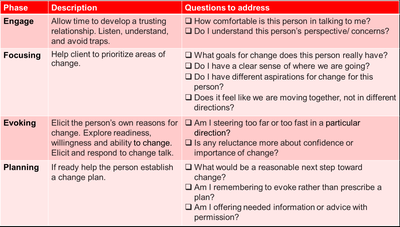
Motivational Interviewing (MI) is a collaborative communication style designed to strengthen personal motivation for change. It emphasizes acceptance, compassion, and guiding conversation to activate a person's own motivation and resources.
Core MI Skills (OARS): Open questions, affirmations, reflective listening, and summarizing.
Phases of MI: Engage, focus, evoke, and plan.
Health Communication
Definition and Principles
Health communication uses strategies to inform and influence decisions that enhance health. It is a key tool in public health, aiming to promote healthy behaviors and improve health literacy.
Six Main Areas: Health education, risk communication, social marketing, policy communication, healthcare communication, and media advocacy.
Principles: Results-oriented, science-based, participatory, user-centered, benefit-oriented, distributed, multichannel, multimedia.
Communicating About Health Determinants
Effective health communication must address the complexity of health determinants, including lifestyle, cultural, social, and economic factors. Strategies should connect information about health problems with evidence-based solutions.
Summary Table: Prevention Approaches
Approach | Target | Examples |
|---|---|---|
Universal | Entire population | Vaccination, seatbelt laws |
Selected | At-risk groups | Targeted education, screening programs |
Indicated | Individuals with the problem | Treatment, rehabilitation |
Additional info: Academic context was added to clarify prevention types and ethical principles.
