 Indietro
Homeostasis and the Organization of the Animal Body
Guida di studio - Note intelligenti
 Appunti personalizzati basati sui tuoi materiali, ampliati con definizioni chiave, esempi e contesto.
Homeostasis and the Organization of the Animal Body
Introduction to Homeostasis
Homeostasis is the process by which animals maintain a stable internal environment, allowing optimal cellular function despite external fluctuations. This concept, introduced by Walter Cannon in the 1920s, is fundamental to understanding how animal bodies operate and survive in changing environments.
Definition: Homeostasis means "to stay the same"—the maintenance of internal conditions within a narrow, workable range.
Importance: Most biochemical reactions in cells are catalyzed by enzymes, whose function depends on stable temperature, pH, and ionic conditions.
Example: During exercise, muscle activity increases body heat, which is detected and regulated to maintain temperature within a safe range.
Why and How Do Animals Regulate Their Internal Environment?
Animals regulate their internal environment to ensure that cellular processes proceed efficiently. The composition of interstitial fluid, temperature, and other factors must remain within specific limits for enzymes and cells to function properly.
Enzyme Activity: Enzyme-catalyzed reactions are temperature-dependent. Low temperatures slow reactions, while high temperatures can accelerate them to harmful levels.
Disruption: Extreme salt, pH, or temperature can disrupt protein structure and cell function.
Sources of Body Heat: Ectotherms vs. Endotherms
Animals are classified based on how they regulate body temperature:
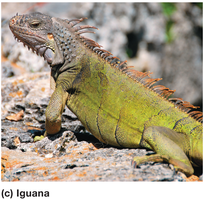
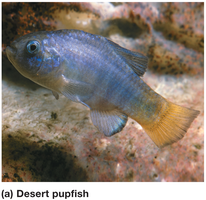
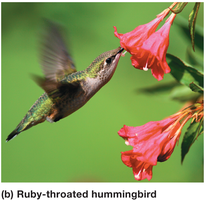
Ectotherms: Derive most of their heat from the environment (e.g., reptiles, amphibians, most fish, invertebrates). They often become inactive at night to conserve energy.
Endotherms: Generate most of their heat through metabolic reactions (e.g., birds, mammals). They maintain a relatively constant body temperature, which allows for greater activity but requires more energy.
Feedback Systems in Homeostasis
Homeostasis is maintained by feedback systems, which are mechanisms that detect changes and initiate responses to restore balance.
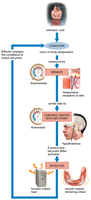
Negative Feedback: Counteracts changes, restoring the system to its set point. This is the primary mechanism for maintaining homeostasis (e.g., regulation of body temperature, blood glucose, water balance).
Positive Feedback: Amplifies changes, creating a cycle that intensifies the original stimulus. This is rare and usually occurs in specific situations, such as childbirth.
Example: Negative Feedback in Temperature Regulation
Temperature sensors in the skin detect changes.
The hypothalamus coordinates responses (e.g., sweating, shivering) to restore normal temperature.
Animal Body Organization
Levels of Organization
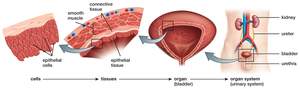
Animal bodies are organized into hierarchical levels, each building upon the previous:
Cells: Basic units of life.
Tissues: Groups of similar cells performing a common function.
Organs: Structures composed of multiple tissue types working together.
Organ Systems: Groups of organs that carry out major body functions.
Animal Tissues
There are four major categories of animal tissues:
Epithelial Tissue: Covers body surfaces and lines cavities; forms glands.
Connective Tissue: Supports, binds, and protects other tissues.
Muscle Tissue: Enables movement through contraction.
Nerve Tissue: Conducts electrical signals for communication and control.
Epithelial Tissue
Epithelial tissue forms membranes and glands, providing protection, facilitating exchange, and regulating movement of substances.
Structure: Has a free surface and is anchored to a basement membrane.
Regeneration: Can rapidly replace damaged cells.
Classification: Based on layers (simple = one layer; stratified = multiple layers) and cell shape (squamous, cuboidal, columnar).
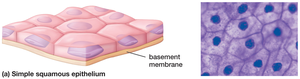
Simple Squamous: Flat, thin cells; found in lung air sacs for gas exchange.
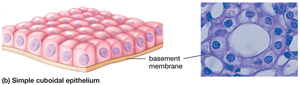
Simple Cuboidal: Cube-shaped; found in ducts and kidney tubules.
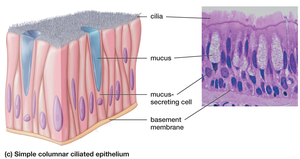
Simple Columnar (Ciliated): Elongated; found in the trachea, often with cilia and mucus-secreting cells.
Glands
Exocrine Glands: Secrete substances into body cavities or onto surfaces via ducts (e.g., sweat, salivary glands).
Endocrine Glands: Release hormones into interstitial fluid and blood (e.g., thyroid, pituitary).
Connective Tissue
Connective tissue supports and binds other tissues, with a large extracellular matrix that may be fluid, gelatinous, or solid.
Loose Connective Tissue: Most abundant; supports and cushions organs.
Dense Connective Tissue: Packed with collagen fibers; forms tendons and ligaments.
Specialized Connective Tissue: Includes cartilage, bone, fat, blood, and lymph.
Muscle Tissue
Skeletal Muscle: Voluntary movement; attached to bones.
Cardiac Muscle: Involuntary; found only in the heart.
Smooth Muscle: Involuntary; found in walls of organs and blood vessels.
Nerve Tissue
Neurons: Generate and conduct electrical signals.
Glial Cells: Support, insulate, and protect neurons.
Organs and Organ Systems
Organs are composed of multiple tissue types and perform specific functions. Organ systems are groups of organs that work together to carry out major physiological processes and maintain homeostasis.
Example: The skin is an organ composed of epithelial, connective, muscle, and nerve tissues, playing a key role in temperature regulation and protection.
Organ Systems: Examples include the integumentary, muscular, nervous, circulatory, respiratory, digestive, urinary, and endocrine systems.
Summary Table: Major Vertebrate Organ Systems
Organ System | Main Components | Primary Functions |
|---|---|---|
Integumentary | Skin, hair, nails | Protection, temperature regulation |
Muscular | Skeletal muscles | Movement, posture |
Nervous | Brain, spinal cord, nerves | Coordination, response to stimuli |
Circulatory | Heart, blood vessels, blood | Transport of nutrients, gases, wastes |
Respiratory | Lungs, trachea | Gas exchange |
Digestive | Mouth, stomach, intestines | Breakdown and absorption of food |
Urinary | Kidneys, bladder | Excretion of wastes, water balance |
Endocrine | Glands (e.g., thyroid, pituitary) | Hormone production, regulation |
Immune/Lymphatic | Lymph nodes, spleen | Defense against pathogens |
Reproductive | Ovaries, testes | Production of offspring |
Additional info: This summary table is inferred from standard biology textbooks and the context of the provided material.
