 Indietro
Ch. 32 Homeostasis and the Organization of the Animal Body: Study Notes
Guida di studio - Note intelligenti
 Appunti personalizzati basati sui tuoi materiali, ampliati con definizioni chiave, esempi e contesto.
Homeostasis
Definition and Importance
Homeostasis is the process by which animals regulate their internal environment to maintain conditions within a narrow, optimal range for cellular function. This concept, coined by Walter Cannon in the 1920s, is fundamental for life, as it ensures that biochemical reactions occur efficiently and safely. - Key Point 1: Homeostasis literally means "to stay the same," but internal conditions fluctuate within tolerable limits. - Key Point 2: Most cells are bathed in interstitial fluid, whose composition and temperature are tightly regulated. - Example: Enzyme activity is highly sensitive to temperature, pH, and salt concentration; deviations can disrupt protein structure and function.
Feedback Systems
Feedback systems are mechanisms that maintain homeostasis. There are two main types: negative feedback and positive feedback. - Negative Feedback: Counteracts changes, restoring internal conditions to their set point. It regulates temperature, glucose, hormones, water, salts, and oxygen. - Positive Feedback: Amplifies changes, creating cycles that are usually halted by negative feedback. Example: labor contractions during childbirth. Additional info: Negative feedback is the primary mechanism for homeostasis; positive feedback is rare and typically occurs in specific physiological events. 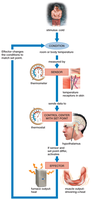
Regulation of Body Temperature
Ectotherms vs. Endotherms
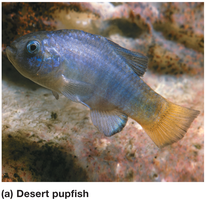
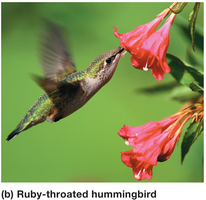
Animals are classified by their primary source of body heat. - Ectotherms: Derive heat from the environment. Includes reptiles, amphibians, most fish, and invertebrates. They often become inactive at night to conserve energy. - Endotherms: Generate heat through metabolic reactions. Includes birds and mammals. They maintain a constant body temperature (typically 95°F–106°F), which allows for rapid responses and movement but requires significant energy. Example: Iguanas and desert pupfish are ectotherms, while ruby-throated hummingbirds are endotherms. 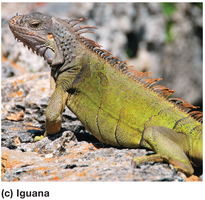
Temperature Regulation Mechanisms
The hypothalamus in the brain coordinates responses to temperature changes. - Too Warm: Skin blood vessels widen, sweat evaporates, heat leaves the body. - Too Cold: Skin blood vessels narrow, muscles shiver, heat is conserved or produced. Sensors signal the hypothalamus to switch off actions once normal temperature is restored.
Organization of the Animal Body
Levels of Organization
Animal bodies are organized hierarchically: cells → tissues → organs → organ systems. Each level depends on the previous, and larger structures coordinate work across the body. - Cells: Basic unit of life. - Tissues: Groups of similar cells working together. - Organs: Multiple tissues with a shared function. - Organ Systems: Organs working together for basic life functions. Example: Skin cell → epithelial tissue → skin → integumentary system. 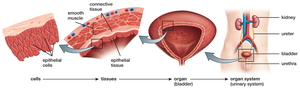
Animal Tissues
There are four major categories of animal tissues: epithelial, connective, muscle, and nerve tissue.
Epithelial Tissue
Epithelial tissue forms membranes and glands, covering internal and external surfaces, lining ducts and hollow organs, and providing protection and regulation. - Simple Epithelium: One cell thick; found in digestive, urinary, reproductive, circulatory, and respiratory systems. - Stratified Epithelium: Multiple cell layers; found in areas subject to wear and tear (e.g., skin, esophagus).
Classification by Shape
Epithelial tissues are named by cell shape: - Simple Squamous: Flat and thin; lining lung air sacs. 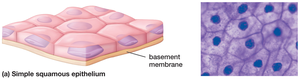 - Simple Cuboidal: Cube-shaped; lining kidney tubules and ducts.
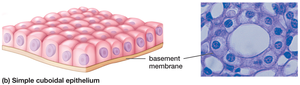 - Simple Columnar (Ciliated): Elongated; lining trachea, with cilia and mucus-secreting cells.
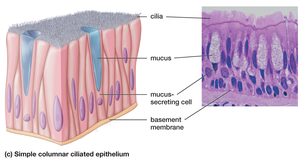 Additional info: Epithelial membranes are anchored to a basement membrane and can regenerate, especially in harsh environments.
Glands
- Exocrine Glands: Secrete substances into body cavities or onto surfaces via ducts (e.g., sweat, mammary, salivary glands). - Endocrine Glands: Secrete hormones into interstitial fluid, which diffuse into capillaries (e.g., ovaries, testes, thyroid, pituitary). Hormones: Chemical messengers regulating activity of other cells.
Connective Tissue
Connective tissue supports, strengthens, and binds other tissues. It contains a large extracellular matrix, which may be watery, gelatinous, tough, or rigid. - Loose Connective Tissue: Most abundant; connects, supports, and cushions other tissues. - Dense Connective Tissue: Tightly packed collagen fibers; found in tendons and ligaments. - Specialized Connective Tissue: Includes cartilage, bone, fat, blood, and lymph.
Muscle Tissue
Muscle tissue consists of long, thin cells packed with fibrous proteins that contract to produce movement. - Skeletal Muscle: Voluntary, moves skeleton. - Cardiac Muscle: Involuntary, found only in heart, connected by intercalated discs. - Smooth Muscle: Involuntary, found in walls of organs and blood vessels.
Nerve Tissue
Nerve tissue produces and conducts electrical signals. - Neurons: Generate and transmit electrical signals. - Glial Cells: Support, insulate, and protect neurons.
Organs and Organ Systems
Organs consist of two or more interacting tissue types, often all four. Most organs function as part of organ systems, which carry out basic life functions and maintain homeostasis. Example: Skin is an organ made of epithelial, connective, muscle, and nervous tissues, essential for temperature regulation and protection.
Summary Table: Major Vertebrate Organ Systems
Organ System | Main Components | Primary Functions |
|---|---|---|
Integumentary | Skin, hair, nails | Protection, temperature regulation |
Muscular | Muscles | Movement, posture |
Nervous | Brain, spinal cord, nerves | Coordination, response to stimuli |
Endocrine | Glands | Hormone production, regulation |
Circulatory | Heart, blood vessels | Transport of nutrients, gases |
Respiratory | Lungs, airways | Gas exchange |
Digestive | Stomach, intestines | Food breakdown, absorption |
Urinary | Kidneys, bladder | Waste removal, water balance |
Reproductive | Ovaries, testes | Production of offspring |
Immune | White blood cells, lymph nodes | Defense against disease |
Additional info: The skin consists of three layers: epidermis (stratified epithelial tissue), dermis (loose connective tissue), and hypodermis (adipose tissue). Each layer contributes to homeostasis and protection. ----------------------------------------
