 Indietro
How Cells Harvest Chemical Energy: Cellular Respiration and Metabolic Pathways
Guida di studio - Note intelligenti
 Appunti personalizzati basati sui tuoi materiali, ampliati con definizioni chiave, esempi e contesto.
How Cells Harvest Chemical Energy
Big Ideas and Overview
Cellular respiration is a central biological process that allows cells to extract energy from organic molecules, primarily glucose, to produce ATP, the energy currency of the cell. This process connects with other metabolic pathways and is essential for life in all aerobic organisms.
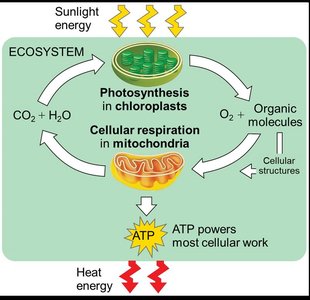
Energy Flow and Chemical Cycling: Energy flows through ecosystems, while chemicals are recycled. Photosynthesis and cellular respiration are interconnected processes that sustain life.
ATP Production: ATP is produced through substrate-level phosphorylation and oxidative phosphorylation, powering most cellular work.
Breathing and Cellular Respiration
Relationship Between Breathing and Cellular Respiration
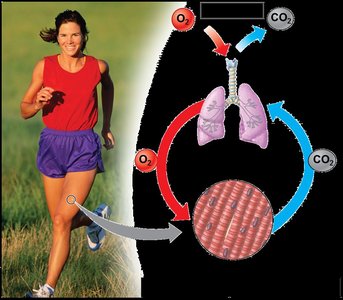
Breathing supplies oxygen to cells and removes carbon dioxide, both of which are essential for cellular respiration. Oxygen acts as the final electron acceptor in the electron transport chain, while carbon dioxide is a waste product of glucose oxidation.
Oxygen Intake: Required for aerobic respiration in mitochondria.
Carbon Dioxide Release: Produced during the breakdown of glucose and expelled from the body.
Oxidation-Reduction (Redox) Reactions
Electron Transfer in Cellular Respiration
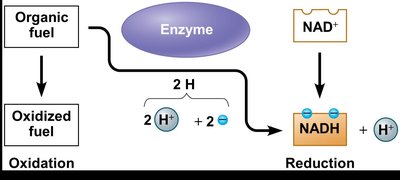
Redox reactions are fundamental to cellular respiration, involving the transfer of electrons from fuel molecules to electron carriers such as NAD+. Oxidation is the loss of electrons, while reduction is the gain of electrons.
Oxidation: Organic fuel molecules lose electrons and are oxidized.
Reduction: Electron carriers like NAD+ gain electrons and are reduced to NADH.
ATP Synthesis Mechanisms
Substrate-Level Phosphorylation
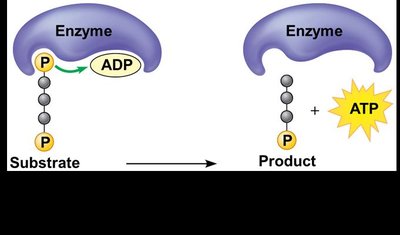
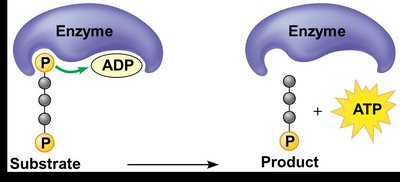
ATP can be generated directly in metabolic pathways by transferring a phosphate group from a substrate to ADP, forming ATP. This process occurs during glycolysis and the citric acid cycle.
Direct Phosphate Transfer: Enzymes catalyze the transfer of phosphate groups to ADP.
Oxidative Phosphorylation
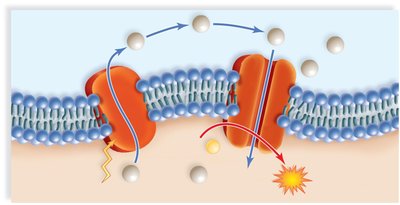
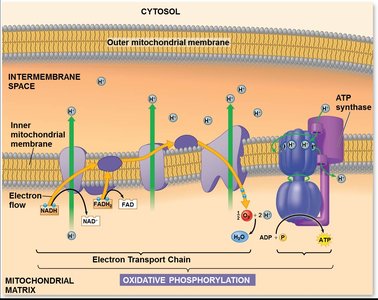
Most ATP is produced by oxidative phosphorylation, which involves the electron transport chain and chemiosmosis. Electrons from NADH and FADH2 pass through protein complexes, driving the production of ATP via ATP synthase.
Electron Transport Chain: Transfers electrons to oxygen, forming water.
Proton Gradient: Energy from electrons pumps protons across the mitochondrial membrane, creating a gradient used by ATP synthase to generate ATP.
Stages of Cellular Respiration
Overview of the Three Main Stages
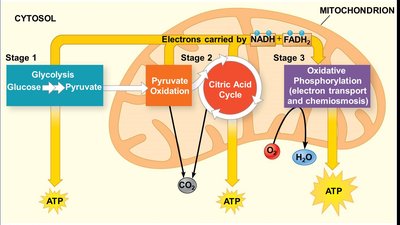
Cellular respiration occurs in three main stages: glycolysis, pyruvate oxidation and the citric acid cycle, and oxidative phosphorylation.
Glycolysis: Occurs in the cytoplasm; breaks down glucose into two molecules of pyruvate, producing a small amount of ATP and NADH.
Pyruvate Oxidation and Citric Acid Cycle: Occur in the mitochondrial matrix; pyruvate is converted to acetyl CoA, which enters the citric acid cycle, generating NADH, FADH2, ATP, and CO2.
Oxidative Phosphorylation: Occurs in the inner mitochondrial membrane; uses NADH and FADH2 to produce most of the cell's ATP.
Glycolysis
Glycolysis is the first step in cellular respiration, splitting glucose into two pyruvate molecules. It consists of an energy-investment phase and an energy-harvesting phase.
Energy-Investment: 2 ATP are used to phosphorylate glucose.
Energy-Harvesting: 4 ATP and 2 NADH are produced, with a net gain of 2 ATP per glucose.
End Products: 2 pyruvate, 2 ATP (net), 2 NADH, and 2 H2O.
Pyruvate Oxidation
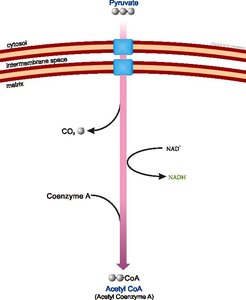
Pyruvate produced in glycolysis is transported into the mitochondrion, where it is converted to acetyl CoA. This step produces NADH and releases CO2.
Location: Mitochondrial matrix.
Products: Acetyl CoA, NADH, and CO2.
Citric Acid Cycle (Krebs Cycle)
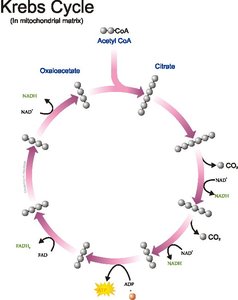
The citric acid cycle completes the breakdown of glucose by oxidizing acetyl CoA to CO2. It generates NADH, FADH2, and ATP through substrate-level phosphorylation.
Key Steps: Acetyl CoA combines with oxaloacetate to form citrate; redox reactions generate NADH and FADH2.
Products (per glucose): 6 NADH, 2 FADH2, 2 ATP, and 4 CO2.
Oxidative Phosphorylation and Chemiosmosis
Electrons from NADH and FADH2 are transferred through the electron transport chain, powering the movement of protons across the inner mitochondrial membrane. The resulting proton gradient drives ATP synthesis via ATP synthase.
Electron Transport Chain: Series of protein complexes that transfer electrons to oxygen.
ATP Yield: About 28-32 ATP per glucose molecule.
Fermentation
Anaerobic Energy Harvesting
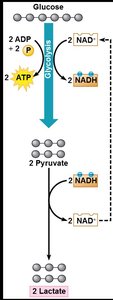
Fermentation allows cells to produce ATP without oxygen by regenerating NAD+ from NADH. There are two main types: lactic acid fermentation and alcoholic fermentation.
Lactic Acid Fermentation: Pyruvate is reduced to lactate, regenerating NAD+.
Alcoholic Fermentation: Pyruvate is converted to ethanol and CO2, regenerating NAD+.
Connections Between Metabolic Pathways
Integration of Macromolecule Metabolism
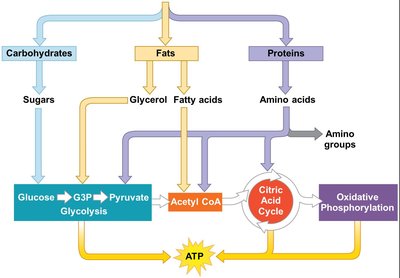
Carbohydrates, fats, and proteins can all be used as fuel for cellular respiration. Their breakdown products enter the pathway at various points, allowing flexibility in energy production and biosynthesis.
Carbohydrates: Broken down to glucose, entering glycolysis.
Fats: Glycerol enters glycolysis; fatty acids are converted to acetyl CoA.
Proteins: Amino acids are deaminated and enter the citric acid cycle.
Nutritional Diseases and Energy Balance
Examples of Nutritional Deficiencies and Excesses
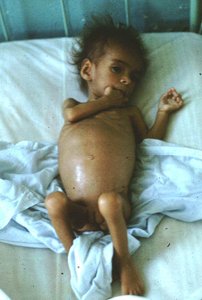
Proper nutrition is essential for maintaining metabolic health. Deficiencies or excesses in energy intake can lead to diseases such as marasmus, kwashiorkor, and obesity.
Marasmus: Severe undernourishment causing significant weight loss and muscle wasting.
Kwashiorkor: Protein deficiency leading to edema and an enlarged liver.
Obesity: Excess energy intake resulting in excessive fat accumulation.
Calories and Energy in Food
Measuring Energy Content
Calories are a measure of the potential energy stored in food. The energy released from food molecules during cellular respiration is used to produce ATP, which powers cellular activities.
Caloric Value: Indicates how much energy food can provide to the body.
----------------------------------------
