 Indietro
How Genes Work: The Central Dogma, Genetic Code, and Mutations
Guida di studio - Note intelligenti
 Appunti personalizzati basati sui tuoi materiali, ampliati con definizioni chiave, esempi e contesto.
How Genes Work
Introduction to Gene Expression
Genes are fundamental units of heredity, encoding instructions for the synthesis of proteins and functional RNAs. The process of gene expression involves converting information stored in DNA into functioning molecules within the cell. Understanding how genes work at the molecular level is essential for linking genotype to phenotype.
16.1 What Do Genes Do?
Beadle and Tatum's Experiments
Beadle and Tatum pioneered the study of gene function by creating defective genes and observing their effects on phenotype. Nonfunctioning alleles are termed null or loss-of-function alleles. Their experiments with the bread mold Neurospora crassa revealed mutants unable to synthesize certain compounds, leading to the discovery that each gene contains information to make a specific enzyme.
One-Gene, One-Enzyme Hypothesis: Each gene encodes a single enzyme.
Genetic Screens: Used to identify mutants lacking enzymes in metabolic pathways.
One-Gene, One-Polypeptide Hypothesis: Modern understanding recognizes that genes encode polypeptides, not just enzymes.
Example: Mutants deficient in enzymes required for arginine synthesis.

16.2 The Central Dogma of Molecular Biology
Flow of Genetic Information
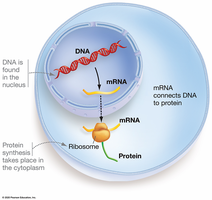
The central dogma describes the directional flow of genetic information in cells: DNA → RNA → Protein. Genes are stretches of DNA that code for proteins, and the sequence of DNA bases determines the sequence of RNA, which in turn determines the sequence of amino acids in proteins.
Transcription: The process of synthesizing RNA from a DNA template.
Translation: The process of synthesizing proteins using information in mRNA.
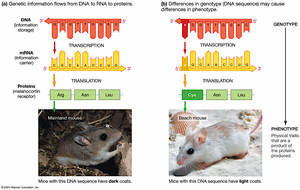
Genotype: Determined by DNA sequence.
Phenotype: Determined by the proteins produced.
Linking Genotype to Phenotype
Differences in DNA sequence (genotype) can result in differences in protein structure and function (phenotype). Alleles of the same gene may produce proteins with different amino acid sequences, affecting traits.
Modifications to the Central Dogma
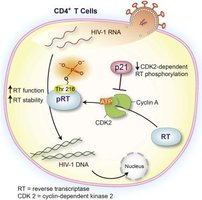
Some genes code for RNAs that are not translated into proteins but perform essential cellular functions. Additionally, certain viruses use reverse transcriptase to synthesize DNA from an RNA template, demonstrating RNA → DNA information flow.
16.3 The Genetic Code
Structure and Properties of the Genetic Code
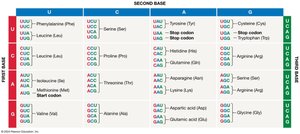
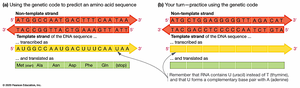
The genetic code specifies how sequences of nucleotides in DNA and RNA are translated into sequences of amino acids in proteins. The code is composed of triplets called codons, each specifying a particular amino acid.
Triplet Code: Each codon consists of three bases.
Start Codon: AUG (methionine) signals the start of protein synthesis.
Stop Codons: UGA, UAA, UAG signal the end of protein-coding sequence.
Redundancy: Most amino acids are specified by more than one codon.
Unambiguous: Each codon specifies only one amino acid.
Non-overlapping: Codons are read one at a time.
Nearly Universal: The code is conserved across most organisms.
Conservative: Codons for the same amino acid often share the first two bases.
Using the Genetic Code
Biologists can predict amino acid sequences from DNA or mRNA sequences and vice versa. Due to redundancy, multiple DNA sequences can code for the same protein.
16.4 Types and Consequences of Mutation
Definition and Types of Mutation
A mutation is any permanent change in an organism’s DNA, resulting in a modification of its genotype and potentially creating new alleles. Mutations can be classified as:
Point Mutations: Changes in one or a few bases.
Chromosome-Level Mutations: Larger-scale changes affecting chromosome structure or number.
Impacts of Point Mutations
Mutations can affect an organism’s fitness in various ways:
Beneficial: Increase fitness (survival and reproduction).
Neutral: No effect on fitness.
Deleterious: Decrease fitness.
Most point mutations are neutral or deleterious.
Mutations outside coding regions can affect gene expression and phenotype.

Summary Table: Types of Mutations and Their Consequences
Type of Mutation | Description | Consequence |
|---|---|---|
Point Mutation | Change in a single nucleotide | Can be silent, missense, nonsense, or frameshift |
Chromosome-Level Mutation | Large-scale changes (deletions, duplications, inversions, translocations) | Can affect many genes, often with major phenotypic effects |
Beneficial | Improves organism's fitness | May become more common in population |
Neutral | No effect on fitness | May persist without impact |
Deleterious | Reduces fitness | May be eliminated by natural selection |
Key Equations
Central Dogma:
Codon Translation:
Mutation Rate:
Additional info: Academic context was added to clarify the types and consequences of mutations, and to expand on the properties of the genetic code and the central dogma.
