 Indietro
Human Biology: Organ Systems, Body Cavities, and Anatomical Orientation
Guida di studio - Note intelligenti
 Appunti personalizzati basati sui tuoi materiali, ampliati con definizioni chiave, esempi e contesto.
Organ Systems & Body Orientations
Introduction
This study guide covers the foundational concepts of human biology, focusing on the organization of the human body from cells to organ systems, the major body cavities, tissue membranes, and the anatomical terminology used to describe body orientation and direction. Understanding these basics is essential for further study in biology, anatomy, and physiology.
Tissues of the Human Body
Major Tissue Types
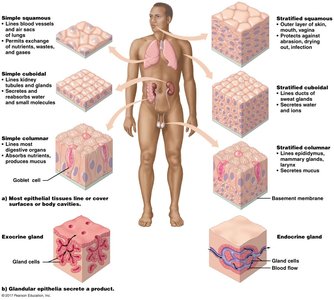
Tissues are groups of specialized cells that perform common functions. There are four major types of tissues in the human body:
Epithelial Tissue: Covers body surfaces, lines cavities, and forms glands. Functions include protection, absorption, secretion, and filtration.
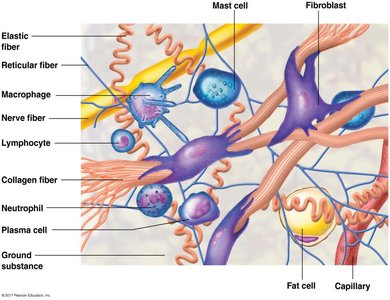
Connective Tissue: Supports, binds, and protects other tissues and organs. Includes fibrous tissues, cartilage, bone, blood, and adipose tissue.
Muscle Tissue: Responsible for movement. Types include skeletal, cardiac, and smooth muscle.
Nervous Tissue: Initiates and transmits electrical impulses to coordinate body activities.
Connective Tissue Details
Fibrous Connective Tissue: Provides support (reticular fibers), strength (collagen fibers), and flexibility (elastic fibers).
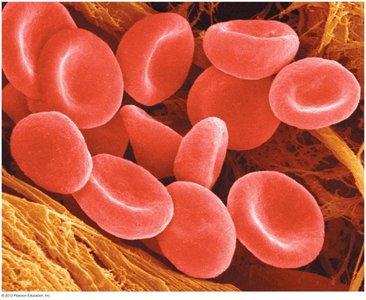
Specialized Connective Tissue: Includes cartilage, bone, blood, and adipose tissue, each with unique functions such as support, transport, and energy storage.
Organs and Organ Systems
Organs
An organ is a structure composed of two or more tissue types that work together to perform specific functions. For example, the heart contains cardiac muscle, smooth muscle, nervous, connective, and epithelial tissues, all contributing to its function of pumping blood.
Organ Systems
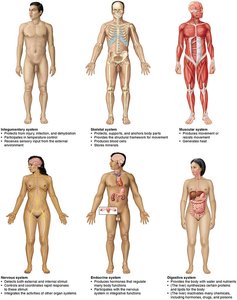
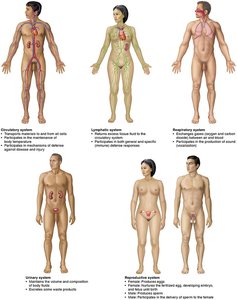
Organ systems are groups of organs that work together to perform major functions necessary for survival. There are eleven organ systems in the human body:
Organ System | Main Functions |
|---|---|
Integumentary | Protection, temperature regulation, sensation |
Skeletal | Support, movement, mineral storage, blood cell production |
Muscular | Movement, heat generation |
Circulatory | Transport of materials, temperature regulation, defense |
Lymphatic | Return of tissue fluid, immune defense |
Respiratory | Gas exchange, vocalization |
Nervous | Detection of stimuli, rapid response coordination |
Endocrine | Hormone production, regulation of body functions |
Digestive | Nutrient and water absorption, waste elimination |
Urinary | Fluid and electrolyte balance, waste excretion |
Reproductive | Production of gametes, nurturing offspring (female) |
Body Cavities
Major Body Cavities
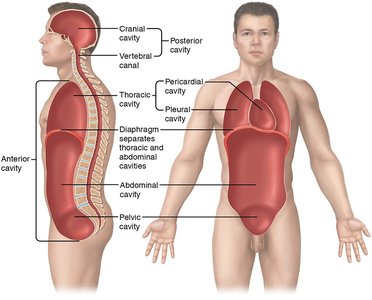
The human body contains several major cavities that house and protect internal organs:
Anterior (Ventral) Cavity: Includes the thoracic cavity (above the diaphragm, containing pleural and pericardial cavities) and the abdominal cavity (below the diaphragm).
Posterior (Dorsal) Cavity: Includes the cranial cavity (brain) and vertebral cavity (spinal cord).
Tissue Membranes
Types of Membranes
Tissue membranes are layers of connective tissue and epithelial cells that line body cavities and surfaces:
Serous Membrane: Lines and lubricates internal body cavities, reducing friction between organs.
Mucous Membrane: Lines passages open to the exterior (airways, digestive tract, reproductive passages); goblet cells produce mucus for lubrication and protection.
Synovial Membrane: Lines and lubricates joint cavities, secreting synovial fluid for smooth movement.
Cutaneous Membrane: The skin; protects the body from the external environment.
Anatomical Terms and Body Orientation
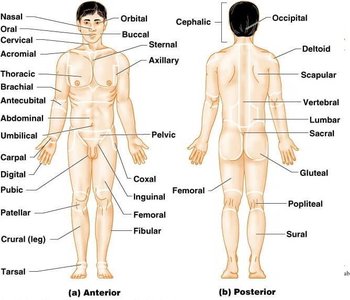
Body Regions and Landmarks
Specific terms are used to describe locations and regions of the body, aiding in precise communication in anatomy and medicine.
Orientation and Directional Terms
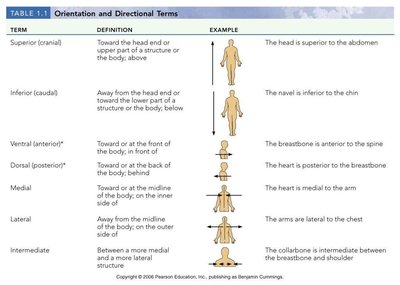
Directional terms describe the positions of structures relative to each other:
Term | Definition | Example |
|---|---|---|
Superior (cranial) | Toward the head or upper part | The head is superior to the abdomen |
Inferior (caudal) | Away from the head or toward the lower part | The navel is inferior to the chin |
Anterior (ventral) | Toward the front of the body | The breastbone is anterior to the spine |
Posterior (dorsal) | Toward the back of the body | The heart is posterior to the breastbone |
Medial | Toward the midline of the body | The heart is medial to the arm |
Lateral | Away from the midline | The arms are lateral to the chest |
Intermediate | Between a more medial and a more lateral structure | The collarbone is intermediate between the breastbone and shoulder |
Body Planes
Body planes are imaginary flat surfaces that divide the body for anatomical study:
Frontal (coronal) plane: Divides the body into anterior and posterior parts.
Transverse (horizontal) plane: Divides the body into superior and inferior parts.
Midsagittal (median) plane: Divides the body into equal right and left halves.
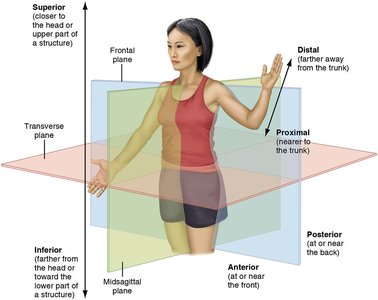
Application of Anatomical Terms
Understanding and using anatomical terms is essential for accurately describing locations, directions, and relationships of body parts in health sciences.
Additional info: Mastery of these foundational concepts is critical for success in advanced topics such as physiology, pathology, and clinical practice.
