 Indietro
Human Body Systems: Structure, Function, and Homeostasis
Guida di studio - Note intelligenti
 Appunti personalizzati basati sui tuoi materiali, ampliati con definizioni chiave, esempi e contesto.
Chapter 11: Human Body Systems
11.1 Animal Bodies are Organized into a Structural Hierarchy
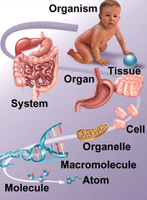
The human body is organized in a hierarchical structure, from atoms to the whole organism. Understanding this hierarchy helps explain how complex functions arise from simpler building blocks.
Anatomy: The study of the structure of an organism’s body parts.
Physiology: The study of the function of those parts.
Structural Hierarchy: Atoms → Molecules → Macromolecules → Organelles → Cells → Tissues → Organs → Organ Systems → Organism
Form and Function: The shape of a cell or organ often indicates its function.
11.2 The Human Body Contains Four Types of Tissues
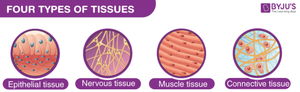
Tissues are groups of cells with similar structure and function. The human body contains four main types of tissues, each with specialized roles.
Connective Tissue: Binds and supports other tissues. Examples: tendons, ligaments, cartilage, bone, blood, adipose (fat).
Muscle Tissue: Bundles of long cells (muscle fibers) that contract to produce movement. Types: skeletal, smooth, cardiac.
Nervous Tissue: Communicates signals throughout the body, enabling sensation and response.
Epithelial Tissue: Covers surfaces of organs and the body, forming protective sheets.
Connective Tissue
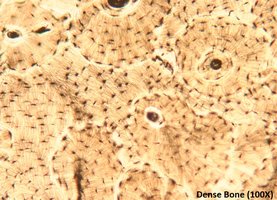
Connective tissue is a broad category that provides structural support and binds other tissues together.
Examples: Bone, blood, adipose, cartilage, tendons, ligaments.
Epithelial Tissue
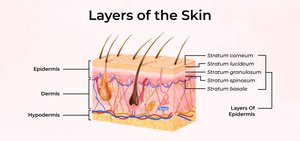
Epithelial tissue forms protective layers on body surfaces and lines internal organs.
Structure: Sheets of tightly packed cells.
Function: Protection, absorption, secretion.
11.3 Homeostasis: Maintaining a Constant Internal Environment
Homeostasis is the process by which the body maintains a stable internal environment for optimal function. Key variables include temperature, blood pH, and blood glucose.
Definition: The body’s “steady state” for optimum functioning.
Examples: Sweating to cool down, shivering to warm up, blood sugar regulation.
Disruption: Diseases like diabetes result from breakdowns in homeostasis.
11.4 Organ Systems
Organ systems are groups of organs that work together to perform major functions. The human body has 11 organ systems, each essential for survival and homeostasis.
Examples: Cardiovascular, digestive, respiratory, urinary, reproductive, endocrine, skeletal, muscular, nervous, immune, integumentary.
Organs: Structures made of two or more tissues that perform specific functions.
11.5 The Digestive System
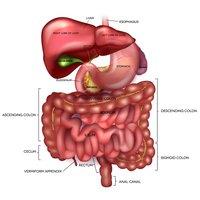
The digestive system extracts energy and nutrients from food. It consists of the alimentary canal and accessory organs.
Alimentary Canal: Mouth → Pharynx → Esophagus → Stomach → Small Intestine → Large Intestine → Anus
Accessory Organs: Salivary glands, liver, gallbladder, pancreas
Key Processes: Ingestion, digestion, absorption, elimination
11.8 The Respiratory System
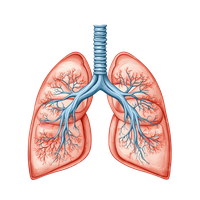
The respiratory system exchanges oxygen and carbon dioxide between the body and the environment. It includes the airway and lungs.
Airway: Nasal cavity, mouth, pharynx, trachea
Lungs: Contain alveoli for gas exchange
Function: Supplies oxygen for cellular respiration, removes carbon dioxide
11.9 The Circulatory System
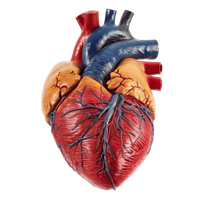
The circulatory system transports materials throughout the body, including oxygen, nutrients, and waste products. It consists of the heart and blood vessels.
Heart: Pumps blood through pulmonary and systemic circuits
Blood Vessels: Arteries, veins, capillaries
Blood: Contains plasma, red blood cells, white blood cells, platelets
11.12 The Immune System
The immune system protects the body from infectious diseases. It includes external defenses, inflammatory responses, and the lymphatic system.
External Defense: Skin, nose hairs, cilia
Inflammatory Response: Swelling after injury
Lymphatic System: Produces white blood cells and antibodies
11.14 The Endocrine System
The endocrine system regulates the body via hormones. Glands throughout the body secrete hormones that control metabolism, growth, reproduction, and homeostasis.
Key Glands: Thyroid, ovaries/testes, pancreas
Function: Regulation of blood glucose, metabolism, sexual traits
11.15 The Urinary System
The urinary system maintains water balance and removes waste from the body. The kidneys filter blood, and waste is excreted as urine.
Organs: Kidneys, ureter, bladder, urethra
Function: Excretion of waste, regulation of water and electrolytes
11.16 The Reproductive System
The reproductive system produces, stores, and delivers gametes (sperm and egg). It is essential for the continuation of the species.
Male and Female Organs: Testes, ovaries, uterus, etc.
Function: Fertilization, development of offspring
11.17 Human Development
Human development begins with fertilization, forming a zygote. The zygote divides and differentiates into a fetus, which grows and develops through three trimesters.
First Trimester: Organ formation
Second Trimester: Growth and feature development
Third Trimester: Preparation for birth
11.19 The Nervous System
The nervous system is the communication and coordination network of the body. It consists of the central nervous system (CNS) and peripheral nervous system (PNS).
CNS: Brain and spinal cord
PNS: Nerve cells throughout the body
Function: Sensation, integration, motor response
11.22 The Skeletal System
The skeletal system supports the body, protects organs, and anchors muscles. It consists of 206 bones divided into the axial and appendicular skeleton.
Axial Skeleton: Skull, spine, ribcage
Appendicular Skeleton: Shoulders, arms, hips, legs
Joints: Ball and socket, hinge
11.23 The Muscular System
The muscular system enables movement. It includes skeletal, smooth, and cardiac muscle. Only skeletal muscle is under voluntary control.
Muscle Fibers: Bundles of cells that contract to produce movement
Summary Table: Structural Hierarchy of the Human Body
Level | Description |
|---|---|
Atom | Smallest unit of matter |
Molecule | Group of atoms bonded together |
Macromolecule | Large complex molecules (e.g., proteins, DNA) |
Organelle | Cellular structures with specific functions |
Cell | Basic unit of life |
Tissue | Group of similar cells |
Organ | Structure made of multiple tissues |
Organ System | Group of organs working together |
Organism | Complete living being |
Summary Table: Four Types of Tissues
Tissue Type | Main Function | Examples |
|---|---|---|
Connective | Support, bind, protect | Bone, blood, cartilage |
Muscle | Movement | Skeletal, cardiac, smooth muscle |
Nervous | Communication | Brain, nerves |
Epithelial | Protection, absorption | Skin, lining of organs |
Key Equations
Blood pH: Normal range is
Blood Glucose (fasting):
Body Temperature:
Additional info:
Some images and tables were inferred to clarify tissue types and structural hierarchy.
Organ system interactions and malfunctions were summarized for exam relevance.
