 Indietro
Human Evolution and Primate Origins: Study Notes
Guida di studio - Note intelligenti
 Appunti personalizzati basati sui tuoi materiali, ampliati con definizioni chiave, esempi e contesto.
Human Evolution
Introduction to Human Evolution
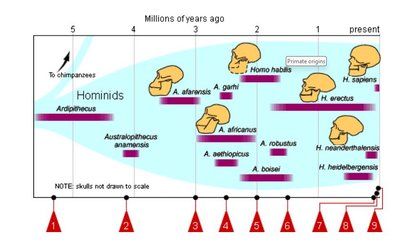
Human evolution is the gradual process by which modern humans developed from apelike ancestors over approximately six million years. This evolutionary journey began in Africa and is characterized by significant changes such as bipedalism (walking on two legs), increased brain size, tool use, and the development of language.
Key Evidence for Human Evolution: Fossil records, DNA analysis, archaeological findings, and comparative studies with living primates.
Major Milestones: Bipedalism, tool-making, complex social structures, and symbolic communication.
Primate Origins and Characteristics
Origins of Primates
Primates are an order of mammals that include lemurs, monkeys, apes, and humans. The earliest fossil primates date back to the Eocene epoch (~55 million years ago), though the lineage likely originated over 65 million years ago. Primates are closely related to the orders Scandentia (tree shrews) and Dermoptera (colugos).
General Primate Characteristics
Primates share a suite of anatomical and behavioral traits that distinguish them from other mammals.
Bunodont molars: Rounded cusps on molars, adapted for an omnivorous diet.
Shorter rostrum/tooth row: Reduced snout length compared to other mammals.
Enlarged orbits: Large eye sockets, indicating reliance on vision.
Postorbital bar: Bony ring around the eye, providing structural support.
Enlarged brain: Higher brain-to-body size ratio, supporting complex behaviors.
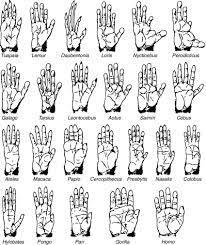
Grasping hands: Opposable thumbs and nails instead of claws, facilitating manipulation of objects.
Brachiation: Adaptations for swinging through trees, especially in apes.
Long gestation and lifespan: Fewer offspring, longer developmental periods, and extended parental care.
Complex social groups: Advanced social structures and communication.

Modern Primate Lineages
Suborder Strepsirrhini
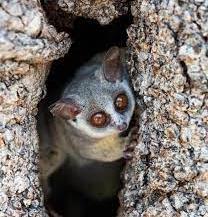
Strepsirrhines include lemurs, lorises, and galagos. They are characterized by a naked rhinarium (wet nose), comma-shaped nostrils, and a strong reliance on smell.
Examples: Lemurs (Madagascar), lorises (Asia and Africa), bush babies (Africa).

Suborder Haplorhini
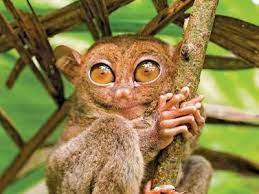
Haplorhines are 'dry-nosed' primates, including tarsiers, monkeys, and apes. They diverged from Strepsirrhines about 65 million years ago.
Key Features: Larger brain-to-body ratio, vision as the primary sense, upper lip not attached to nose or gum (allowing greater facial expression), and lack of the enzyme to produce Vitamin C.
Major Groups: Tarsiers, New World monkeys (Platyrrhini), Old World monkeys and apes (Catarrhini).
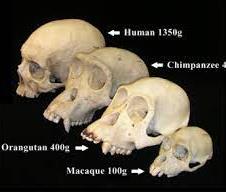
Clade Platyrrhini (New World Monkeys)
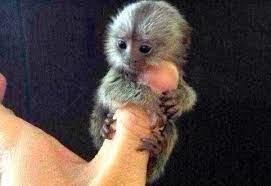
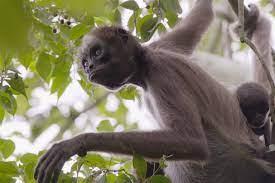
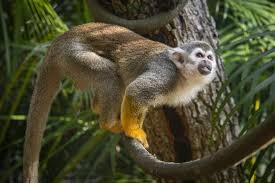
New World monkeys are found in Central and South America and are characterized by broad, outward-facing nostrils and prehensile tails in some species.
Examples: Marmosets, tamarins, capuchins, squirrel monkeys, howler monkeys, spider monkeys, saki monkeys.


Clade Catarrhini (Old World Monkeys and Apes)
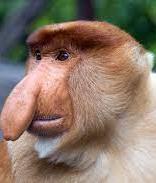
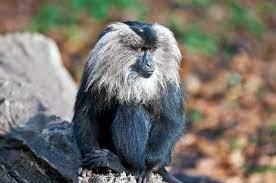
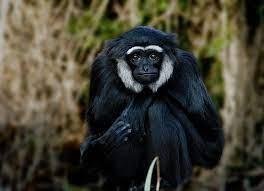
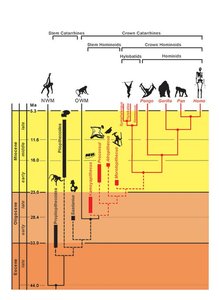
Catarrhines are 'hook-nosed' primates with downward-pointing nostrils. They diverged from New World monkeys about 38-40 million years ago and are found in Africa and Asia.
Families: Cercopithecidae (Old World monkeys), Hylobatidae (lesser apes/gibbons), Hominidae (great apes and humans).
Origins of Humans
Hominoids and Hominins
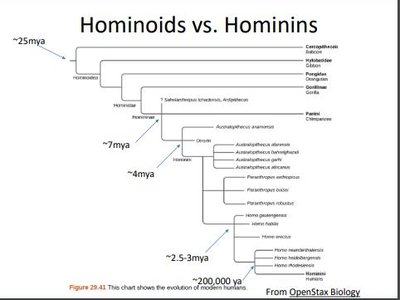
Hominoids are members of the superfamily Hominoidea, which includes all apes and humans. Hominins are a subgroup that includes modern humans and our direct ancestors after the split from the common ancestor with chimpanzees.
Apes: Large-bodied, tailless primates that appeared around 25 million years ago.
Key Fossil Genera: Sahelanthropus, Orrorin, Ardipithecus, Australopithecus, Homo.
Early Hominin Fossils
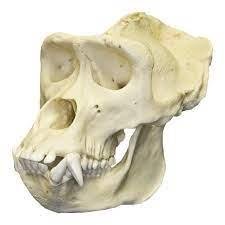
Early hominins show a mix of ape-like and human-like features. Sahelanthropus tchadensis (~7 mya) and Orrorin tugenensis are among the earliest known hominins. Ardipithecus provides evidence of bipedalism and woodland adaptation.
Australopithecus
Australopithecus species lived between 4 and 2 million years ago. They were bipedal but retained adaptations for climbing. Their brains were larger than those of earlier primates but smaller than modern humans.
Genus Homo
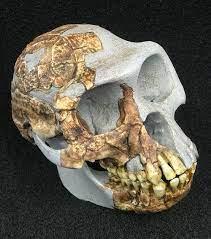
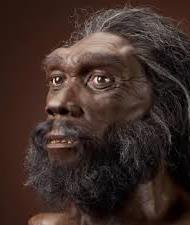
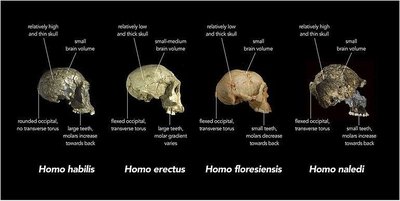
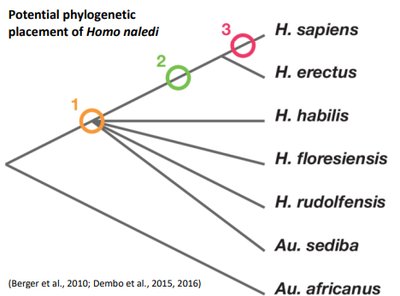
The genus Homo includes modern humans and closely related species. Key evolutionary trends include increased brain size, reduced jaw and tooth size, and more sophisticated tool use.
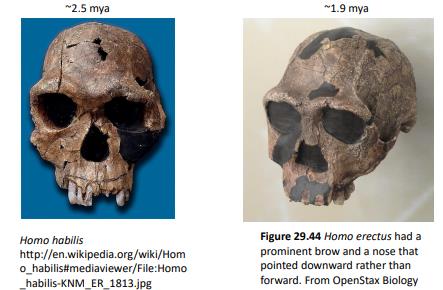
Homo habilis: (~2.5 mya) Known for using simple stone tools.
Homo erectus: (~1.9 mya) First to use fire and migrate out of Africa; had a prominent brow and a projecting nose.
Homo heidelbergensis: An ancestor to both Neanderthals and modern humans.
Homo sapiens: Modern humans, characterized by a high forehead, rounded skull, and complex culture.
Summary Table: Major Primate Groups
Group | Key Features | Examples |
|---|---|---|
Strepsirrhini | Wet nose, strong sense of smell, grooming claw | Lemurs, lorises, galagos |
Haplorhini | Dry nose, larger brain, vision-dominant | Tarsiers, monkeys, apes, humans |
Platyrrhini | New World, broad nostrils, prehensile tails | Marmosets, capuchins, howler monkeys |
Catarrhini | Old World, downward nostrils, no prehensile tails | Baboons, macaques, gibbons, great apes, humans |
Methods of Studying Human Evolution
Fossil Evidence: Provides physical remains of ancient species, allowing reconstruction of morphology and behavior.
DNA Analysis: Compares genetic material to determine evolutionary relationships.
Archaeology & Culture: Studies artifacts and cultural remains to infer behavior and cognitive abilities.
Comparative Anatomy: Examines similarities and differences among living primates to infer ancestral traits.
Conclusion
Human evolution is a complex, branching process involving many transitional species. The study of fossils, genetics, and comparative anatomy provides insight into how modern humans emerged from primate ancestors, highlighting the shared traits and unique adaptations that define our lineage.
