 Indietro
Human Evolution: Evidence, Phylogenies, and Primate Relationships
Guida di studio - Note intelligenti
 Appunti personalizzati basati sui tuoi materiali, ampliati con definizioni chiave, esempi e contesto.
Human Evolution: We Are Africans
Key Evidence for African Origin
Modern humans, Homo sapiens, originated in Africa, as supported by multiple lines of evidence including DNA sequences, fossil records, and the distribution of our closest ape relatives. Understanding these lines of evidence is crucial for interpreting human evolutionary history.
DNA Sequences: Genetic studies show that the common ancestor of all living humans lived in Africa approximately 200,000 years ago.
Fossil Hominids: Key fossils such as Ardipithecus ramidus ("Ardi") and Australopithecus afarensis ("Lucy") were discovered in Africa, indicating early upright walking and other human-like traits.
Closest Ape Relatives: Our closest living relatives, such as chimpanzees and gorillas, are native to Africa.
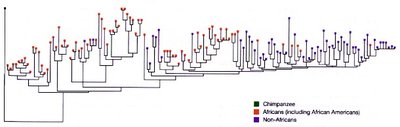
Example: Mitochondrial DNA studies (Vigilant et al., 1991) revealed greater genetic diversity in African populations than in the rest of the world, supporting the "Mitochondrial Eve" hypothesis.
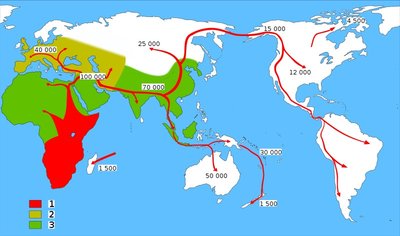
Application: Migration maps illustrate the spread of Homo sapiens from Africa to other continents, with estimated dates of arrival.
Phylogenetic Trees and Ancestral States
Interpreting Phylogenies
Phylogenetic trees are used to define evolutionary groups and reconstruct ancestral states. The principle of parsimony (Occam's Razor) guides the inference of ancestral traits by favoring the simplest explanation with the fewest evolutionary changes.
Monophyletic Groups: Groups that include a common ancestor and all its descendants.
Ancestral Traits: Traits present at the deepest nodes of a tree (oldest traits).
Derived Traits: Traits found at the shallowest nodes or only in extant species (most recent traits).
Parsimony: The most likely evolutionary scenario is the one requiring the fewest changes.
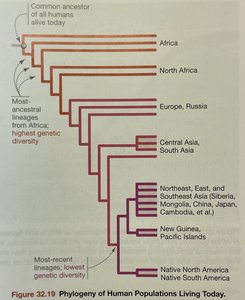
Example: Phylogenetic trees of human populations show that the most ancestral lineages are from Africa, with the highest genetic diversity.
mtDNA Trees and African Origin
Mitochondrial DNA (mtDNA) trees are used to infer the geographic origin of human populations. The tree most consistent with a recent African origin is the one where Africa is the ancestral state and only one migration event to Eurasia is required.
Paraphyletic African Populations: African populations are paraphyletic with respect to the rest of the world, indicating African ancestry is most parsimonious.
Lowest Genetic Diversity: Non-African populations have the lowest genetic diversity due to founder effects and bottlenecks during migration.
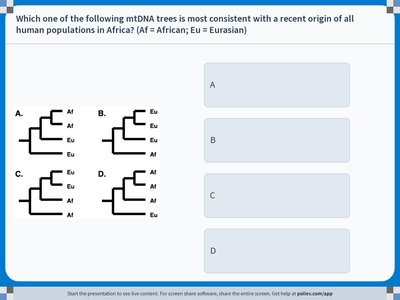
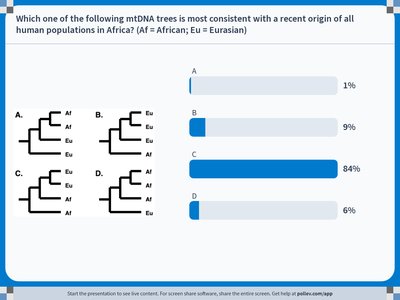
Example: The correct mtDNA tree (option C) shows Africa as the ancestral state, with only one migration to Eurasia, consistent with the principle of parsimony.
Fossil Evidence and Extinct Human Relatives
Key Fossil Hominids
Fossil discoveries in Africa provide crucial evidence for human evolution. These fossils clarify the traits and behaviors of early hominids and dispel misconceptions about our ancestry.
Ardipithecus ramidus ("Ardi"): Lived ~4.5 million years ago, close to the human-chimp split. Ardi was upright walking and had small male canines, indicating the common ancestor was not chimp-like.
Australopithecus afarensis ("Lucy"): Lived ~3.5 million years ago, with specialized adaptations for bipedalism.
Misconception: Humans did not evolve from extant chimpanzees; both species share a common ancestor.
Recently Extinct Homo Species
Several Homo species lived in Eurasia and Asia until recently, some of which hybridized with Homo sapiens.
Flores Man (Homo floresiensis): Extinct ~10,000 years ago, found in Indonesia, notable for small stature and brain size.
Denisovans: Extinct ~40,000 years ago, discovered in Siberia, contributed DNA to modern Asian and Native American populations.
Neanderthals (Homo neanderthalensis): Extinct ~40,000 years ago, hybridized with non-African Homo sapiens.
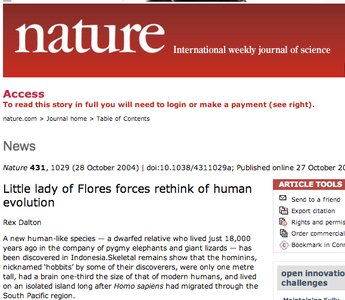
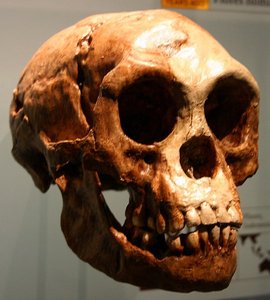
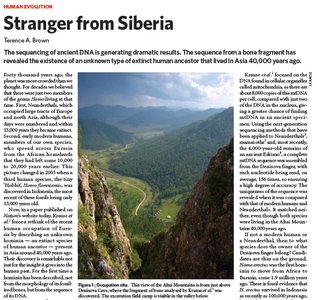
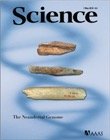
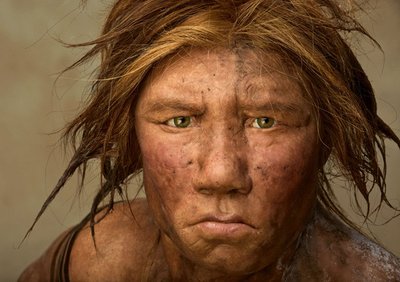
Example: Neanderthal genome sequencing revealed hybridization with non-African humans, and many people today carry Neanderthal DNA.
Primate Evolution and Adaptations
Primate Adaptations for Arboreal Life
Primates evolved several adaptations for life in the trees, which are still present in humans and other primates.
Binocular Vision: Provides depth perception for navigating complex environments.
Opposable Thumb: Enables grasping and manipulation of objects.
Rotating Shoulder Joint: Allows a wide range of arm movement, useful for climbing.
Major Primate Lineages
Primates are classified into several major lineages, including apes, Old World monkeys, New World monkeys, and lemurs. Understanding these groups helps clarify evolutionary relationships.
Apes: Includes great apes (humans, chimpanzees, bonobos, gorillas, orangutans) and lesser apes (gibbons).
Old World Monkeys: Found in Africa and Asia, e.g., baboons, macaques.
New World Monkeys: Found in Central and South America, e.g., spider monkeys, howler monkeys.
Lemurs: Native to Madagascar, represent an early branch of primate evolution.
Example: Loss of tails is a derived trait in apes and gibbons, while most monkeys retain tails.
Phylogenetic Relationships and Misconceptions
Humans did not evolve from extant apes or monkeys; instead, all extant primates are cousins, sharing common ancestors at various points in evolutionary history.
Great Ape Clade: Humans, Neanderthals, bonobos, chimpanzees, gorillas, orangutans.
Primate Clade: Includes all apes, monkeys, and lemurs.
Mammal Clade: Primates are one group within the larger mammal clade.
Challenge: Draw a scaled tree based on shared ancestry and divergence times.
Summary Table: Key Evidence for Human Evolution
Evidence Type | Description | Key Findings |
|---|---|---|
DNA Sequences | Analysis of mtDNA, Y chromosome, and whole genomes | Common ancestor in Africa; greater diversity in African populations |
Fossil Hominids | Discovery of early hominid fossils in Africa | Ardi and Lucy show upright walking and human-like traits |
Phylogenetic Trees | Reconstruction of evolutionary relationships | African origin is most parsimonious; extant lineages are not ancestral |
Hybridization | Genomic evidence of interbreeding | Neanderthal and Denisovan DNA present in modern humans |
Additional info:
Extinct species can be more ancestral or older, but extant species are not "primitive" or "less evolved".
Conservation and medical implications: Primates face threats from deforestation and hunting; diseases can be transmitted between humans and our closest relatives.
