 Indietro
Information Flow: From DNA to Protein, Mutations, and Inheritance in Mice
Guida di studio - Note intelligenti
 Appunti personalizzati basati sui tuoi materiali, ampliati con definizioni chiave, esempi e contesto.
Properties of Life and Information Flow
Fundamental Properties of Life
Living organisms share several key properties that distinguish them from non-living matter. These properties are essential for the maintenance, reproduction, and evolution of life.
Self-replication: The ability to reproduce and pass genetic information to offspring.
Information storage and processing: Organisms store instructions in DNA and follow them to maintain cellular functions.
Membrane delimitation: Cells are bounded by membranes that separate internal processes from the external environment.
Energy utilization: Life stores and uses energy to drive biological processes.
Regulation and response: Organisms control their internal functions and respond to environmental changes.
Evolution: Populations of organisms undergo heritable changes over time.
Central Dogma: DNA to Protein
Genetic Information Flow
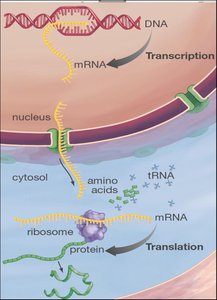
The central dogma of molecular biology describes the flow of genetic information within a biological system. It explains how DNA is transcribed into RNA, which is then translated into protein.
DNA (Deoxyribonucleic Acid): The molecule that stores genetic information.
Gene: A segment of DNA that codes for a specific protein.
Transcription: The process by which a gene's DNA sequence is copied to make messenger RNA (mRNA).
Translation: The process by which the sequence of nucleotides in mRNA is used to build a protein.
Key Steps:
DNA is transcribed into mRNA in the nucleus.
mRNA exits the nucleus and enters the cytosol.
Ribosomes read the mRNA and, with the help of tRNA, assemble amino acids into a polypeptide chain (protein).
Codons and the Genetic Code
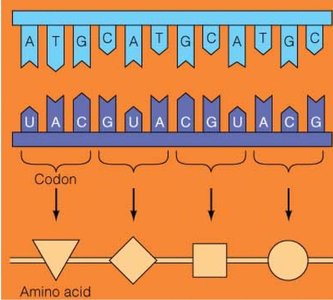
The genetic code is read in sets of three nucleotides called codons, each of which specifies a particular amino acid.
Codon: A sequence of three mRNA nucleotides that corresponds to a specific amino acid or stop signal during translation.
tRNA (transfer RNA): Brings the correct amino acid to the ribosome based on the codon-anticodon pairing.
Example: Transcription and Translation
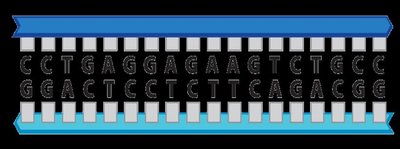
Consider the following DNA and its corresponding mRNA and protein sequence:
DNA template: CCTGAGGACAAGTCTCAGG
mRNA: CCUGAGGAGAAGUCUCUCC
Protein: PRO GLU GLU LYS SER ALA


Mutations and Their Effects
Types of Mutations
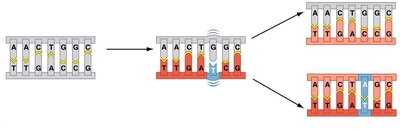
Mutations are changes in the DNA sequence that can affect protein structure and function. They occur randomly and can have various effects on an organism's fitness.
Point Mutation: A change in a single nucleotide.
Missense Mutation: Changes one amino acid in the protein.
Silent Mutation: Does not change the amino acid sequence due to redundancy in the genetic code.
Frameshift Mutation: Insertion or deletion of nucleotides that shifts the reading frame, altering all downstream codons.
Nonsense Mutation: Changes a codon to a stop codon, resulting in a truncated protein.
Mutation Consequences
Deleterious: Decreases fitness.
Neutral: No effect on fitness.
Beneficial: Increases fitness.
Most point mutations are neutral, some are deleterious, and a few are beneficial.
Example: Sickle Cell and Hemoglobin Mutations
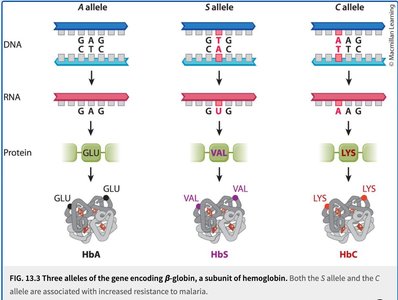
Different alleles of the β-globin gene result in different hemoglobin proteins, which can affect disease resistance and health.
Mutation Analysis Example
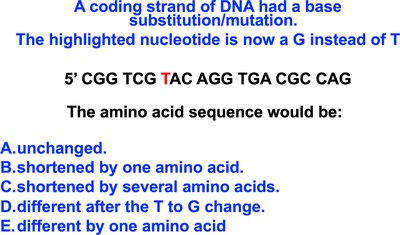
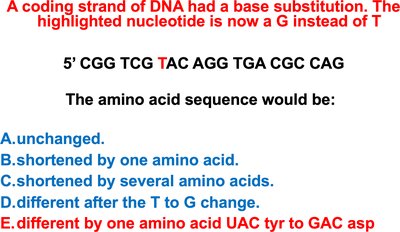
Consider a base substitution in a DNA coding strand:
Original: 5’ CGG TCG TAC AGG TGA CGC CAG
Mutation: TAC (Tyr) to GAC (Asp)
Clinical Example: Cystic Fibrosis Mutation
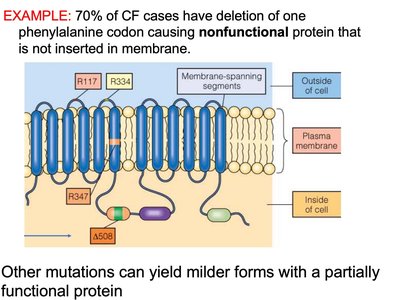
70% of cystic fibrosis (CF) cases are caused by the deletion of a phenylalanine codon, resulting in a nonfunctional protein that is not inserted into the membrane. Other mutations can yield milder forms with partially functional proteins.
Genes, Alleles, and Inheritance
Alleles and Genetic Variation
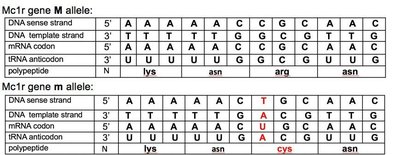
Alleles are alternative forms of a gene that arise by mutation. They can differ by as little as one nucleotide and are shuffled by processes such as crossing over, independent assortment, and random fertilization. However, mutation is the ultimate source of new alleles.
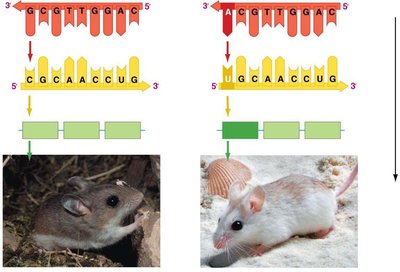
M allele and m allele of the Mc1r gene in mice differ by a single nucleotide, leading to different amino acids in the protein product.
Genotype to Phenotype: Example in Mice
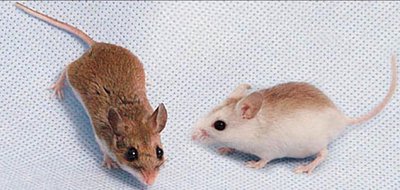
The Mc1r gene affects coat color in Florida Gulf coast mice. A single nucleotide change can result in a missense mutation, altering the protein and thus the phenotype (e.g., coat color adaptation to environment).
Mendelian Genetics and Pedigree Analysis
Inheritance Patterns
Mendelian genetics explains how traits are inherited through dominant and recessive alleles. For example, in mice, brown fur (B) is dominant over white fur (b).
Genotypic ratio for Mm x Mm cross: 1/4 MM, 1/2 Mm, 1/4 mm (1:2:1)
Phenotypic ratio for Mm x Mm cross: 3/4 dark, 1/4 light
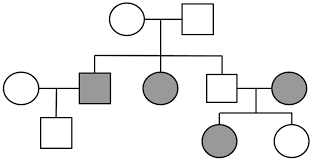
Pedigree Analysis
Pedigrees are used to track inheritance of traits through generations and to infer genotypes from phenotypes.
Genetic Code and Amino Acids
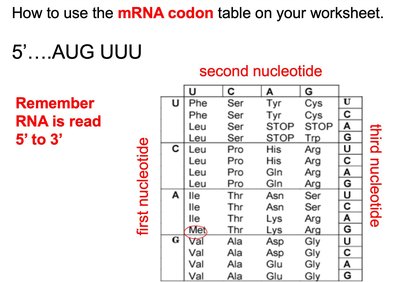
Using the Codon Table
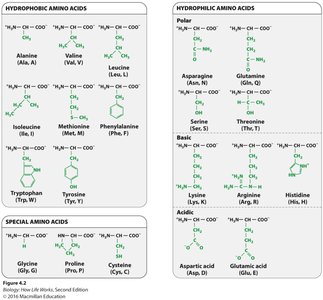
The mRNA codon table is used to translate nucleotide sequences into amino acids. RNA is read 5’ to 3’.
Summary Table: Types of Point Mutations
Type of Mutation | Description | Effect on Protein |
|---|---|---|
Missense | Single nucleotide change results in a different amino acid | May alter protein function |
Silent | Single nucleotide change does not alter amino acid | No effect on protein |
Frameshift | Insertion or deletion shifts reading frame | Alters all downstream amino acids |
Nonsense | Change creates a stop codon | Truncated, usually nonfunctional protein |
Exam 2 Topics Review
DNA replication
Transcription
Translation
Central dogma and information flow
Regulation of gene expression
Cell cycle and ploidy
Mitosis and meiosis
Mendel’s laws of inheritance
Mutations and their impact
Pedigrees and inheritance patterns
