 Indietro
Information Flow, Mutations, and Mendelian Genetics in General Biology
Guida di studio - Note intelligenti
 Appunti personalizzati basati sui tuoi materiali, ampliati con definizioni chiave, esempi e contesto.
Information Flow in Biological Systems
Properties of Life
Living organisms exhibit several fundamental properties, including self-replication, information storage and processing, membrane delimitation, energy management, environmental responsiveness, and evolutionary change. These properties are essential for the continuity and adaptation of life.
Self-replication: Ability to reproduce and pass genetic information to offspring.
Information storage: Genetic instructions are stored in DNA.
Membrane delimitation: Cells are bounded by membranes, separating internal and external environments.
Energy management: Cells store and utilize energy for metabolic processes.
Environmental response: Organisms control functions and respond to stimuli.
Evolution: Heritable changes occur over time, leading to adaptation.
Central Dogma: DNA, RNA, and Protein
Genetic Information Flow
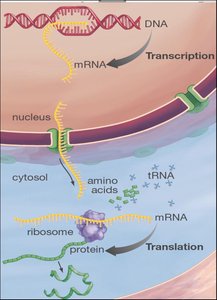
The central dogma describes the flow of genetic information from DNA to RNA to protein. DNA sequences encode genes, which are transcribed into messenger RNA (mRNA) and then translated into proteins. Changes in DNA sequence can alter protein function, affecting phenotype.
DNA: Information storage molecule; sequence of nucleotides forms genes.
Transcription: DNA is transcribed into mRNA in the nucleus.
Translation: mRNA is translated into a sequence of amino acids (protein) in the cytoplasm.
Protein: Functional molecules that determine physical traits.
Codons and Amino Acids
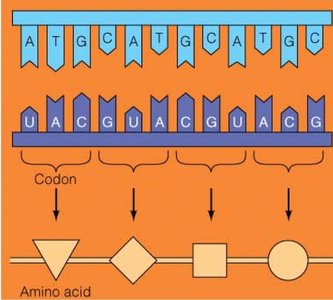
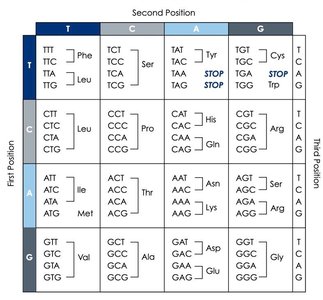
Each set of three nucleotides (codon) in mRNA specifies an amino acid. The sequence of codons determines the sequence of amino acids in a protein.
Codon: Three-nucleotide sequence in mRNA.
Amino acid: Building block of proteins; sequence determines protein structure and function.
Mutations and Their Effects
Types of Mutations
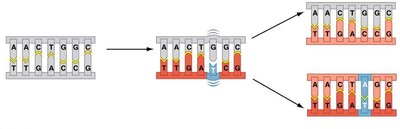
Mutations are changes in the DNA sequence. They can arise from replication errors or base pair mismatches. If not repaired, mutations become permanent and are the ultimate source of genetic variation.
Point mutations: Change in a single nucleotide.
Missense mutation: Alters an amino acid in the protein.
Silent mutation: Does not change the amino acid sequence due to redundancy in the genetic code.
Frameshift mutation: Shifts the reading frame, altering all subsequent codons.
Nonsense mutation: Changes a codon to a stop codon, truncating the protein.
Impact of Mutations
Mutations can have different effects on an organism's fitness:
Deleterious: Decrease fitness.
Neutral: No effect on fitness.
Beneficial: Increase fitness.
Most point mutations are neutral, some are deleterious, and a few are beneficial.
Mutation Example: Cystic Fibrosis
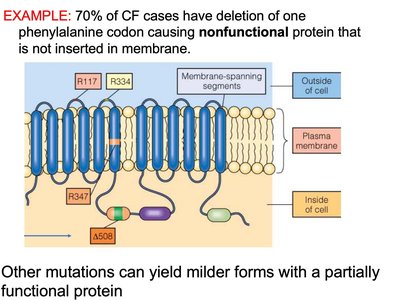
Mutations in the CFTR gene can cause cystic fibrosis. For example, deletion of a phenylalanine codon results in a nonfunctional protein that is not inserted into the membrane.
Alleles and Genetic Variation
Definition of Alleles
Alleles are alternative forms of a gene, often differing by one or more nucleotides. Mutation is the ultimate source of new alleles. Alleles can be shuffled by crossover, independent assortment, and random fertilization.
Allele: Variant form of a gene.
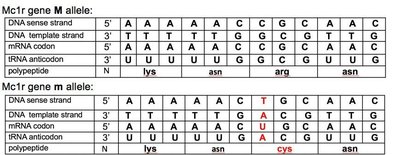
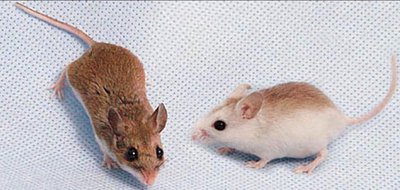
Example: M and m alleles of the Mc1r gene.
Allelic Variation and Phenotype
A single nucleotide change in a gene can result in a missense mutation, altering the protein and leading to a change in phenotype, such as coat color in mice.
Mendelian Genetics and Inheritance
Genotypic and Phenotypic Ratios
Mendel's laws describe inheritance patterns. For a single gene with dominant and recessive alleles, crossing heterozygotes (Mm x Mm) yields predictable genotypic and phenotypic ratios.
Genotypic ratio: 1:2:1 (MM:Mm:mm)
Phenotypic ratio: 3:1 (dominant:recessive)
Example: Fur color in mice, where B (brown) is dominant and b (white) is recessive.
Pedigree Analysis
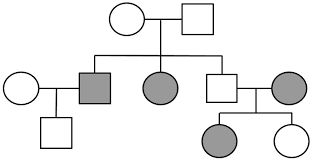
Pedigrees are used to track inheritance of traits across generations. Symbols represent affected and unaffected individuals, and genotypes can be inferred from phenotypes.
Gene Expression and Regulation
Transcription and Translation
Gene expression involves transcription of DNA to mRNA and translation of mRNA to protein. Regulation of gene expression ensures proper timing and quantity of protein production.
Transcription: DNA to mRNA.
Translation: mRNA to protein.
Using Codon Tables
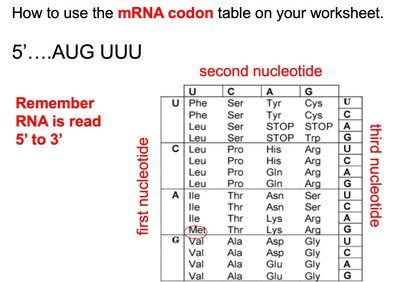
Codon tables are used to determine which amino acid is specified by each mRNA codon. RNA is read 5' to 3'.
Summary Table: Types of Mutations and Their Effects
Mutation Type | Effect on Protein | Example |
|---|---|---|
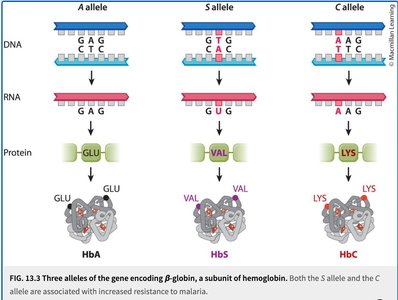
Missense | Changes one amino acid | Sickle cell anemia |
Silent | No change in amino acid | Redundancy in code |
Frameshift | Alters reading frame | Cystic fibrosis |
Nonsense | Creates stop codon | Truncated protein |
Summary Table: Alleles and Protein Effects
Allele | DNA Sequence | RNA Sequence | Protein |
|---|---|---|---|
A allele | GAG | GAG | GLU |
S allele | GTG | GUG | VAL |
C allele | AAG | AAG | LYS |
Exam Topics Review
DNA replication
Transcription
Translation
Central dogma and information flow
Regulation of gene expression
Cell cycle and ploidy
Mitosis
Meiosis and advantage of sexual reproduction
Mendel’s laws of inheritance
Mutations and their impact
Pedigrees and inheritance
