 Indietro
Information Flow, Mutations, and Mendelian Genetics in General Biology
Guida di studio - Note intelligenti
 Appunti personalizzati basati sui tuoi materiali, ampliati con definizioni chiave, esempi e contesto.
Properties of Life
Fundamental Characteristics
Living organisms exhibit several fundamental properties that distinguish them from non-living matter. These properties are essential for understanding biological systems and their evolution.
Self-replication: Organisms can reproduce themselves, passing genetic information to offspring.
Information storage and processing: Genetic instructions are stored in DNA and followed during cellular processes.
Membrane delimitation: Cells are bounded by membranes, which separate internal and external environments.
Energy management: Organisms store, use, and transform energy for cellular functions.
Environmental response: Cells control their functions and respond to environmental changes.
Evolution: Heritable changes occur over time, leading to adaptation and diversity.
Central Dogma: Information Flow in Cells
DNA, RNA, and Protein Synthesis
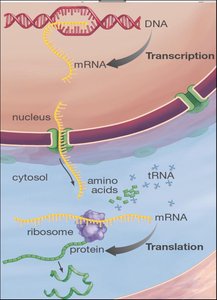
The central dogma of molecular biology describes the flow of genetic information from DNA to RNA to protein. This process is fundamental to gene expression and cellular function.
DNA: The genetic material that stores information in the sequence of nucleotides.
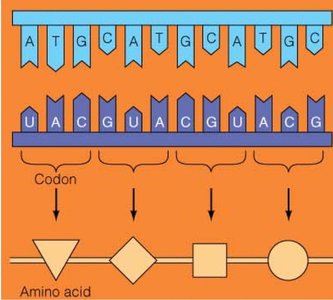
Transcription: The process by which a segment of DNA is copied into messenger RNA (mRNA).
Translation: The mRNA sequence is decoded by ribosomes to synthesize proteins, which are chains of amino acids.
Gene: A protein-coding DNA sequence that determines the sequence of amino acids in a protein.
Example: The sequence of nucleotides in DNA determines the sequence in mRNA, which in turn specifies the amino acid sequence in a protein.
Mutations and Their Effects
Types and Consequences of Mutations
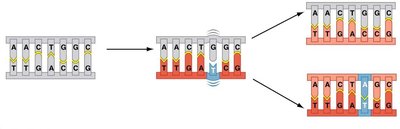
Mutations are changes in the DNA sequence that can arise from replication errors or base pair mismatches. If not repaired, these changes are inherited by subsequent generations.
Mutation: A change in DNA sequence, often occurring randomly.
Alleles: Alternative forms of a gene, differing by one or more nucleotides.
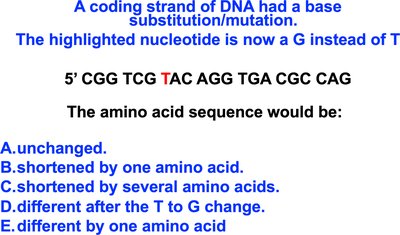
Point mutations: Changes in a single nucleotide, with varying effects:
Missense mutation: Changes an amino acid in the protein.
Silent mutation: Does not change the amino acid sequence due to redundancy in the genetic code.
Frameshift mutation: Alters the reading frame, affecting all subsequent codons.
Nonsense mutation: Converts a codon for an amino acid into a stop codon, truncating the protein.
Fitness impact: Mutations can be deleterious (decrease fitness), neutral (no effect), or beneficial (increase fitness).
Example: A single nucleotide change can result in a missense mutation, altering protein function and phenotype.
Gene Expression: From DNA to Protein
Transcription and Translation
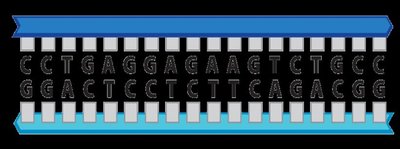
Gene expression involves the transcription of DNA into mRNA and the translation of mRNA into protein. The sequence of nucleotides in DNA is transcribed into complementary RNA, which is then translated into a specific sequence of amino acids.
Codon: A sequence of three nucleotides in mRNA that specifies an amino acid.
tRNA: Transfer RNA matches codons with their corresponding amino acids during translation.
Polypeptide: A chain of amino acids that forms a protein.
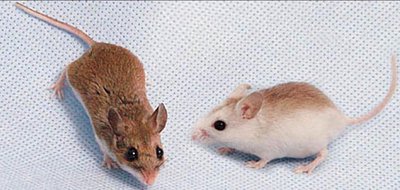
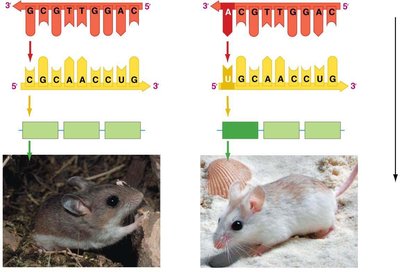
Example: The Mc1r gene in mice has different alleles (M and m) that result in different amino acid sequences and phenotypes.


Alleles and Phenotypic Variation
Genotype to Phenotype
Alleles are alternative forms of a gene that arise by mutation. The combination of alleles (genotype) determines the physical traits (phenotype) of an organism.
Genotype: The genetic makeup of an organism.
Phenotype: The observable traits resulting from the genotype.
Example: In beach and mainland mice, a single nucleotide change in the Mc1r gene alters coat color.
Mendelian Genetics and Inheritance
Single-Trait and Two-Trait Inheritance
Mendel's laws describe how traits are inherited from one generation to the next. The segregation and independent assortment of alleles explain the observed ratios in offspring.
Dominant allele: Expressed in the phenotype when present (e.g., B for brown fur).
Recessive allele: Expressed only when two copies are present (e.g., b for white fur).
Genotypic ratio: The proportion of different genotypes in offspring (e.g., 1:2:1 for MM:Mm:mm).
Phenotypic ratio: The proportion of observable traits (e.g., 3:1 for brown:white fur).
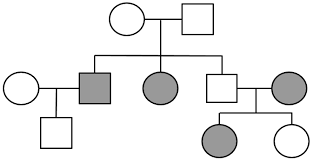
Example: Pedigree analysis can be used to determine potential genotypes from observed phenotypes.
Mutation Impact on Protein Function
Examples of Mutation Effects
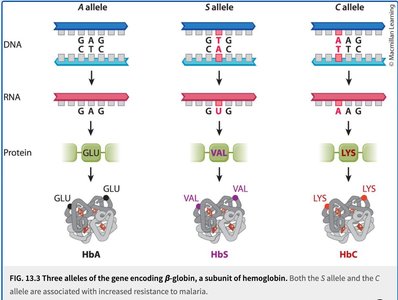
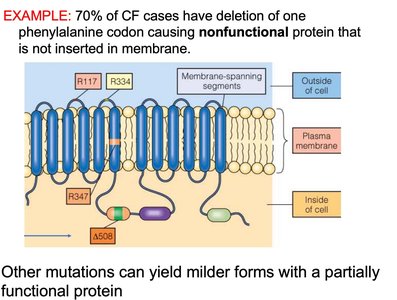
Mutations can alter protein function, sometimes resulting in disease or adaptation. For example, a deletion in the CFTR gene causes cystic fibrosis, while mutations in hemoglobin genes confer resistance to malaria.
Nonfunctional protein: A mutation may prevent proper insertion or function of a protein in the membrane.
Partially functional protein: Some mutations yield milder forms of disease.
Allelic variation: Different alleles of a gene can produce proteins with distinct properties.
Example: The β-globin gene has A, S, and C alleles, each resulting in different hemoglobin proteins and disease resistance.
Genetic Code and Amino Acids
Codon Tables and Amino Acid Properties
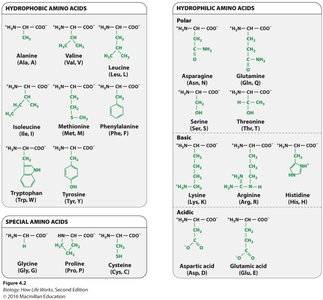
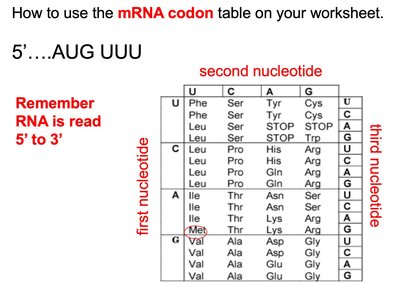
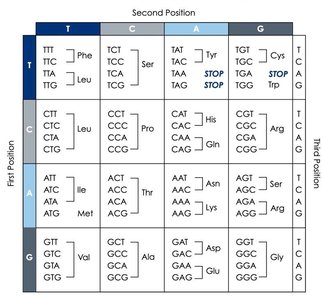
The genetic code is universal and redundant, allowing for silent mutations. Codon tables are used to translate mRNA sequences into amino acids. Amino acids have distinct properties that affect protein structure and function.
Codon table: Used to determine which amino acid corresponds to each mRNA codon.
Amino acid properties: Hydrophobic, hydrophilic, acidic, basic, and special amino acids.
Example: Use the codon table to translate mRNA sequences and predict protein structure.
Pedigrees and Probability in Genetics
Pedigree Analysis and Genotype Prediction
Pedigrees are diagrams that show the inheritance of traits across generations. They are used to predict genotypes and calculate probabilities of offspring inheriting specific traits.
Affected/unaffected: Individuals are marked based on phenotype.
Probability calculations: Used to estimate the likelihood of offspring inheriting a trait.
Example: Calculate the probability of affected offspring based on parental genotypes.
Summary Table: Types of Mutations and Their Effects
Mutation Type | Effect on Protein | Example |
|---|---|---|
Missense | Changes one amino acid | Sickle cell anemia |
Silent | No change in amino acid | Redundancy in genetic code |
Frameshift | Alters reading frame | Cystic fibrosis (ΔF508) |
Nonsense | Creates stop codon | Duchenne muscular dystrophy |
Summary Table: Mendelian Ratios
Cross | Genotypic Ratio | Phenotypic Ratio |
|---|---|---|
Mm x Mm | 1:2:1 (MM:Mm:mm) | 3:1 (dominant:recessive) |
BB x bb | All Bb | All dominant phenotype |
Additional info: These notes expand on brief points from the original materials, providing academic context and examples for clarity and completeness.
