 Indietro
Innate and Adaptive Immunity: Mechanisms and Cellular Components
Guida di studio - Note intelligenti
 Appunti personalizzati basati sui tuoi materiali, ampliati con definizioni chiave, esempi e contesto.
Immunity: Overview
Definition and Types
Immunity refers to the mechanisms organisms use to recognize, neutralize, and eliminate infectious organisms, foreign particles, and altered body cells. There are two main types of immunity: innate immunity and adaptive immunity. Innate immunity is present in all eukaryotes and provides immediate, non-specific defense, while adaptive immunity is found in vertebrates and offers specific, flexible responses with memory.
Innate Immunity
Physical Barriers
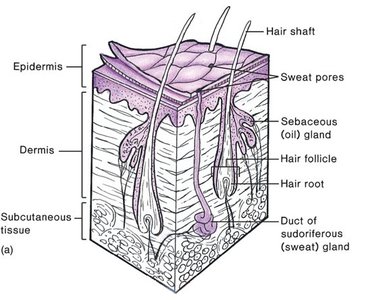
The first line of protection against pathogens consists of physical barriers such as the skin and mucous membranes. These structures prevent the entry of infectious organisms and foreign materials.
Skin: Acts as a tough, impermeable barrier.
Mucous membranes: Trap and remove pathogens from body surfaces.
Antimicrobial Peptides
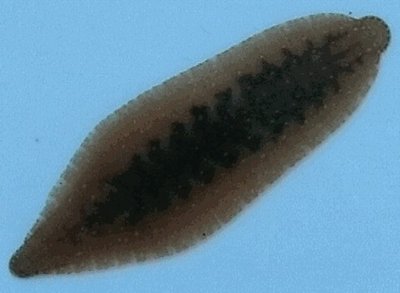
Most eukaryotes produce antimicrobial peptides that disrupt microbial membranes. Examples include theromacin and theromyzin from the leech Theromyzon tessulatum. In humans, neutrophils produce defensins, and saliva contains histatins.
Antimicrobial peptides: Short proteins that kill bacteria, fungi, and viruses.
Defensins: Produced by neutrophils, important in human innate immunity.
Histatins: Found in saliva, protect oral cavity.
Bacteriolytic Activity of Antimicrobial Peptides
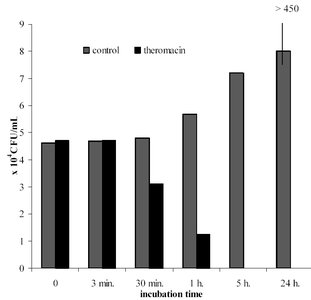
Antimicrobial peptides such as theromacin exhibit bacteriolytic activity, effectively reducing bacterial populations over time.
Bacteriolytic activity: Ability to lyse and kill bacteria.
Experimental evidence: Theromacin reduces Micrococcus luteus cell counts compared to control.
Phagocytosis
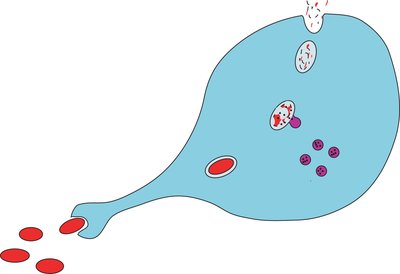
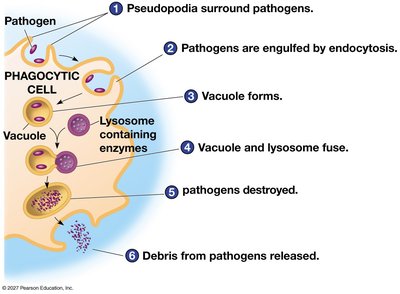
Phagocytosis is a process by which cells internalize large particles, including pathogens, cell fragments, and foreign materials. Most coelomates possess phagocytes, which are essential for innate immunity.
Phagocytes: Cells that engulf and digest pathogens.
Steps of phagocytosis: Recognition, engulfment, digestion, and release of debris.
Innate Cellular Defenses in Vertebrates
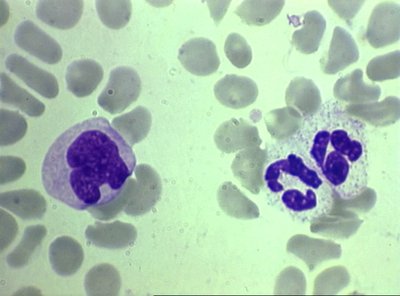
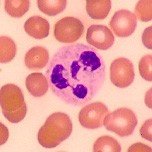
Macrophages and neutrophils are the two main types of phagocytic immune cells in vertebrates. They are crucial mediators of early bacterial killing during infection.
Macrophages: Engulf pathogens and present antigens.
Neutrophils: Most abundant leukocytes, first responders to infection.
Local Inflammatory Response
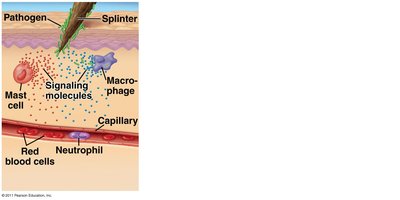
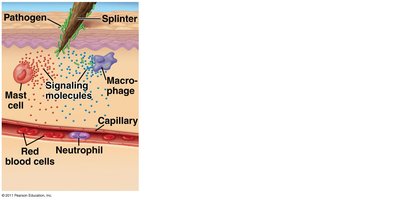
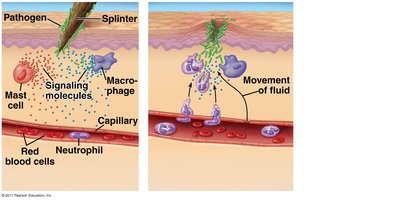
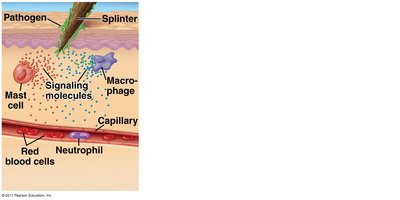
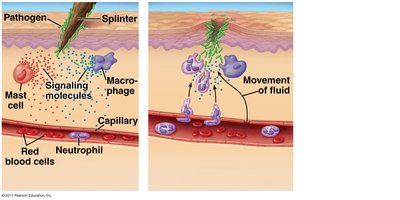
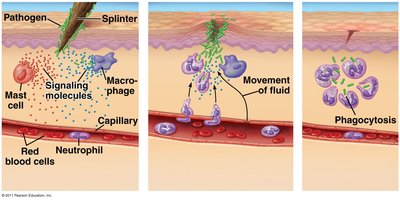
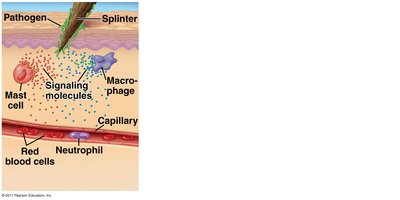
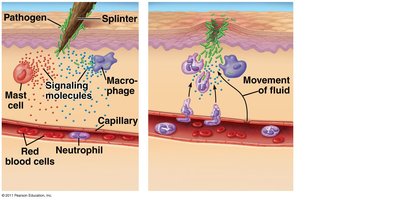
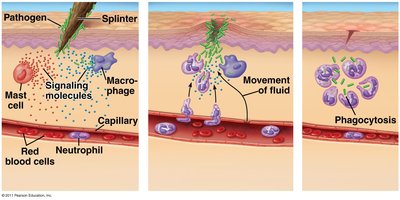
Inflammation is a complex response to injury or infection, involving the release of chemical signals, recruitment of neutrophils, and activation of phagocytes. The process includes adherence to vascular endothelium, extravasation, activation, and phagocytosis, followed by fluid accumulation (edema).
Chemical signals: Released by cells at the site of injury/infection.
Neutrophil adherence: Neutrophils stick to blood vessel walls.
Extravasation: Neutrophils move out of blood vessels into tissues.
Activation and phagocytosis: Neutrophils engulf pathogens.
Edema: Fluid accumulation in tissues.
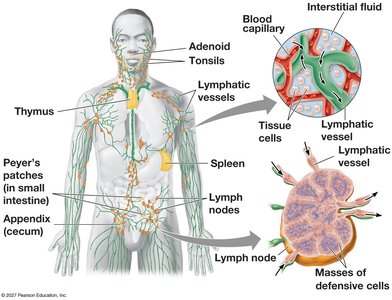
Lymphatic System
The human lymphatic system collects interstitial fluid and is integral to immune function. It includes lymph nodes, vessels, and organs such as the spleen and thymus.
Lymph nodes: Filter lymph and house immune cells.
Spleen: Filters blood and supports immune responses.
Thymus: Site of T cell maturation.
Adaptive Immunity
Characteristics
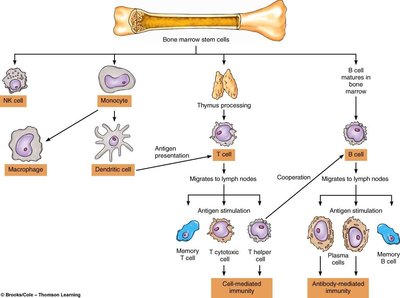
Adaptive immunity, also known as acquired or specific immunity, is characterized by flexible recognition of non-self entities, delayed but effective responses, and immunological memory. Previous exposure to a pathogen enables a faster response upon subsequent encounters.
B cells: Produce antibodies.
T cells: Evaluate intracellular proteins and mediate cellular immunity.
Antigens and Antibodies
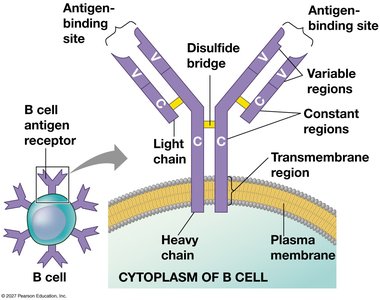
An antigen is any substance that elicits antibody synthesis or a specific cellular response. Antibodies (immunoglobulins) are peptide tetramers that bind antigens with high specificity.
Antigen: Triggers immune response.
Antibody structure: Composed of variable and constant regions, binds antigen.
Antibody Functions
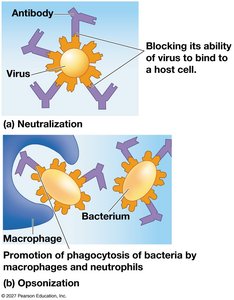
Soluble immunoglobulins (Ig) can act as opsonins, neutralize antigens, and promote phagocytosis by macrophages and neutrophils.
Neutralization: Blocks pathogen binding to host cells.
Opsonization: Enhances phagocytosis.
Antibody Diversity
Antibody variation is generated by rearrangement of the immunoglobulin (Ig) gene and hypermutation. These processes create millions of different antibody arrangements among humans.
Ig gene rearrangement: Permanent changes passed to daughter cells.
Hypermutation: Introduces further variability during V-J recombination.
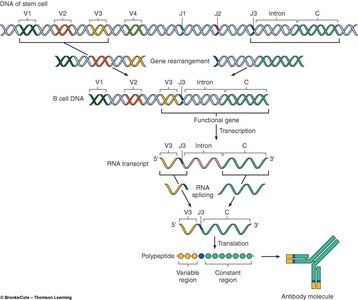
B Cell Tolerance
B cell tolerance is established in the bone marrow, where stromal cells present 'self' antigens to B cells. This process ensures that B cells do not react against the body's own tissues.
Self-tolerance: Prevents autoimmunity.
Bone marrow: Site of B cell maturation and tolerance induction.
*Additional info: B cell tolerance is critical for preventing autoimmune diseases.*
B Cell Activation
B cell activation leads to clonal expansion and antibody synthesis and secretion. Activated B cells differentiate into plasma cells that produce large quantities of antibodies.
Clonal expansion: Proliferation of B cells with identical antigen specificity.
Antibody synthesis: Production and secretion of antibodies.
*Additional info: B cell activation is often aided by T helper cells.*
T Cells and Antigen Presentation
T cells originate in the bone marrow and express diverse antigen receptors. They are activated by antigen presentation, which involves protein complexes on cell surfaces displaying fragments of intracellular proteins.
Major histocompatibility complex (MHC): Displays protein fragments for T cell recognition.
Antigen presentation: Essential for T cell activation.
*Additional info: T cell activation requires costimulatory signals for full response.*
T Cell Selection and Tolerance
T cells recognizing 'self' proteins are deleted in the thymus through positive and negative selection. Positive selection ensures T cells can recognize self-MHC, while negative selection eliminates those with high affinity for self-antigens.
Positive selection: Low-affinity self-ligands on thymic cortical epithelial cells.
Negative selection: High-affinity self-ligands on thymic medullary epithelial and bone marrow-derived cells.
*Additional info: This process prevents autoimmunity and shapes the T cell repertoire.*
Effector Functions of T Cells
Cytotoxic T lymphocyte (CTL) activation triggers the release of cytotoxic granules, leading to the destruction of infected or altered cells. Helper T cell activation contributes to B cell activation and antibody production.
CTLs: Kill infected cells.
Helper T cells: Aid B cell activation and antibody synthesis.
*Additional info: Adaptive immunity relies on cooperation between B and T cells.*
Interdependence of Innate and Adaptive Immunity
The innate and adaptive immune mechanisms are interdependent. Innate immunity provides immediate defense and shapes the adaptive response, while adaptive immunity offers specificity and memory.
Innate immunity: Rapid, non-specific, first line of defense.
Adaptive immunity: Specific, delayed, provides immunological memory.
*Additional info: Both systems are essential for effective protection against pathogens.*
