 Indietro
Inside the Cell: Structure and Function of Cellular Components
Guida di studio - Note intelligenti
 Appunti personalizzati basati sui tuoi materiali, ampliati con definizioni chiave, esempi e contesto.
Inside the Cell: Structure and Function of Cellular Components
Introduction to Cellular Structure
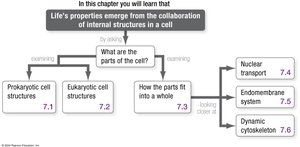
Cells are the fundamental units of life, and their internal structures collaborate to support the properties and functions of living organisms. Understanding the organization and function of cellular components is essential for grasping how life operates at the microscopic level.
Unified Cellular Theory
All living things are composed of one or more cells.
The cell is the basic unit of life.
All cells arise from pre-existing cells.
This theory forms the foundation of modern biology and emphasizes the universality of cellular structure and function across all forms of life.
Major Classes of Cellular Molecules
Carbohydrates: Provide chemical energy, carbon, structural support, and cellular identity.
Proteins: Perform most cellular functions, including catalysis, structure, and signaling.
Nucleic Acids: Store, transmit, and process genetic information (e.g., DNA and RNA).
Plasma Membrane (Lipids): Acts as a selectively permeable barrier, controlling the entry and exit of substances.
These molecules are present in all cells and perform similar roles across different organisms.
Types of Cells
Unicellular and Multicellular Organisms
Unicellular: Organisms composed of a single cell (e.g., most bacteria, archaea, many protists, and some fungi).
Multicellular: Organisms composed of many cells (e.g., some protists, fungi, plants, and animals).
Prokaryotic vs. Eukaryotic Cells
Prokaryotic Cells: Lack a nucleus and membrane-bound organelles; include Bacteria and Archaea.
Eukaryotic Cells: Possess a nucleus and various membrane-bound organelles; include protists, fungi, plants, and animals.
Overview of Prokaryotic Cell Structure
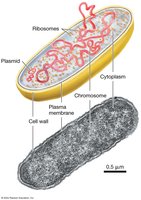
Prokaryotic cells are structurally simpler than eukaryotic cells but still perform all essential life functions.
Key Structures: Plasma membrane, cell wall, cytoplasm, ribosomes, chromosome (DNA), plasmids.
DNA Organization in Prokaryotes
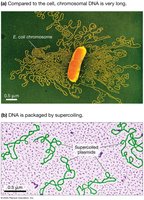
Prokaryotic DNA is typically a single, circular chromosome located in the nucleoid region. DNA is highly compacted by supercoiling to fit within the cell.
Photosynthetic Membranes in Bacteria
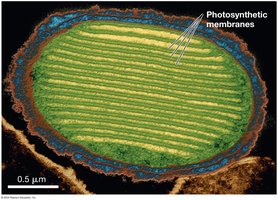
Some bacteria possess internal membranes specialized for photosynthesis, increasing the surface area for light absorption and energy conversion.
Overview of Eukaryotic Cell Structure
Eukaryotic cells are characterized by compartmentalization, with membrane-bound organelles that perform specialized functions.
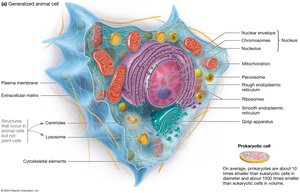
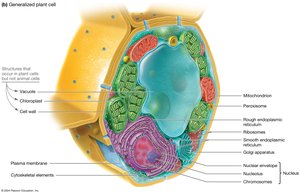
Major Eukaryotic Cell Components
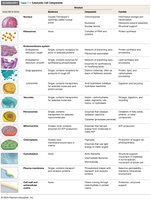
The following table summarizes the main organelles, their structure, and their functions in eukaryotic cells:
Organelle | Structure | Component(s) | Function |
|---|---|---|---|
Nucleus | Large, double membrane with pores | Chromosomes, nucleolus | Information storage and transmission; ribosome subunit assembly |
Endomembrane System | Network of membranes (ER, Golgi, vesicles) | Rough ER, Smooth ER, Golgi apparatus, vesicles | Protein and lipid synthesis, processing, and transport |
Ribosomes | Complexes of RNA and protein | Large and small subunits | Protein synthesis |
Mitochondria | Double membrane, own DNA | Enzymes for ATP production | ATP synthesis (cellular respiration) |
Chloroplasts (plants/algae) | Double membrane, internal thylakoids, own DNA | Pigments, enzymes for photosynthesis | Photosynthesis |
Lysosomes | Single membrane, acidic interior | Digestive enzymes | Digestion and recycling |
Peroxisomes | Single membrane | Enzymes for oxidation | Oxidation of fatty acids, detoxification |
Vacuoles (plants/fungi) | Large, single membrane | Varied (pigments, toxins, water, etc.) | Storage, digestion, and recycling |
Cytoskeleton | Protein fibers | Actin filaments, microtubules, intermediate filaments | Structural support, movement |
Plasma Membrane | Phospholipid bilayer with proteins | Transport and receptor proteins | Selective permeability, communication |
Cell Wall (plants, fungi, some protists) | Rigid, varies by organism | Cellulose (plants), chitin (fungi) | Protection, structural support |
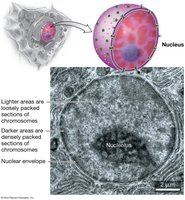
The Nucleus
The nucleus is the control center of the cell, storing genetic material and coordinating activities such as growth and reproduction.
Ribosomes
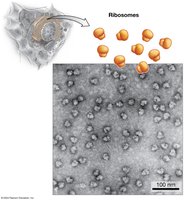
Ribosomes are the molecular machines responsible for protein synthesis. They can be free in the cytoplasm or bound to the rough endoplasmic reticulum.
Endoplasmic Reticulum (ER)
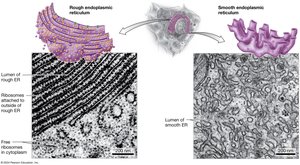
Rough ER: Studded with ribosomes; synthesizes proteins for secretion or membrane insertion.
Smooth ER: Lacks ribosomes; synthesizes lipids and detoxifies certain chemicals.
Golgi Apparatus
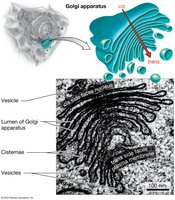
The Golgi apparatus modifies, sorts, and ships proteins and lipids received from the ER.
Lysosomes
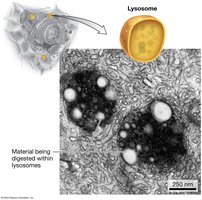
Lysosomes contain digestive enzymes that break down macromolecules, old organelles, and foreign substances.
Vacuoles
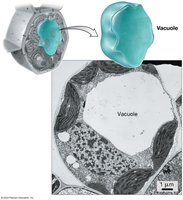
Vacuoles are large storage organelles found mainly in plant and fungal cells. They store water, nutrients, and waste products, and can also aid in digestion.
Peroxisomes
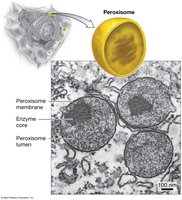
Peroxisomes are involved in oxidation reactions, breaking down fatty acids and detoxifying harmful substances.
Summary Table: Eukaryotic Cell Components
The following table summarizes the main eukaryotic cell components, their structure, and function (see above for details).
Additional info:
Some organelles, such as mitochondria and chloroplasts, contain their own DNA and are believed to have originated from endosymbiotic events.
The cytoskeleton is dynamic, allowing cells to change shape, move, and transport materials internally.
