 Indietro
Inside the Cell: Structure and Function of Prokaryotic and Eukaryotic Cells
Guida di studio - Note intelligenti
 Appunti personalizzati basati sui tuoi materiali, ampliati con definizioni chiave, esempi e contesto.
Inside the Cell
Introduction to Cells
Cells are the fundamental unit of life, forming the basis of all living organisms. Every cell contains essential biomolecules and structures that enable it to function, grow, and reproduce.
Proteins: Perform most cellular functions, including catalysis, structure, and signaling.
Nucleic acids: Store, transmit, and process genetic information (DNA and RNA).
Carbohydrates: Provide chemical energy, carbon, structural support, and cellular identity.
Plasma membrane: A selectively permeable barrier that separates the cell from its environment.
Cell Types and Domains of Life
Prokaryotes vs. Eukaryotes
Cells are classified based on morphology and phylogeny. The two main types are prokaryotic and eukaryotic cells.
Prokaryotes: Lack a membrane-bound nucleus. Includes Bacteria and Archaea.
Eukaryotes: Possess a membrane-bound nucleus. Includes Protists, Fungi, Plants, and Animals.
Based on phylogeny, all life is divided into three domains: Bacteria, Archaea (both prokaryotic), and Eukarya (eukaryotic).
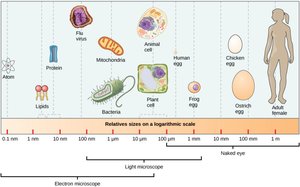
Characteristics of Eukaryotes
Range from microscopic algae to large multicellular organisms like redwood trees.
May be unicellular or multicellular; generally larger than prokaryotes.
Endosymbiosis Theory
Origin of Mitochondria and Chloroplasts
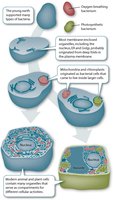
The endosymbiosis theory proposes that mitochondria and chloroplasts originated as free-living bacteria that were engulfed by ancestral eukaryotic cells, leading to a mutually beneficial relationship.
Both organelles contain their own DNA.
They synthesize their own small ribosomes.
They grow and divide independently of the cell cycle.
Bacterial & Archaeal Cell Structures
Prokaryotic Cell Overview
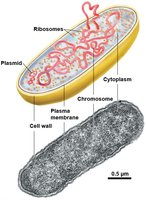
Prokaryotic cells have a simpler structure compared to eukaryotes but contain all necessary components for life.
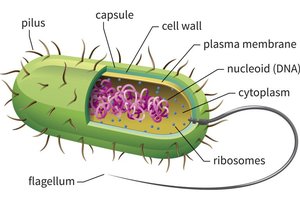
DNA: Usually a single, circular chromosome located in the nucleoid region (not membrane-bound).
Plasmids: Small, circular DNA molecules carrying non-essential genes.
Ribosomes: Sites of protein synthesis.
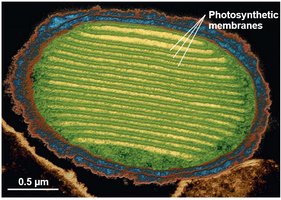
Photosynthetic membranes: In some species, internal membranes convert sunlight to chemical energy.
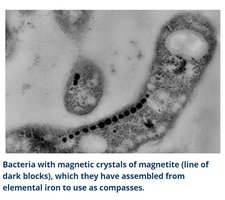
Organelles: Some bacteria have specialized, membrane-bound compartments.
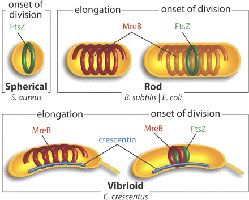
Cytoskeleton: Protein fibers that maintain cell shape and assist in division.
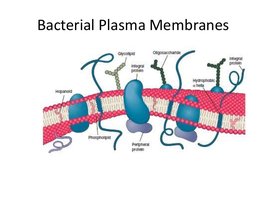
Plasma membrane: Phospholipid bilayer with embedded proteins.
Cell wall: Provides structural support, often made of peptidoglycan.
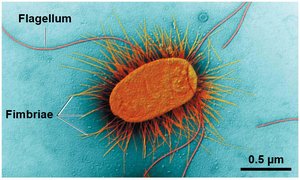
External structures: Flagella (movement) and fimbriae (attachment).
Prokaryotic DNA Organization
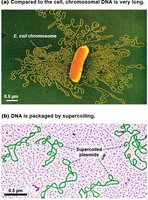
DNA is supercoiled to fit within the cell.
Genes code for polypeptides and essential functions.
Plasmids often carry genes for antibiotic resistance or other advantages.
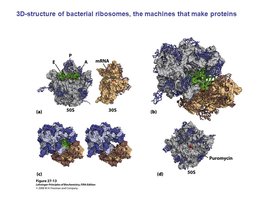
Ribosomes in Prokaryotes
Composed of RNA and proteins.
Function as macromolecular machines for protein synthesis.
Photosynthetic Membranes
Some prokaryotes have internal membranes derived from the plasma membrane.
These membranes convert sunlight into chemical energy.
Prokaryotic Organelles
Some bacteria contain organelles for specialized functions (e.g., storing calcium, orienting with magnetite crystals, organizing enzymes).
The Cytoskeleton in Prokaryotes
Protein fibers form the cytoskeleton, aiding in cell division and maintaining shape.
The Plasma Membrane
Composed of a phospholipid bilayer with integral and peripheral proteins.
Separates the cell's internal environment from the external environment.
The Cell Wall
Most prokaryotes have a tough, fibrous cell wall made of peptidoglycan.
Some species have an additional glycolipid layer outside the cell wall.
External Structures: Flagella and Fimbriae
Flagella: Long filaments that rotate to propel the cell.
Fimbriae: Needlelike projections that promote attachment to surfaces or other cells.
Eukaryotic Cell Structures and Their Functions
Overview of Eukaryotic Organelles
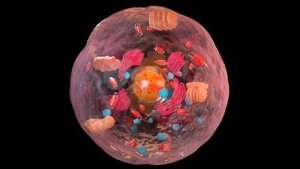
Eukaryotic cells contain numerous membrane-bound organelles, each with specialized functions:
Nucleus
Ribosomes
Endoplasmic Reticulum (Rough and Smooth)
Golgi Apparatus
Lysosomes
Vacuoles
Peroxisomes
Mitochondria
Chloroplasts (in plants and algae)
Cytoskeleton
Cell Wall (in plants, fungi, and some protists)
Benefits of Compartmentalization
Organelles increase the efficiency of cellular processes by separating incompatible reactions and localizing specific functions.
Compartmentalization allows for greater complexity and specialization within eukaryotic cells.

The Nucleus
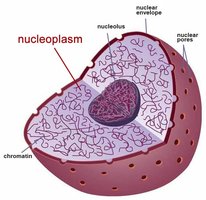
Enclosed by a double-membrane nuclear envelope with pore complexes for transport.
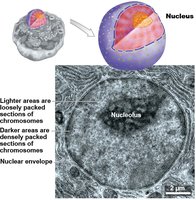
Contains chromosomes and the nucleolus (site of ribosomal RNA synthesis and ribosome assembly).
Chromosomes occupy distinct regions; DNA is densely packed at the periphery and loosely packed toward the interior.
Ribosomes
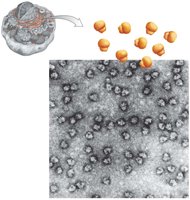
Complexes of RNA and protein; not membrane-bound.
Free ribosomes synthesize proteins for the cytosol; bound ribosomes (on ER) synthesize proteins for export or membranes.
Endoplasmic Reticulum (ER)
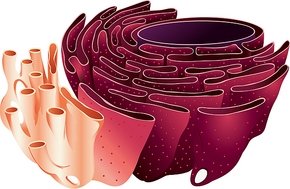
Rough ER (RER): Studded with ribosomes; synthesizes and processes proteins.
Smooth ER (SER): Lacks ribosomes; synthesizes lipids, detoxifies molecules, and stores calcium ions.
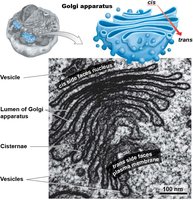
Golgi Apparatus
Stacked, flat membranous sacs (cisternae) with distinct cis (receiving) and trans (shipping) faces.
Processes, sorts, and ships proteins and lipids from the ER to their destinations via vesicles.
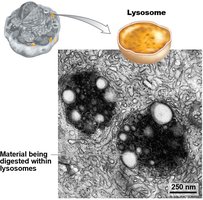
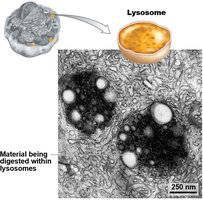
Lysosomes
Found only in animal cells; contain hydrolytic enzymes for digesting macromolecules.
Maintain acidic internal pH (about 5) via proton pumps.
Part of the endomembrane system (ER, Golgi, lysosomes).
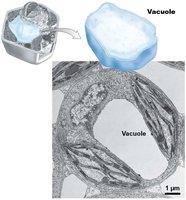
Vacuoles
Large, membrane-bound structures in plants and fungi.
Functions include storage of water, ions, pigments, proteins, and defensive compounds.
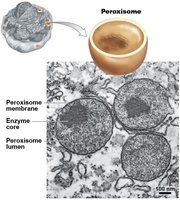
Peroxisomes
Originate from the ER; site of redox reactions (e.g., breakdown of fatty acids, detoxification of ethanol).
Contain catalase to break down hydrogen peroxide, a toxic byproduct.
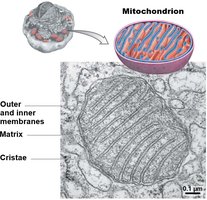
Mitochondria
Double-membraned organelles; inner membrane folded into cristae.
Site of ATP production via cellular respiration.
Contain their own DNA and ribosomes.
Chloroplasts
Found in plants and algae; site of photosynthesis.
Three membranes: outer, inner, and thylakoid (arranged in stacks called grana).
Contain their own DNA and ribosomes.
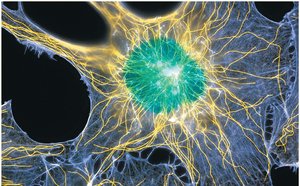
Cytoskeleton
Network of protein fibers that provide structural support, cell shape, movement, and organization of organelles.
Eukaryotic Cell Wall
Present in fungi, algae, and plants.
Composed of carbohydrate fibers embedded in a matrix of polysaccharides and proteins.
Cell Structure and Function Correlation
Specialization of Cell Structure
The structure of each cell component is closely related to its function. Cells with specialized roles have organelles and structures adapted to their needs (e.g., muscle cells packed with mitochondria for energy, secretory cells with abundant rough ER).
Nuclear Transport
Nuclear Envelope and Pore Complexes
The nuclear envelope is perforated with nuclear pore complexes, allowing regulated exchange of materials between the nucleus and cytosol.
Composed of about 30 different proteins.
The Endomembrane System
Overview
Includes the ER, Golgi apparatus, and lysosomes.
Responsible for the production, processing, and transport of proteins and lipids.
Lysosomal Recycling Pathways
Receptor-mediated endocytosis: Uptake of specific molecules via receptor binding and vesicle formation.
Phagocytosis: Engulfment of large particles or cells, forming a phagosome that fuses with a lysosome.
Autophagy: Digestion of the cell's own damaged organelles or cytoplasmic components.
The Dynamic Cytoskeleton
Types of Cytoskeletal Elements
Actin filaments (microfilaments): Smallest; involved in cell shape, movement, and muscle contraction.
Intermediate filaments: Provide structural support; include keratins and nuclear lamins.
Microtubules: Largest; hollow tubes made of tubulin dimers, involved in organelle movement, cell division, and as tracks for motor proteins.
Microtubule Organization and Function
Originate from the microtubule organizing center (centrosome in animals).
Serve as tracks for vesicle transport, mediated by motor proteins like kinesin and dynein.
Form the structural basis of cilia and flagella ("9 + 2" arrangement).
Motor Proteins and Movement
Kinesin: Moves vesicles along microtubules toward the plus end by hydrolyzing ATP.
Dynein: Drives the bending of cilia and flagella by moving along microtubules toward the minus end.
Cilia and Flagella
Both have a "9 + 2" arrangement of microtubules (axoneme) and are anchored by a basal body.
Flagella are usually few and long; cilia are numerous and short.
Movement is powered by dynein arms causing bending of the axoneme.
Table: Comparison of Prokaryotic and Eukaryotic Cell Structures
Feature | Prokaryotic Cells | Eukaryotic Cells |
|---|---|---|
Nucleus | Absent | Present (membrane-bound) |
DNA Structure | Single, circular chromosome; plasmids | Multiple, linear chromosomes |
Organelles | Few, rare membrane-bound organelles | Numerous, complex organelles |
Cell Wall | Usually present (peptidoglycan in bacteria) | Present in plants, fungi, some protists (cellulose, chitin, etc.) |
Size | Generally smaller (0.5–5 μm) | Generally larger (10–100 μm) |
Examples | Bacteria, Archaea | Protists, Fungi, Plants, Animals |
