 Indietro
Inside the Cell: Structure and Function of Cellular Components
Guida di studio - Note intelligenti
 Appunti personalizzati basati sui tuoi materiali, ampliati con definizioni chiave, esempi e contesto.
Inside the Cell
Cell Theory and Basic Cell Components
Cell theory states that all living organisms are composed of cells, which are the fundamental units of life. All cells share several essential components:
Proteins: Perform most cellular functions.
Nucleic acids: Store, transmit, and process genetic information.
Carbohydrates: Provide energy, carbon, structural support, and cellular identity.
Plasma membrane: Acts as a selectively permeable barrier.
Cell Types and Domains
Cells are classified based on morphology and evolutionary history:
Eukaryotes: Have a membrane-bound nucleus.
Prokaryotes: Lack a membrane-bound nucleus.
Phylogenetically, organisms are divided into three domains:
Bacteria (prokaryotic)
Archaea (prokaryotic)
Eukarya (eukaryotic)
Prokaryotic Cell Structures
Structural Components of Prokaryotic Cells
Prokaryotic cells possess distinctive structures and functions:
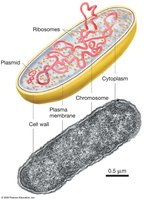
At least one chromosome
Numerous ribosomes for protein synthesis
Phospholipid composition varies between Bacteria (fatty acids) and Archaea (branched isoprenoid chains)
Cytoplasm: All contents within the cell membrane
Chromosome Organization and Plasmids
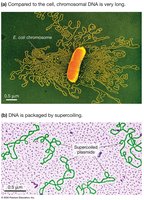
The chromosome is the most prominent structure in prokaryotic cells, typically a single, circular DNA molecule associated with proteins. Prokaryotes may also contain plasmids—small, circular, supercoiled DNA molecules.
Ribosomes and Protein Synthesis
Ribosomes are macromolecular machines composed of RNA and protein, responsible for synthesizing proteins. Bacterial and archaeal ribosomes are similar in size and function but differ in primary structure.
Cytoskeleton in Prokaryotes
Long, thin protein filaments form the cytoskeleton, essential for cell division and maintaining cell shape.
Internal Membrane Complexes in Photosynthetic Prokaryotes
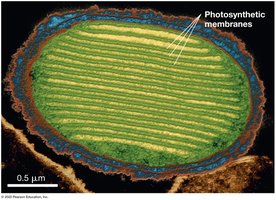
Photosynthetic prokaryotes possess internal membrane complexes that convert sunlight into chemical energy. These membranes are infoldings of the plasma membrane and contain enzymes and pigments necessary for photosynthesis.
Prokaryotic Organelles
Some bacteria have membrane-bound organelles for specialized functions, such as storing ions, holding magnetite crystals, or concentrating enzymes.
Cell Wall Structure
The cell wall forms a protective exoskeleton, composed of peptidoglycan in bacteria and glycolipids in some species. It provides shape and rigidity.
External Structures: Flagella and Fimbriae
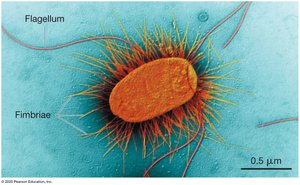
Prokaryotes interact with their environment using flagella (for movement) and fimbriae (for attachment).
Eukaryotic Cell Structures and Functions
Overview of Eukaryotic Cells
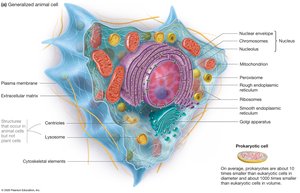
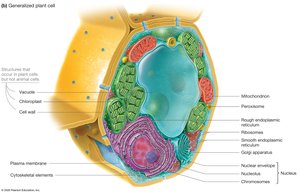
Eukaryotes include protists, fungi, plants, and animals, and may be unicellular or multicellular. Eukaryotic cells are generally larger (5–100 µm) than prokaryotic cells (1–10 µm).
Benefits of Organelles
Organelles compartmentalize the cell, allowing separation of incompatible reactions and increasing efficiency. The cytosol is the fluid portion outside organelles.
The Nucleus
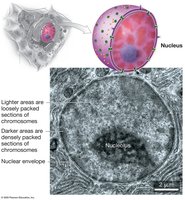
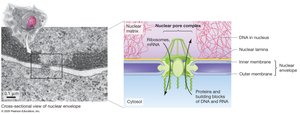
The nucleus is a large, membrane-bound compartment surrounded by a double-membrane nuclear envelope. It contains the nucleolus, where ribosomal RNA is synthesized and ribosome subunits are assembled. The nuclear lamina provides structural support.
Ribosomes
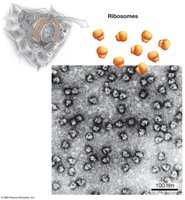
Ribosomes manufacture proteins and are either free in the cytosol or attached to the endoplasmic reticulum. They lack a membrane and are not considered organelles.
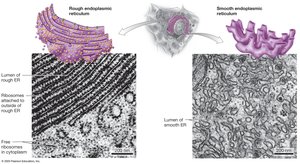
Endoplasmic Reticulum (ER)
The ER is a membrane-enclosed factory continuous with the nuclear envelope. It has two regions:
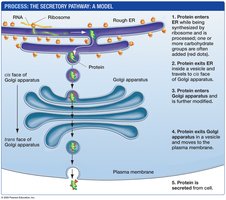
Rough ER (RER): Studded with ribosomes, synthesizes proteins for secretion, membrane insertion, or organelle targeting.
Smooth ER (SER): Lacks ribosomes, catalyzes reactions involving lipids, detoxifies molecules, and stores Ca2+ ions.
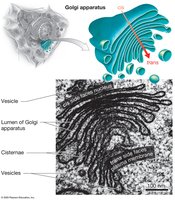
Golgi Apparatus
The Golgi apparatus processes, sorts, and ships proteins from the RER. It consists of stacked, flat membranous sacs (cisternae) with distinct cis (entry) and trans (exit) faces.
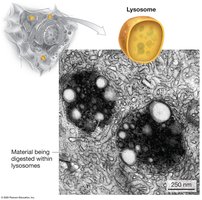
Lysosomes
Lysosomes are recycling centers in animal cells, containing acid hydrolases that digest macromolecules. They maintain a low internal pH via proton pumps.
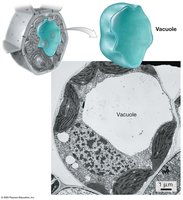
Vacuoles
Vacuoles are prominent in plant and fungal cells, serving as storage centers for water, ions, proteins, pigments, and defensive compounds.
Peroxisomes
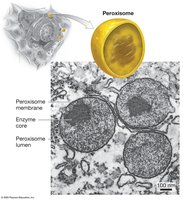
Peroxisomes are globular organelles that perform reduction–oxidation reactions and detoxify hydrogen peroxide.
Mitochondria
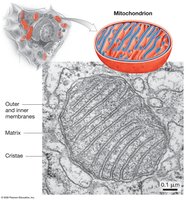
Mitochondria supply ATP to cells and have two membranes. The inner membrane is folded into cristae, enclosing the mitochondrial matrix. Mitochondria contain their own DNA and ribosomes, and can divide independently.
Chloroplasts
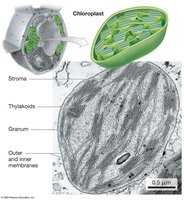
Chloroplasts are found in plant and algal cells, where photosynthesis occurs. They have three membranes, with thylakoids arranged in grana and surrounded by stroma. Chloroplasts contain their own DNA and ribosomes.
Cell Wall and Extracellular Matrix
Fungi, algae, and plants have a stiff cell wall outside the plasma membrane for structural support. Animal cells lack a cell wall and are supported by the extracellular matrix (ECM).
Cell Structure and Function Correlation
Variation in Cell Structure
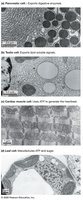
The structure and number of organelles vary according to cell function. For example, fat cells store lipids, while cardiac muscle cells are specialized for contraction.
Nuclear Transport
Nuclear Envelope and Pore Complex
The nuclear envelope separates the nucleus from the cytosol and is perforated by nuclear pore complexes, which regulate transport of molecules.
Nuclear Localization Signal (NLS)
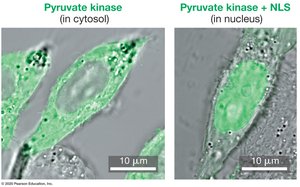
Proteins destined for the nucleus contain a nuclear localization signal (NLS), a 17-amino-acid sequence that acts as a molecular zip code for nuclear import.
The Endomembrane System
Secretory Pathway
The endomembrane system includes the ER, Golgi apparatus, and lysosomes, and is responsible for producing, processing, and transporting proteins, carbohydrates, and lipids. The secretory pathway starts in the RER and ends with secretion from the cell.
Pulse–Chase Experiment
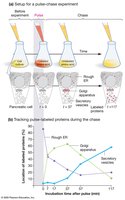
The pulse–chase experiment tracks protein movement through the endomembrane system, confirming the existence of the secretory pathway.
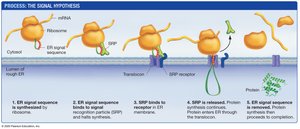
Signal Hypothesis
Proteins bound for the endomembrane system have an ER signal sequence that directs them to the RER, where they are processed and folded.
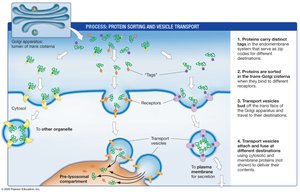
Protein Sorting and Vesicle Transport
Proteins are sorted in the Golgi apparatus and tagged for delivery to specific destinations via transport vesicles.
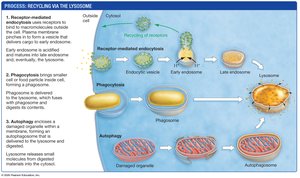
Lysosomal Recycling Pathways
Cells recycle materials via lysosomes through three pathways: receptor-mediated endocytosis, phagocytosis, and autophagy.
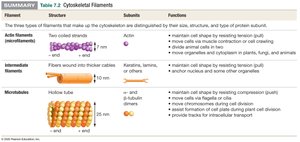
The Dynamic Cytoskeleton
Cytoskeletal Elements
The cytoskeleton is a network of protein fibers that maintains cell shape, organizes organelles, and enables movement. It consists of three major types:
Actin filaments (microfilaments): Smallest, made of actin, involved in movement and cell shape.
Intermediate filaments: Provide structural support, anchor organelles.
Microtubules: Largest, made of tubulin dimers, involved in chromosome separation and vesicle transport.
Actin Filament Function
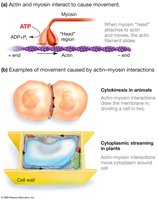
Actin filaments interact with myosin motor proteins to produce movement, including cytokinesis, cytoplasmic streaming, and cell crawling.
Microtubules and Centrosomes
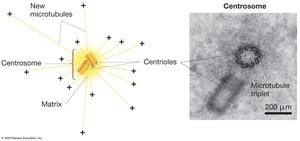
Microtubules originate from the microtubule organizing center (MTOC), called the centrosome in animal cells, and are essential for chromosome separation during cell division.
Microtubule-Based Vesicle Transport
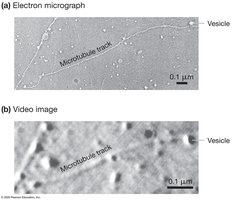
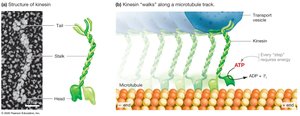
Vesicles move along microtubule tracks, facilitated by motor proteins such as kinesin, which convert ATP into mechanical energy.
Flagella and Cilia
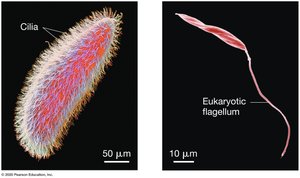
Flagella and cilia are cellular appendages that enable movement. Prokaryotic flagella rotate, while eukaryotic flagella and cilia have a "9+2" microtubule arrangement and move via bending.
Cell-to-Cell Junctions
Plant Cell Junctions: Plasmodesmata
Plasmodesmata are channels between plant cells that allow communication and transport of materials.
Animal Cell Junctions
Three types of junctions are common in animal cells:
Tight junctions: Prevent leakage of extracellular fluid.
Desmosomes: Fasten cells together into strong sheets.
Gap junctions: Provide cytoplasmic channels for communication.
Summary Table: Eukaryotic Cell Components
The following table summarizes the main components of eukaryotic cells, their structure, and function:
Component | Structure | Function |
|---|---|---|
Nucleus | Double membrane, nuclear pores | Stores genetic information, site of RNA synthesis |
Ribosomes | RNA and protein, no membrane | Protein synthesis |
Rough ER | Membrane with ribosomes | Protein synthesis and processing |
Smooth ER | Membrane without ribosomes | Lipid synthesis, detoxification |
Golgi apparatus | Stacked cisternae | Protein processing, sorting, shipping |
Lysosomes | Membrane-bound vesicles | Digestion and recycling |
Vacuoles | Large membrane-bound sacs | Storage, digestion, protection |
Peroxisomes | Membrane-bound, enzyme core | Redox reactions, detoxification |
Mitochondria | Double membrane, cristae | ATP production |
Chloroplasts | Double membrane, thylakoids | Photosynthesis |
Cell wall | Rigid outer layer | Structural support |
Additional info: This summary expands on the original notes with definitions, examples, and context for each cell structure and function, suitable for General Biology college students.
