 Indietro
Inside the Cell: Structure, Function, and Evolution of Eukaryotic Cells
Guida di studio - Note intelligenti
 Appunti personalizzati basati sui tuoi materiali, ampliati con definizioni chiave, esempi e contesto.
Inside the Cell
Overview of Eukaryotic Cell Structure
Eukaryotic cells are highly organized structures containing various membrane-bound organelles, each with specialized functions. The compartmentalization of cellular processes allows for greater efficiency and complexity compared to prokaryotic cells.
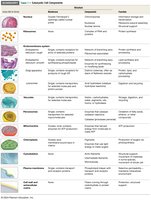
Nucleus: Contains genetic material (DNA) and acts as the control center of the cell.
Ribosomes: Sites of protein synthesis, found free in the cytoplasm or attached to the endoplasmic reticulum (ER).
Endomembrane System: Includes the ER (rough and smooth), Golgi apparatus, lysosomes, and vesicles, coordinating the synthesis, modification, and transport of biomolecules.
Mitochondria: Powerhouses of the cell, generating ATP through cellular respiration.
Chloroplasts: Present in plants and algae, responsible for photosynthesis.
Cell Membrane: Regulates the entry and exit of substances, maintaining homeostasis.
Mitochondria: Power-Generating Stations
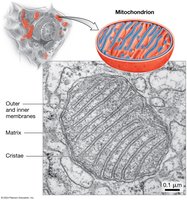
Mitochondria are double-membraned organelles responsible for converting the chemical energy stored in macromolecules into ATP, the cell's main energy currency. The inner membrane is highly folded into structures called cristae, increasing the surface area for energy production. The space enclosed by the inner membrane is the mitochondrial matrix, which contains enzymes, mitochondrial DNA, and ribosomes.
ATP Production: Mitochondria carry out aerobic respiration, producing ATP from glucose and oxygen.
Structure: Outer membrane, inner membrane, cristae, and matrix.
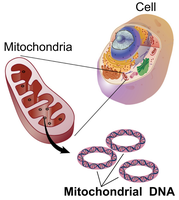
Genetic Material: Contains its own circular DNA, similar to prokaryotes.
Chloroplasts: Sugar-Manufacturing Centers
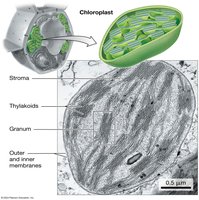
Chloroplasts are specialized organelles found in plants and algae, responsible for photosynthesis. They convert light energy into chemical energy by synthesizing sugars from carbon dioxide and water. Chloroplasts have a double membrane and contain internal stacks of membranes called thylakoids, which are organized into grana. The fluid surrounding the thylakoids is the stroma.
Photosynthesis: Chloroplasts capture light energy to produce glucose and oxygen.
Structure: Outer and inner membranes, thylakoids, grana, and stroma.
Genetic Material: Contains its own circular DNA.
Functional Analogs: The Factory Analogy
To better understand the roles of organelles, they can be compared to parts of a factory:
Nucleus: CEO/Main Office (information storage and management)
Ribosomes: Machines/Workers (protein synthesis)
Rough ER: Assembly Line (protein processing)
Smooth ER: Lipid Synthesis (lipid and steroid production)
Golgi Apparatus: Shipping Department (modification, sorting, and shipping of proteins and lipids)
Lysosomes: Janitors/Recycling Crew (waste breakdown and recycling)
Mitochondria: Power Plant (energy production)
Cell Membrane: Security Gate (regulates entry/exit)
Cell Structure Correlates with Function
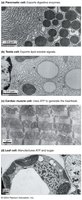
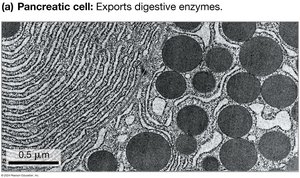
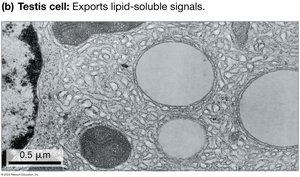
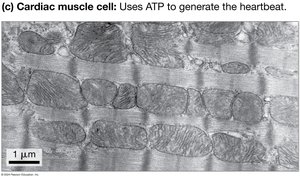
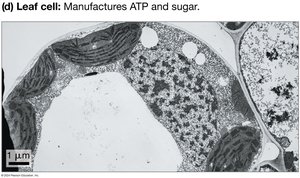
The abundance and specialization of organelles in a cell reflect its function. For example, cells that secrete proteins have extensive rough ER, while cells that synthesize lipids have abundant smooth ER. Muscle cells contain many mitochondria to meet high energy demands.
Pancreatic cells: Packed with rough ER for enzyme secretion.
Testis cells: Dominated by smooth ER for steroid hormone synthesis.
Cardiac muscle cells: Contain numerous mitochondria for ATP production.
Leaf cells: Rich in chloroplasts for photosynthesis.
The Endosymbiont Theory
Origin of Mitochondria and Chloroplasts
The endosymbiont theory proposes that mitochondria and chloroplasts originated as free-living prokaryotes that were engulfed by ancestral eukaryotic cells. This symbiotic relationship became permanent, leading to the evolution of modern eukaryotic cells.
First Event: An aerobic heterotrophic bacterium was engulfed, becoming the mitochondrion.
Second Event (in plants): A cyanobacterium was engulfed, becoming the chloroplast.
Evidence Supporting Endosymbiosis
Double Membranes: Both organelles have double membranes, consistent with engulfment.
Circular DNA: Mitochondria and chloroplasts contain their own circular DNA, similar to bacterial genomes.
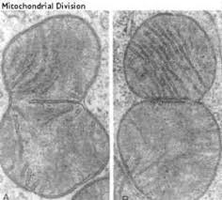
Binary Fission: Both organelles replicate independently of the cell by binary fission, like bacteria.
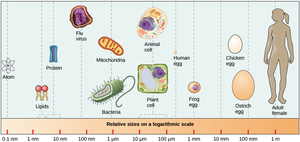
Size: Mitochondria and chloroplasts are similar in size to prokaryotic cells.
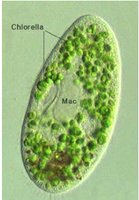
Current Endosymbiosis: Some modern protists have endosymbiotic relationships with photosynthetic bacteria.
Other Developments in Eukaryotes
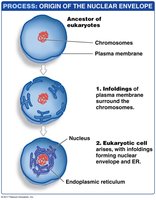
In addition to endosymbiosis, the evolution of eukaryotic cells involved the infolding of the plasma membrane, which led to the formation of internal compartments such as the nuclear envelope and endoplasmic reticulum.
Nuclear Envelope: Separates the genetic material from the cytoplasm, allowing for more complex regulation of gene expression.
Endomembrane System: Includes the ER, Golgi apparatus, and vesicles, facilitating intracellular transport and compartmentalization.
Prokaryotic vs. Eukaryotic Cells
Major Differences
Cells are classified into two main types: prokaryotic and eukaryotic. Prokaryotes include Bacteria and Archaea, while eukaryotes include Protists, Plants, Animals, and Fungi.
Prokaryotes: Lack membrane-bound organelles and a nucleus; DNA is circular and located in the nucleoid region; reproduce by binary fission.
Eukaryotes: Possess membrane-bound organelles, including a nucleus; DNA is linear and organized into chromosomes; reproduce by mitosis or meiosis.
Animal vs. Plant Cells
Animal and plant cells share many organelles but also have distinct differences:
Animal Cells: Contain centrosomes and lysosomes; lack cell walls and chloroplasts.
Plant Cells: Have cell walls (cellulose), chloroplasts, and a central vacuole; lack centrosomes and lysosomes.
Cell Walls in Different Organisms
Animals: No cell wall.
Bacteria: Cell wall made of peptidoglycan.
Archaea: Cell wall composed of various polysaccharides.
Fungi: Cell wall made of chitin.
Plants: Cell wall made of cellulose.
Summary Table: Key Differences Between Prokaryotic and Eukaryotic Cells
Feature | Prokaryotic Cells | Eukaryotic Cells |
|---|---|---|
Nucleus | No | Yes |
Membrane-bound organelles | No | Yes |
DNA shape | Circular | Linear |
Cell division | Binary fission | Mitosis/meiosis |
Cell wall composition | Peptidoglycan (Bacteria), various polysaccharides (Archaea) | Cellulose (Plants), chitin (Fungi), none (Animals) |
Practice Question Example
Which of the following components is found in a prokaryotic cell, but NOT necessarily in a eukaryotic cell?
(A) Ribosomes
(B) Cell wall
(C) Chromosomal DNA
(D) Cytoplasm
(E) Plasma membrane
Answer: (B) Cell wall (since not all eukaryotic cells have a cell wall, but most prokaryotes do).
Additional info: This study guide integrates content from Freeman et al., Chapter 7, and expands on the structure and function of eukaryotic organelles, the endosymbiont theory, and the differences between prokaryotic and eukaryotic cells. It is suitable for exam preparation in a General Biology course.
