 Indietro
Ch.30 pt1 Introduction to Animal Diversity: Structure, Function, and Evolution
Guida di studio - Note intelligenti
 Appunti personalizzati basati sui tuoi materiali, ampliati con definizioni chiave, esempi e contesto.
Introduction to Animal Diversity
Key Characteristics of Animals
Animals are a diverse group of multicellular, eukaryotic organisms that share several fundamental characteristics. Understanding these traits is essential for distinguishing animals from other life forms and for studying their evolutionary relationships.
Multicellularity: All animals are composed of multiple cells that are specialized for various functions.
Heterotrophy: Animals obtain energy by consuming other organisms, unlike plants which are autotrophic.
Cell Structure: Animal cells lack cell walls, which distinguishes them from plants and fungi.
Movement: Most animals have specialized tissues for movement, such as muscle tissue.
Reproduction: Animals typically reproduce sexually, though some can reproduce asexually.
Development: Embryonic development includes the formation of tissues and organs.
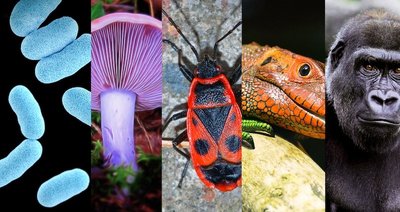
Relationship Between Structure and Function in Animal Body Plans
The structure of an animal's body plan is closely related to its function and adaptation to its environment. Body plans are defined by features such as symmetry, segmentation, and tissue organization.
Symmetry: Animals may exhibit radial symmetry (multiple mirror images around a central axis) or bilateral symmetry (one mirror image along a single plane).
Segmentation: Some animals have bodies divided into repeated segments, which can enhance mobility and specialization.
Tissue Organization: Specialized tissues perform distinct functions, contributing to the complexity of organ systems.
Phylogenetic Trees and Evolutionary Relationships
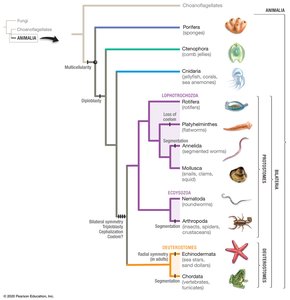
Phylogenetic trees are diagrams that illustrate the evolutionary relationships among different animal lineages. They help identify shared derived characteristics and trace the origin of major animal groups.
Monophyletic Clade: Animals form a monophyletic group, meaning they share a common ancestor.
Major Lineages: The main animal phyla include Porifera, Ctenophora, Cnidaria, Protostomes, and Deuterostomes.
Comparative Data: Fossils, morphology, development, and genomics are used to reconstruct evolutionary history.
Origin and Evolution of Animals
Choanoflagellates and the Opisthokonta Clade
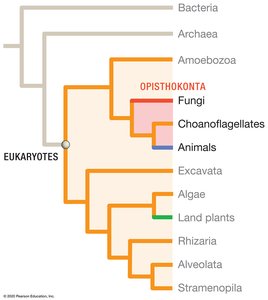
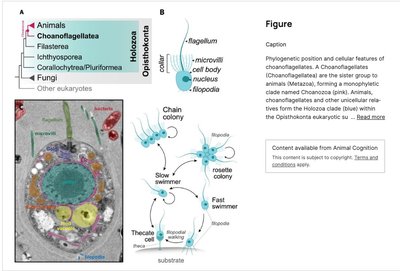
Animals originated from single-celled eukaryotes and are part of the Opisthokonta clade, which also includes fungi and choanoflagellates. Choanoflagellates are considered the closest living relatives to animals, providing insight into the evolution of multicellularity.
Common Ancestor: Animals and choanoflagellates share a common ancestor from approximately 900 million years ago.
Cellular Features: Choanoflagellates exhibit cell adhesion, communication, and signaling, which are key innovations for multicellular life.
Feeding: Both are heterotrophic and feed by phagocytosis.
Animal Body Plans and Tissues
Development of Tissues
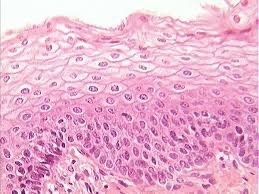
Tissues are collections of specialized cells that act as functional units. The development of tissues during embryogenesis is a key innovation in animal evolution.
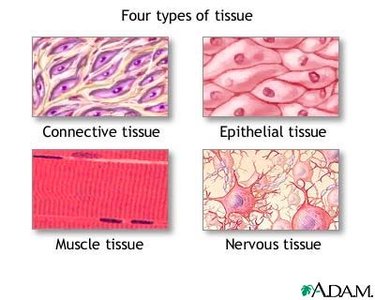
Types of Tissues: The four main types are epithelial, muscle, connective, and nervous tissue.
Function: Each tissue type performs specific functions, such as protection, movement, support, and communication.
Formation: Tissues form during the embryonic stage of development.
Exceptions: Sea Sponges
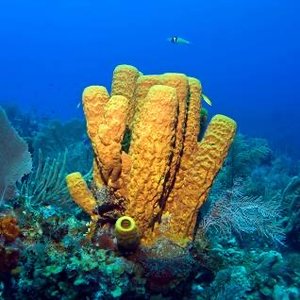
Sea sponges (Porifera) are an exception among animals as they lack true tissues but possess specialized cells.
Comparative Anatomy: Nervous Systems
Neuronal Cells
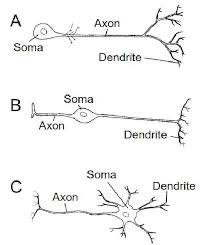
Most animals possess neuronal cells, but their structure and organization vary due to evolutionary adaptations. Neurons typically have three main parts: soma, axon, and dendrite.
Soma: The cell body containing the nucleus.
Axon: The long extension that transmits signals.
Dendrite: Branches that receive signals from other cells.
Embryonic Development and Germ Layers
Diploblasty
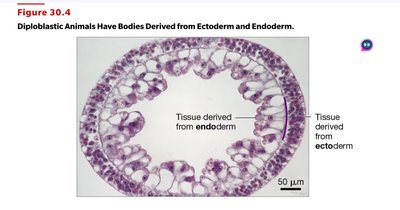
Diploblastic animals develop two primary germ layers during gastrulation: ectoderm and endoderm. These layers give rise to different tissues in the body.
Ectoderm: Forms the outer layer, including epidermis and nervous tissue.
Endoderm: Forms the inner layer, including the lining of the digestive cavity.
Complexity: Diploblastic animals form true tissues but generally lack complex organs.
Reproduction and Development
Types of Reproduction
Most animals reproduce sexually, but some can reproduce asexually. Fertilization can be internal or external, depending on the species.
Sexual Reproduction: Involves the fusion of male (sperm) and female (egg) gametes.
Asexual Reproduction: Offspring are produced without the fusion of gametes.
Fertilization: Internal fertilization occurs inside the body, while external fertilization occurs outside, often in aquatic environments.
Animal Body Plans: Symmetry and Organization
Symmetry
Symmetry refers to the balance and proportion of an organism's body around a central axis. It is a key feature in animal classification.
Radial Symmetry: Multiple mirror images around a central point (e.g., starfish).
Bilateral Symmetry: One mirror image along a single plane (e.g., humans).
Genetic Control of Body Plans
Homeotic Genes (Hox Genes)
Homeotic genes, specifically Hox genes, control the identity and arrangement of body regions during development. Their expression is highly conserved and critical for proper body plan formation.
Homeobox: Clusters of homeotic genes that regulate development.
Expression Order: The timing and order of gene expression determine the formation of specific structures.
Evolutionary Importance: Changes in Hox gene expression can lead to significant developmental consequences.
Animal Nutrition and Energy
Feeding Strategies
Animals are heterotrophs and exhibit various feeding strategies based on their ecological roles.
Carnivores: Eat other animals.
Herbivores: Eat plants.
Parasites: Feed off other animals slowly.
Omnivores: Eat both plants and animals.
Summary
Animals are a monophyletic group that inherited shared derived characteristics from a common ancestor. Over time, they have diversified through evolutionary adaptations in cell structure and function, energy and metabolism, and reproduction and development. This diversification has enabled animals to occupy a wide range of environments on Earth.
Monophyletic Group: All animals share a common ancestor.
Evolutionary Adaptations: Diversification in structure, function, and metabolism.
Ecological Diversity: Animals inhabit diverse environments due to their adaptations.
