 Indietro
Introduction to Biology and Chemistry of Life: Study Notes
Guida di studio - Note intelligenti
 Appunti personalizzati basati sui tuoi materiali, ampliati con definizioni chiave, esempi e contesto.
Introduction to Biology
What is Biology?
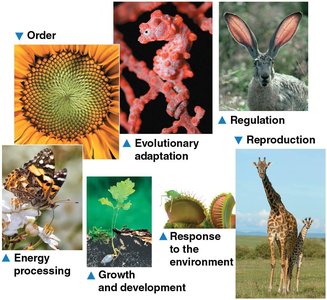
Biology is the scientific study of life, encompassing a vast scope of topics and phenomena. While life itself is difficult to define precisely, biologists recognize living things by the processes and characteristics they exhibit. The study of life is organized around five broad themes: organization, information, energy and matter, interactions, and evolution.
Organization: Living things exhibit complex but ordered structures.
Information: Life processes depend on the storage, transmission, and use of genetic information.
Energy and Matter: Organisms acquire, use, and transform energy and matter to sustain life.
Interactions: Living things interact with each other and their environments.
Evolution: Populations of organisms change over time through evolutionary processes.
Chemistry of Life
Elements, Compounds, and Chemical Bonding
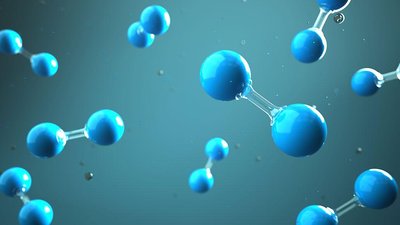
All living organisms are composed of matter, which is anything that has mass and occupies space. Matter is made up of elements, substances that cannot be chemically broken down into other substances. Compounds are substances formed from two or more elements combined in fixed ratios, and they often have properties distinct from their constituent elements.
Element: A pure substance consisting of one type of atom (e.g., oxygen, carbon).
Compound: A substance formed from two or more elements in a fixed ratio (e.g., H2O, NaCl).
Essential Elements: Elements required by organisms for healthy living and reproduction (e.g., O, C, H, N make up 96% of living matter).
Trace Elements: Required in minute amounts (e.g., Fe, I).
Toxic Elements: Some naturally occurring elements are toxic (e.g., arsenic).
Atomic Structure
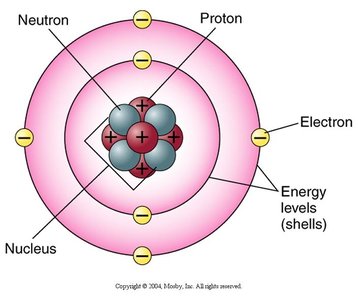
The chemical properties of an element are determined by the structure of its atoms. Atoms are the smallest units of matter that retain the properties of an element and are composed of subatomic particles: protons, neutrons, and electrons.
Protons: Positively charged particles found in the nucleus.
Neutrons: Electrically neutral particles found in the nucleus.
Electrons: Negatively charged particles found in orbitals around the nucleus.
Atomic Number and Atomic Mass
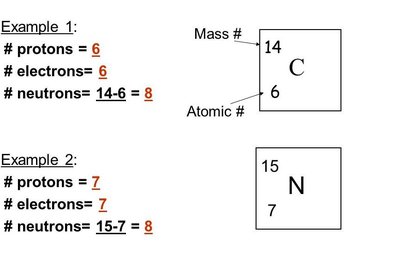
Each element is defined by its atomic number (number of protons). The atomic mass (or mass number) is the sum of protons and neutrons in the nucleus. Electrons contribute negligibly to atomic mass.
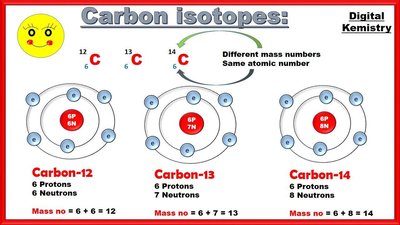
Atomic Number (Z): Number of protons in the nucleus; unique to each element.
Mass Number (A): Total number of protons and neutrons.
Dalton: Unit of atomic mass (1 Dalton = g).
Isotopes
Isotopes are atoms of the same element with different numbers of neutrons, resulting in different mass numbers. Some isotopes are stable, while others are radioactive and decay over time.
Stable Isotopes: Do not change over time; used in ecological studies to trace food webs.
Radioactive Isotopes: Unstable; decay at a predictable rate (half-life) and are used as tracers in research and for radiometric dating.
Half-life: The time required for half of the radioactive atoms in a sample to decay.
Energy Levels of Electrons
Electron Shells and Orbitals
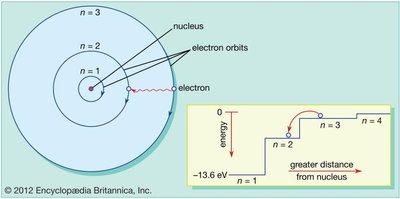
Electrons occupy energy levels (shells) around the nucleus. The chemical behavior of an atom is largely determined by the arrangement of electrons, especially those in the outermost shell (valence electrons).
Potential Energy: Energy due to position; electrons further from the nucleus have higher potential energy.
Electron Shells: First shell holds up to 2 electrons; subsequent shells hold up to 8 electrons each.
Orbitals: Three-dimensional spaces where electrons are likely to be found; each orbital holds up to 2 electrons.
Valence Electrons: Electrons in the outermost shell; determine chemical reactivity.
Periodic Table Patterns
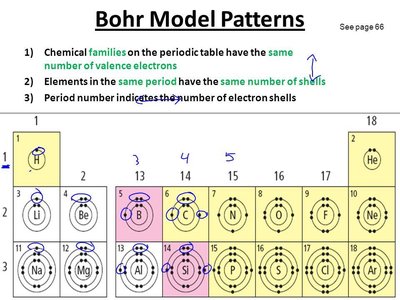
The periodic table arranges elements by increasing atomic number and groups elements with similar valence electron configurations, which results in similar chemical properties.
Elements in the same group (column) have the same number of valence electrons.
Elements in the same period (row) have the same number of electron shells.
Chemical Bonds and Chemical Reactions
Types of Chemical Bonds
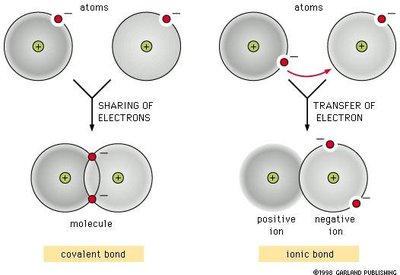
Atoms with incomplete valence shells can interact with other atoms to complete their shells, forming chemical bonds. The main types of bonds are covalent, ionic, and weak interactions (hydrogen bonds and van der Waals forces).
Covalent Bonds: Atoms share pairs of valence electrons; strong and directional (e.g., H2, O2).
Ionic Bonds: One atom transfers electrons to another, forming oppositely charged ions that attract each other (e.g., NaCl).
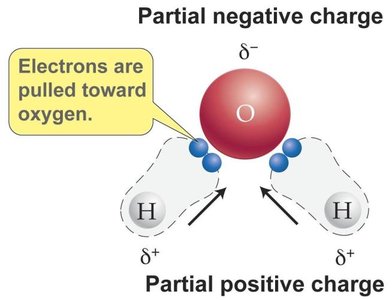
Electronegativity: The tendency of an atom to attract electrons; differences in electronegativity determine bond polarity.
Non-polar Covalent Bond: Electrons are shared equally (e.g., H2).
Polar Covalent Bond: Electrons are shared unequally, creating partial charges (e.g., H2O).
Weak Chemical Bonds
Weaker bonds, such as hydrogen bonds and van der Waals interactions, play crucial roles in biological systems. They help maintain the structure and function of large molecules and allow for reversible interactions.
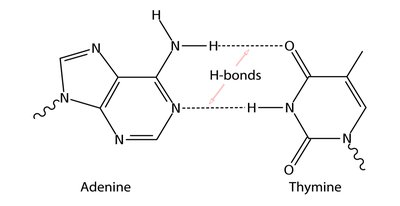
Hydrogen Bonds: Form between a hydrogen atom (with partial positive charge) and an electronegative atom (with partial negative charge), such as in water or between DNA strands.
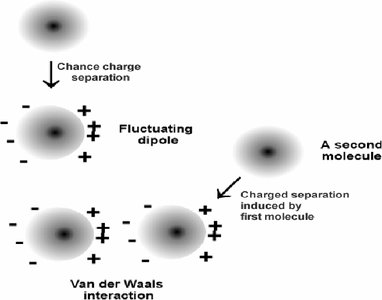
Van der Waals Forces: Weak attractions due to transient local partial charges; significant when many occur together.
Summary Table: Types of Chemical Bonds
Bond Type | Mechanism | Strength | Example |
|---|---|---|---|
Covalent | Sharing of electrons | Strong | H2O, O2 |
Ionic | Transfer of electrons | Strong (in dry compounds) | NaCl |
Hydrogen Bond | Attraction between partial charges | Weak (individually) | Between water molecules, DNA strands |
Van der Waals | Transient charge interactions | Very weak (individually) | Interactions between non-polar molecules |
Additional info: The above notes expand on the provided lecture content with definitions, examples, and a summary table for clarity and completeness.
