 Indietro
Introduction to Biology: Characteristics of Life and the Scientific Method
Guida di studio - Note intelligenti
 Appunti personalizzati basati sui tuoi materiali, ampliati con definizioni chiave, esempi e contesto.
Ch. 1: The Study of Life
Characteristics of Life
Biology is the scientific study of life. All living organisms share several fundamental characteristics that distinguish them from non-living matter. Understanding these characteristics is essential for recognizing what constitutes life and how living systems function.
Life is Organized
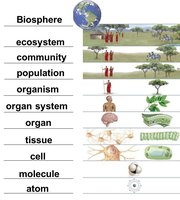
Biological organization refers to the hierarchical structure of life, from the simplest to the most complex levels.
Levels of organization: atom → molecule → cell → tissue → organ → organ system → organism → population → community → ecosystem → biosphere.
As organization increases, emergent properties arise—new characteristics that appear at each level of complexity.
Example: A cell is alive, but its individual molecules are not.
Life Requires Materials and Energy
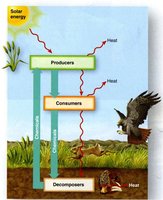
Living organisms need nutrient materials to produce energy and maintain their organization.
The ultimate source of energy for most life on Earth is the sun.
Energy and chemicals flow between organisms in ecosystems, involving producers (plants), consumers (animals), and decomposers (fungi, bacteria).
Example: Plants capture solar energy through photosynthesis, which is then transferred through food webs.
Living Organisms Maintain Homeostasis
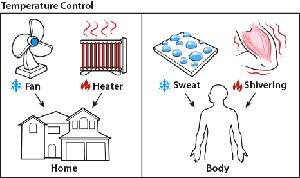
Homeostasis is the maintenance of a relatively stable internal environment despite external changes.
All organ systems contribute to homeostasis (e.g., temperature regulation, pH balance).
Most diseases result from a failure to maintain homeostasis.
Example: Humans sweat to cool down and shiver to warm up, maintaining body temperature.
Living Organisms Respond to Stimuli
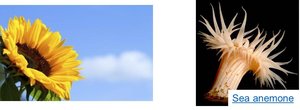
Organisms interact with their environment and other organisms, responding to stimuli to survive and reproduce.
Behavior is a coordinated response to environmental changes.
Example: Plants bend toward light (phototropism); animals flee from predators.
Living Organisms Reproduce and Develop
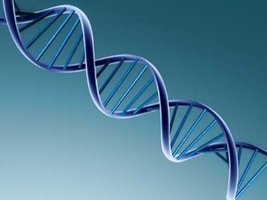
All living things reproduce, passing genetic material (DNA) to the next generation.
Development involves cell division and differentiation, leading to the formation of specialized cells and tissues.
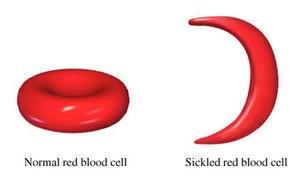
Mutations in DNA introduce genetic diversity, which is essential for evolution.
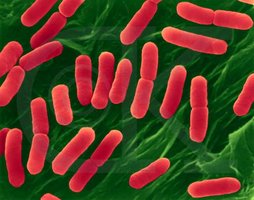
Example: Bacteria reproduce by binary fission; animals develop from fertilized eggs through complex processes.
Living Organisms Have Adaptations
Adaptations are inherited modifications that enhance an organism's ability to survive and reproduce in a particular environment.
Adaptations arise unintentionally through natural selection over generations.
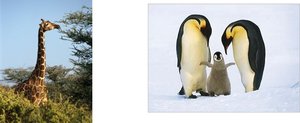
Example: Giraffes have long necks to reach high leaves; penguins have adaptations for cold environments.
The Process of Science
The scientific method is a systematic approach used to investigate natural phenomena, acquire new knowledge, or correct and integrate previous knowledge.
Observation
Science begins with observation—noticing and describing phenomena in a careful, orderly way.
Observations can be direct, instrument-assisted, or based on existing data.
Hypothesis
A hypothesis is a tentative explanation for an observation, based on inductive reasoning.
It must be testable and falsifiable.
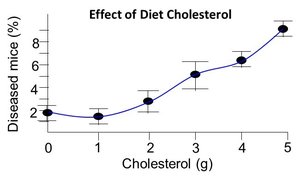
Example: "High cholesterol causes cardiovascular diseases."
Prediction and Experiment
Predictions are made using deductive reasoning: "If...then..." statements.
Experiments are designed to test predictions, using experimental variables and control groups.
Example: Feed experimental groups different amounts of cholesterol; control group receives none.
Presenting and Analyzing Data
Data are summarized in tables and graphs for clarity.
The experimental variable is plotted on the X-axis; the responding variable (result) on the Y-axis.
Statistical analysis (e.g., standard error, standard deviation, P value) determines the reliability of results.
P value < 5% indicates statistical significance (results are unlikely due to chance).
Conclusion and Scientific Theory
Conclusions support or refute the hypothesis based on experimental evidence.
Results are published in peer-reviewed journals for validation by the scientific community.
A scientific theory is a well-tested, widely accepted explanation of natural phenomena (e.g., theory of evolution).
Example of the Scientific Method
Step | Description |
|---|---|
Observation | My toaster doesn’t toast my bread. |
Hypothesis | There is something wrong with the electrical outlet. |
Prediction | If something is wrong with the outlet, my coffeemaker also won’t work when plugged into it. |
Experiment | I plug my coffeemaker into the outlet. |
Analyze Results | My coffeemaker works. |
Conclusion | Hypothesis is not supported. |
Chapter Summary
Life is organized: atom, molecule, organelle, cell, tissue, organ, organ system, organism, population, community, ecosystem, biosphere.
Life requires materials and energy.
Living organisms maintain homeostasis.
Living organisms respond to stimuli.
Living organisms reproduce and develop.
Living organisms have adaptations.
The process of science: observation, hypothesis, prediction and experiment, presenting and analyzing data, conclusion.
