 Indietro
Introduction to Biology: Concepts, Organization, and Scientific Method
Guida di studio - Note intelligenti
 Appunti personalizzati basati sui tuoi materiali, ampliati con definizioni chiave, esempi e contesto.
Introduction to Biology
Definition and Scope of Biology
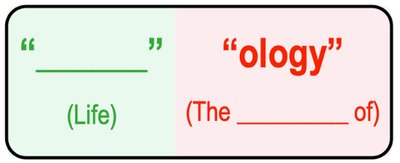
Biology is the scientific study of life, encompassing the structure, function, growth, origin, evolution, and distribution of living organisms. The term 'biology' is derived from the Greek words 'bios' (life) and 'logos' (the study of).
Biology: The science that investigates living organisms and life processes.
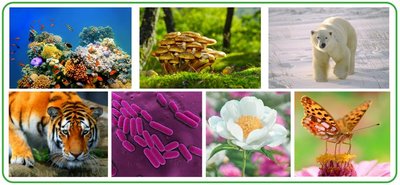
Life is highly diverse, including organisms from microscopic bacteria to large animals and plants.
Unicellular vs. Multicellular Organisms
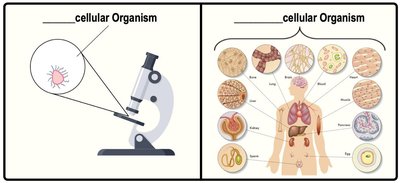
Living organisms can be classified based on the number of cells they possess:
Unicellular organisms: Consist of a single cell (e.g., bacteria, some protists).
Multicellular organisms: Composed of many cells that may be specialized for different functions (e.g., animals, plants, fungi).
Characteristics of Life
Defining Features of Living Organisms
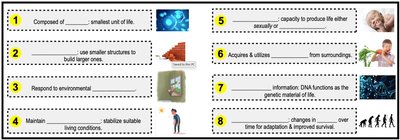
All living organisms share a set of characteristics that distinguish them from nonliving matter:
Composed of cells, the smallest unit of life
Organized in a hierarchical manner
Respond to environmental stimuli
Maintain homeostasis (stable internal conditions)
Reproduce (sexually or asexually)
Acquire and utilize energy and materials
Store genetic information in DNA
Evolve over time through adaptation
Additional info: Viruses are not considered alive because they lack cellular structure and independent metabolism.
Life’s Organizational Hierarchy
Levels of Biological Organization
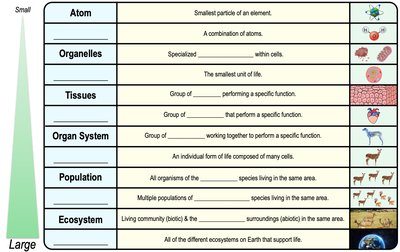
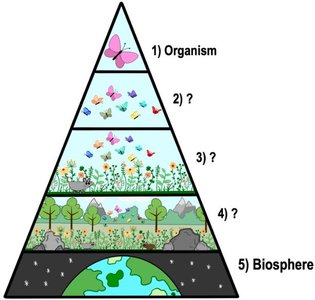
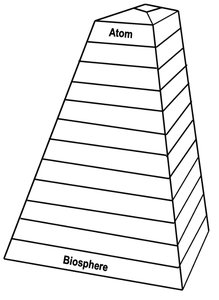
Life is organized into a hierarchy, from the smallest chemical units to the entire biosphere:
Level | Description |
|---|---|
Atom | Smallest particle of an element |
Molecule | Combination of atoms |
Organelle | Specialized structures within cells |
Cell | The smallest unit of life |
Tissue | Group of cells performing a specific function |
Organ | Group of tissues that perform a specific function |
Organ System | Group of organs working together |
Organism | An individual living thing |
Population | All organisms of the same species in an area |
Community | Multiple populations of different species in an area |
Ecosystem | Community plus the nonliving environment |
Biosphere | All ecosystems on Earth |
Emergent Properties
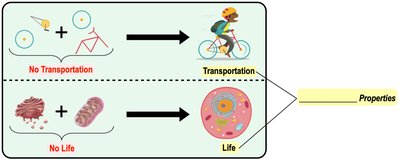
Emergent properties are new attributes that arise at each level of organization, resulting from the interaction of components at lower levels. For example, life emerges at the cellular level, even though individual molecules are not alive.
The whole is greater than the sum of its parts.
Introduction to Taxonomy
Classification of Life
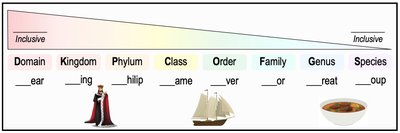
Taxonomy is the branch of biology that classifies, identifies, and names organisms. Organisms are grouped into hierarchical categories based on shared characteristics.
Rank | Mnemonic |
|---|---|
Domain | Dear |
Kingdom | King |
Phylum | Philip |
Class | Came |
Order | Over |
Family | For |
Genus | Great |
Species | Soup |
The Three Domains of Life
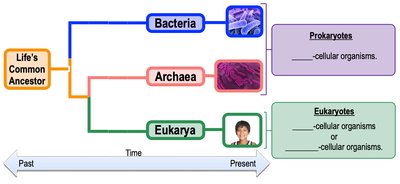
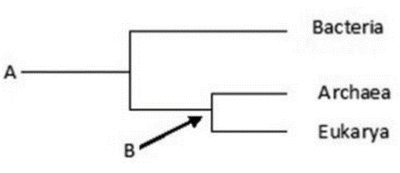
All life is classified into three domains:
Bacteria: Prokaryotic, unicellular organisms without a nucleus
Archaea: Prokaryotic, unicellular organisms, often found in extreme environments
Eukarya: Eukaryotic organisms, can be unicellular or multicellular, with a nucleus
Kingdoms of the Eukarya Domain
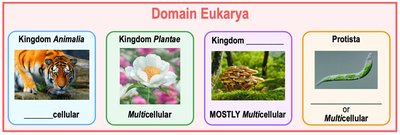
The domain Eukarya is divided into several kingdoms:
Kingdom Animalia: Multicellular animals
Kingdom Plantae: Multicellular plants
Kingdom Fungi: Mostly multicellular fungi
Kingdom Protista: Mostly unicellular, some multicellular organisms
Categorizing Life by Energy Acquisition
Organisms are also classified by how they obtain energy:
Autotrophs (Producers): Make their own food, usually via photosynthesis
Heterotrophs (Consumers): Obtain energy by consuming other organisms
Decomposers: Obtain energy from dead organisms and waste
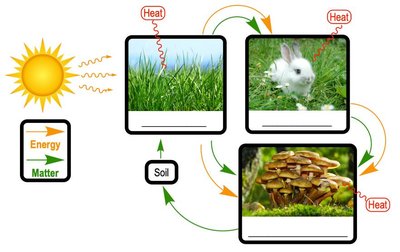
Most energy used by life originates from the sun, and with each transfer, some energy is lost as heat.
The Scientific Method
Steps of the Scientific Method
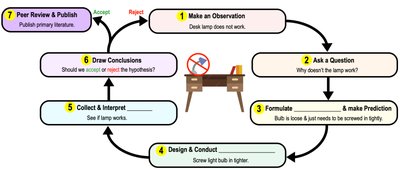
The scientific method is a systematic approach to answering questions and testing hypotheses:
Make an observation
Ask a question
Formulate a hypothesis and make a prediction
Design and conduct an experiment
Collect and interpret data
Draw conclusions
Peer review and publish results
Predictions, Hypotheses, and Theories
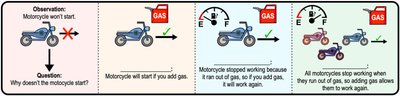
Prediction: An expected outcome of an event (answers 'what will happen?').
Hypothesis: A proposed, testable explanation for an observation (answers 'what will happen and why?').
Theory: A well-supported, testable explanation of many observations, supported by a large body of evidence.
Basic Theories of Biology
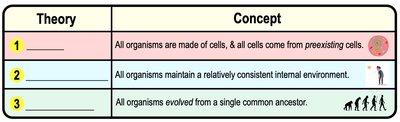
Theory | Concept |
|---|---|
Cell Theory | All organisms are made of cells, and all cells come from preexisting cells. |
Homeostasis Theory | All organisms maintain a relatively consistent internal environment. |
Evolution Theory | All organisms evolved from a single common ancestor. |
Experimental Design
Variables in Experiments
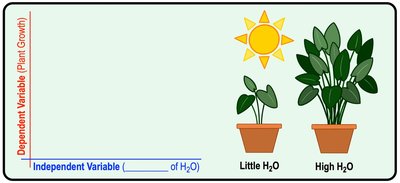
Experiments are designed to test hypotheses by manipulating variables:
Variable Type | Definition | Example |
|---|---|---|
Independent Variable | Variable manipulated by the researcher | Age, Time/Exposure, Amount |
Dependent Variable | Variable measured by the researcher | Growth of plant, Drug effectiveness |

Controls in Experiments
Control groups are essential for validating experimental results and preventing false positives or negatives:
Control Type | Definition | Purpose |
|---|---|---|
Negative Control | Group where no response is expected (e.g., placebo) | Prevents false positives |
Positive Control | Group where a response is expected | Prevents false negatives |

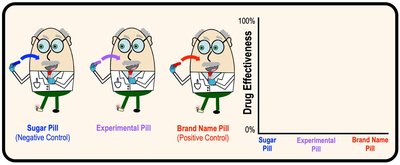
Additional info: A well-designed experiment includes both positive and negative controls to ensure the reliability of results.
