 Indietro
Introduction to Biology: The Study of Life
Guida di studio - Note intelligenti
 Appunti personalizzati basati sui tuoi materiali, ampliati con definizioni chiave, esempi e contesto.
Biology: The Study of Life
Course Introduction
This course provides an overview of the fundamental principles of biology, focusing on the characteristics of life, cell theory, evolution, and the unity and diversity of living organisms. Students will explore the scientific study of living things, their interactions, and the processes that sustain life.
Defining Biology
What is Biology?
Biology is the scientific study of living organisms, their interactions with each other, and their environments.
The term derives from Greek: bios (life) and logos (study).
Biology encompasses a wide range of scales, from microscopic cells to entire ecosystems and the biosphere.
Major branches include cell biology, anatomy, physiology, botany, and zoology. Interdisciplinary fields like biochemistry combine life and physical sciences.
What Does It Mean to Be Alive?
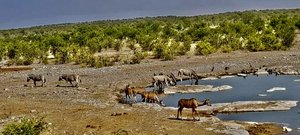
Five Fundamental Characteristics of Life
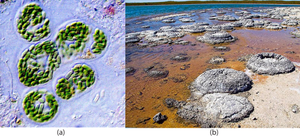
Cells: All organisms are made up of membrane-bound cells.
Replication: All organisms are capable of reproduction.
Information: All organisms process hereditary information encoded in genes and respond to environmental information.
Energy: All organisms acquire and use energy to stay alive.
Evolution: Populations of organisms are continually evolving.
Cell Theory
Historical Development
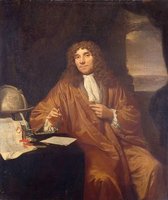
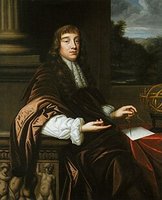
First observations of cells were made in the 1660s by Robert Hooke and Anton van Leeuwenhoek.
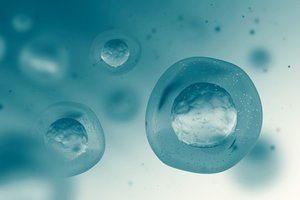
Cell Theory: All living entities are made of one or more cells. The cell is the most basic unit of life. All cells arise from preexisting cells by division.
Theory developed by Theodore Schwann and Matthias Jakob Schleiden (1838-39), and expanded by Rudolf Virchow (1855).
Modern Cell Theory
All living organisms are made of one or more cells.
The cell is the structural and functional unit of life.
All cells arise from pre-existing cells by division.
All cells contain hereditary information in the form of DNA.
All cells are similar in chemical composition.
Energy flow (metabolism and biochemistry) occurs within cells.
Evidence suggests life arose from non-life early in Earth's history through chemical evolution.
Properties of Life
Order and Organization
Living things exhibit organized complexity from the molecular to the organismal level.
Cells are the fundamental units, with atoms forming molecules, molecules making organelles and structures.
Composition
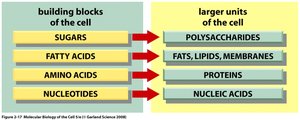
Life is based on organic molecules, especially carbon-carbon (C-C) bonds.
Macromolecules such as proteins, nucleic acids, carbohydrates, and lipids are essential for cellular structure and function.
Sensitivity or Response to Stimuli
Organisms can detect and respond to environmental stimuli.
Responses may be positive (toward stimulus) or negative (away from stimulus).
Responses can involve metabolic or physiological changes, and occur in both unicellular and multicellular organisms.
Reproduction
Single-celled organisms reproduce by cell division after duplicating DNA.
Multicellular organisms produce specialized reproductive cells for sexual reproduction.
Reproduction ensures the continuation of species and the transmission of genetic information.
Growth and Development
Organisms increase in size and undergo organized changes during development.
Genetic instructions guide growth and developmental processes.
Metabolism
Metabolism refers to all chemical reactions that occur within an organism, including breaking down substances to generate energy and synthesizing organic molecules for growth and maintenance (homeostasis).
Enzymes catalyze metabolic reactions.
Growth refers to the increase in size of an individual organism, not just population expansion.
Regulation and Homeostasis
Organisms maintain stable internal conditions through regulatory mechanisms (homeostasis).
Examples include nutrient transport, temperature regulation, and waste removal.
Feedback loops help organisms stay within optimal ranges for survival.
Energy Processing
Organisms require energy to fuel metabolic activities.
Energy sources include sunlight (photosynthesis) and chemical compounds (food).
Adaptation
Inherited traits can enhance an organism's fitness and survival in its environment.
Adaptations result from natural selection acting on genetic variation.
Evolution
Evolution is the change in the characteristics and genetic makeup of a population over time.
Occurs through processes like natural selection and genetic mutations.
Evolution is the driving force behind the diversity of life on Earth.
Despite diversity, all life shares a uniform genetic code.
Theory of Evolution
Darwin and Wallace's Contributions
Species are related by common ancestry.
Characteristics of species can be modified from generation to generation (“descent with modification”).
Natural Selection
Natural selection explains how evolution occurs.
Two conditions for natural selection:
Individuals must vary in heritable characteristics.
Certain versions of these traits help individuals reproduce more successfully in a given environment, making those traits more common over time.
Evolutionary change occurs in populations. New species arise (speciation) when populations diverge.
Course Logistics and Grading
Textbook and Materials
Required eTextbook: Custom Pearson Education Bundle for Biology I and II (ISBN: 9780136173274) or Biological Science, 8th edition (ISBN-13: 9780138276263).
Technology: Computer or tablet with Internet access for Canvas, Google Drive, Rowan email, and instructional videos.
Class Policies
Attendance is recommended for optimal learning; sign-in required at each class.
Contact the instructor via email for emergencies or tardiness.
Computers and preferred note-taking methods are welcome; accommodations available as needed.
Phones should be silenced to minimize distractions.
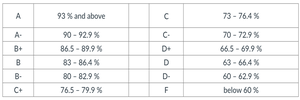
Grading Scheme
Grade | Percentage | Grade | Percentage |
|---|---|---|---|
A | 93% and above | C | 73 - 76.4% |
A- | 90 - 92.9% | C- | 70 - 72.9% |
B+ | 86.5 - 89.9% | D+ | 66.5 - 69.9% |
B | 83 - 86.4% | D | 63 - 66.4% |
B- | 80 - 82.9% | D- | 60 - 62.9% |
C+ | 76.5 - 79.9% | F | below 60% |
Summary
This introduction to biology covers the foundational concepts necessary for understanding life, including the characteristics of living organisms, cell theory, and the principles of evolution. These topics form the basis for further study in biological sciences.
