 Indietro
Introduction to Biology: The Study of Life
Guida di studio - Note intelligenti
 Appunti personalizzati basati sui tuoi materiali, ampliati con definizioni chiave, esempi e contesto.
Exploring Life on Its Many Levels
What is Biology?
Biology is the scientific study of life, derived from the Greek words bios (life) and -ology (study). The use of Latin and Greek roots in scientific terminology allows universal communication among scientists worldwide.
Criteria for Life
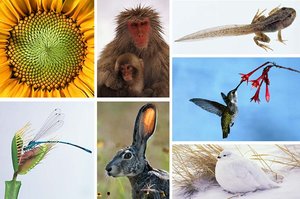
Biologists distinguish living from non-living entities by examining specific criteria. These criteria are essential for identifying life forms and understanding their unique properties.
Order: Precise organization of structures
Energy Utilization: Ability to take in and use energy
Response to Stimuli: Reacting to environmental changes
Growth and Development: Capacity to grow and develop
Reproduction: Ability to produce offspring
Evolutionary Adaptation: Ability to evolve over generations
Homeostasis: Regulation of internal environment
The Cell: The Basic Unit of Life
Cell Structure and Function
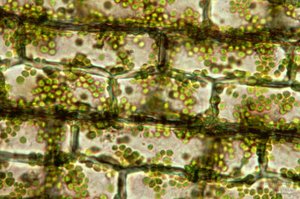
Cells are the simplest units of life, capable of performing all activities necessary for life. Organisms may be unicellular or multicellular, with specialized cells forming aggregates in multicellular organisms.
Discovery of Cells
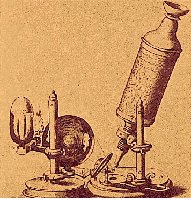
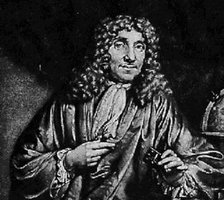
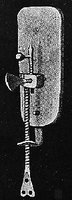
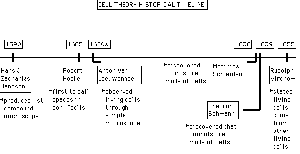
The first cells were observed and named by Robert Hooke in 1665 using a compound microscope. Later, Anton van Leeuwenhoek observed single-celled organisms in pond water and cells in blood and sperm.
The Cell Theory
Formulated in the 19th century, the cell theory states:
All living things consist of cells.
All cells come from pre-existing cells (Rudolf Virchow, 1855).
Cells are the fundamental units of structure and function in living organisms.
Types of Cells: Prokaryotic vs. Eukaryotic
Cells are classified into two major types based on structural organization:
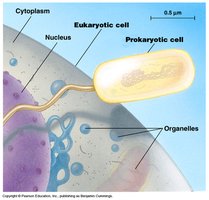
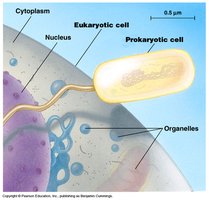
Prokaryotic Cells: Lack a membrane-bound nucleus and organelles; DNA is not separated from the cytoplasm. Found in bacteria and archaea.
Eukaryotic Cells: Have a nucleus and membrane-bound organelles; DNA is enclosed within the nucleus. Found in plants, animals, fungi, and protists.
DNA and the Continuity of Life
Genetic Material
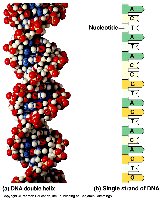
DNA (deoxyribonucleic acid) is the hereditary material in cells, encoding instructions for life processes. Genes, units of inheritance, transmit information from parents to offspring. The continuity of life is based on the replication and transmission of DNA.
The Genome
The genome is the complete set of genetic instructions inherited by an organism. For example, the human genome contains approximately 3 billion nucleotide pairs. The sequencing of genomes has revolutionized biology, enabling the study of gene functions and regulation.
Approaches to Biological Study
Reductionism vs. Holism
Biologists use two complementary approaches:
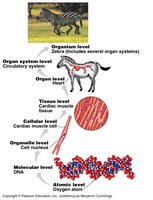
Reductionism: Understanding the whole by studying its parts (e.g., analyzing DNA to understand inheritance).
Holism: Understanding the whole organism or system, recognizing that it is more than the sum of its parts.
Interactions with the Environment
Organisms as Open Systems
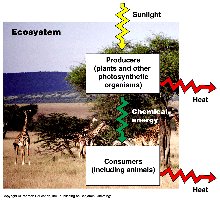
Organisms exchange energy and materials with their surroundings. For example, trees absorb water and nutrients from soil, carbon dioxide from air, and release oxygen. These interactions form the basis of ecosystems.
Energy Flow and Nutrient Cycling
In ecosystems, energy flows from sunlight to producers (photosynthetic organisms) and then to consumers (organisms that feed on plants). Nutrients cycle between organisms and the environment, maintaining ecosystem balance.
Taxonomy and Classification
Taxonomic Hierarchy
Taxonomy is the science of naming and classifying organisms. The current system, developed by Carolus Linnaeus, ranks groups from largest to smallest: Kingdom, Phylum, Class, Order, Family, Genus, Species. Scientific names are binomial, consisting of genus and species.
Group Name | Human | Chimpanzee | House Cat | Lion | Housefly |
|---|---|---|---|---|---|
Kingdom | Animalia | Animalia | Animalia | Animalia | Animalia |
Phylum | Chordate | Chordate | Chordate | Chordate | Arthropoda |
Class | Mammal | Mammal | Mammal | Mammal | Insect |
Order | Primates | Primates | Carnivora | Carnivora | Diptera |
Family | Hominidae | Pongidae | Felidae | Felidae | Muscidae |
Genus | Homo | Pan | Felis | Felis | Musca |
Species | sapiens | troglodytes | domestica | leo | domestica |
Scientific Name | Homo sapiens | Pan troglodytes | Felis domestica | Felis leo | Musca domestica |
Classification Definitions
Motile: Capable of movement
Sessile: Not capable of movement
Multicellular: Composed of more than one cell
Unicellular: Composed of only one cell
Prokaryotic: Cells without a membrane-bound nucleus
Eukaryotic: Cells with a nucleus
Colony: Group of closely associated cells
Autotrophic: Synthesize organic compounds from inorganic materials
Heterotrophic: Ingest pre-formed organic materials
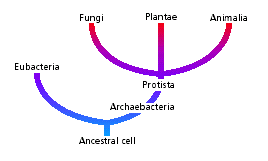
Kingdom Name | Key Characteristics | Examples |
|---|---|---|
Monera | Unicellular, Prokaryotic | Bacteria, Blue-Green Algae |
Protista | Mostly Unicellular, Eukaryotic, Some Colonial | Amoeba, Paramecium, Euglena, Algae |
Fungi | Mostly Multicellular, Eukaryotic, Heterotrophic, Sessile | Mushrooms, Molds, Mildews, Yeast |
Plantae | Multicellular, Eukaryotic, Autotrophic, Sessile, Cell Walls of Cellulose | Moss, Ferns, Flowering Plants, Bushes, Trees |
Animalia | Multicellular, Eukaryotic, Heterotrophic, Motile, Specialized Sense Organs | Insects, Jellyfish, Hydra, Crabs, Fish, Birds, Lions, Tigers, Bears |
Science as a Process
The Scientific Method
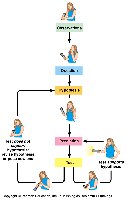
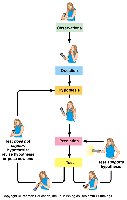
The scientific method is a logical process used to answer questions and solve problems. It is not rigid, but involves common sense and logical steps:
Ask Questions: Collect information about the problem
Form a Hypothesis: Make an educated guess
Test the Hypothesis: Experiment to gather data
Draw a Conclusion: Determine if the hypothesis is supported or rejected
Define the Problem: Clearly state the issue
Use of Controls in Experiments
Controls are essential for comparison in scientific experiments. Variables are conditions that change and affect outcomes. Experimental groups have one variable changed, while control groups have no variables changed.
Limitations of the Scientific Method
Science is limited to studying observable and measurable phenomena. Only natural causes for natural phenomena are considered, and findings must be verifiable by other scientists.
 Additional info: The notes provide foundational concepts for General Biology, including the nature of life, cell theory, classification, and scientific methodology, all of which are essential for understanding subsequent chapters in biology.
