 Indietro
Introduction to Biology: The Study of Life
Guida di studio - Note intelligenti
 Appunti personalizzati basati sui tuoi materiali, ampliati con definizioni chiave, esempi e contesto.
Biology: The Study of Life
What is Biology?
Biology is the scientific study of life, encompassing a wide range of topics from chemistry and microbiology to the structure and function of organisms. It seeks to understand how living things function, interact, and evolve.
Biology is more than memorizing facts; it integrates concepts from chemistry, macro-biology, and microbiology.
Central questions include: What is life? How do we study it? How do different biological disciplines fit together?
Five Fundamental Characteristics of Life
All living organisms share five key characteristics that distinguish them from non-living matter:
Energy: All organisms acquire and use energy to power cellular processes.
Cells: All organisms are made up of membrane-bound cells, the basic units of life.
Information: All organisms process hereditary information encoded in genes and respond to environmental information.
Replication: All organisms are capable of reproduction.
Evolution: Populations of organisms evolve over time through changes in heritable traits.
The Nature of Scientific Inquiry
Theories and Hypotheses
Science relies on the formulation and testing of hypotheses and theories:
Scientific Theory: An explanation for a broad class of phenomena, supported by extensive evidence. Theories have two components: Pattern (what occurs) and Process (how it occurs).
Hypothesis: A testable statement explaining an observation.
Prediction: A measurable or observable result expected if a hypothesis is correct.
Two Central Theories in Biology
Cell Theory: All organisms are made of cells, and all cells come from preexisting cells.
Theory of Evolution by Natural Selection: All species are related by common ancestry and change over time due to natural selection.
The Cell Theory
Definition and Implications
The cell is the lowest level of organization capable of performing all activities required for life. The cell theory states:
All organisms are made of cells (pattern).
All cells come from preexisting cells (process).
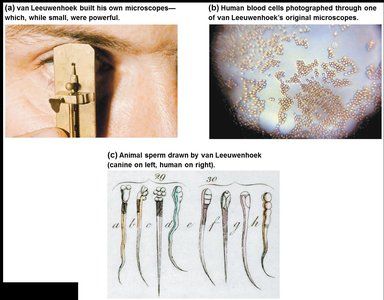
Example: Louis Pasteur's experiment disproved spontaneous generation, showing that cells arise only from preexisting cells.
Implications of the Cell Theory
All individuals in a population of single-celled organisms are related by common ancestry.
All cells in a multicellular organism descend from a single cell and are connected by common ancestry.
Genetic Information and the Central Dogma
DNA, Genes, and Heredity
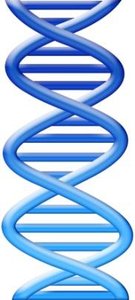
The continuity of life is based on heritable information in the form of DNA:
Genes: Units of inheritance that transmit information from parents to offspring.
Chromosomes: Structures containing DNA, the substance of genes.
The Central Dogma of Molecular Biology
Genes control protein production indirectly through the processes of transcription and translation:
DNA is transcribed into RNA.
RNA is translated into protein.
An organism's genome is its entire set of genetic instructions; its proteome is all the proteins it can produce.
Evolution: Unity and Diversity of Life
The Theory of Evolution by Natural Selection
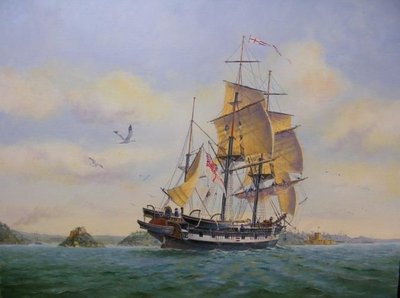
Charles Darwin and Alfred Russel Wallace proposed that:
All species are related by common ancestry (pattern).
Species change over generations through descent with modification (process), driven by natural selection.
Natural Selection
Certain heritable traits increase an individual's fitness (ability to produce offspring).
These traits become more common in the population over time.
Natural selection acts on individuals, but evolutionary change occurs in populations.
Phylogeny and the Tree of Life
Phylogeny is the genealogical relationship among species. A phylogenetic tree visually represents these relationships:
Branches sharing a recent common ancestor represent closely related species.
Branches without a recent common ancestor represent more distantly related species.
Using Molecules to Understand Ancestry
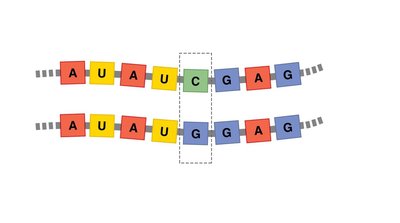
Carl Woese used small subunit ribosomal RNA (rRNA) to study evolutionary relationships:
rRNA is found in all organisms and is made of four ribonucleotides (A, U, C, G).
Closely related organisms have similar rRNA sequences; distant relatives have more differences.
Taxonomy: Classifying Life
The Three-Domain System
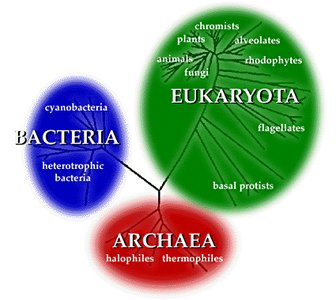
Taxonomy is the science of naming and classifying organisms. The three-domain system is currently used:
Domain Bacteria (prokaryotes)
Domain Archaea (prokaryotes)
Domain Eukarya (eukaryotes)
Hierarchical Classification
Organisms are classified into a hierarchy of taxa:
Rank | Fruit fly | Human | Pea | Fly Agaric | E. coli |
|---|---|---|---|---|---|
Domain | Eukarya | Eukarya | Eukarya | Eukarya | Bacteria |
Kingdom | Animalia | Animalia | Plantae | Fungi | Bacteria |
Phylum/Division | Arthropoda | Chordata | Magnoliophyta | Basidiomycota | Proteobacteria |
Class | Insecta | Mammalia | Magnoliopsida | Agaricomycetes | Gamma-proteobacteria |
Order | Diptera | Primates | Fabales | Agaricales | Enterobacteriales |
Family | Drosophilidae | Hominidae | Fabaceae | Amanitaceae | Enterobacteriaceae |
Genus | Drosophila | Homo | Pisum | Amanita | Escherichia |
Species | D. melanogaster | H. sapiens | P. sativum | A. muscaria | E. coli |
Scientific Names
Each organism is given a unique two-part scientific name (genus and species), e.g., Homo sapiens.
Genus names are capitalized; species names are not. Both are italicized or underlined.
Studying Life: The Scientific Method
Hypothesis-Based Science
Scientists ask questions that can be answered by collecting data.
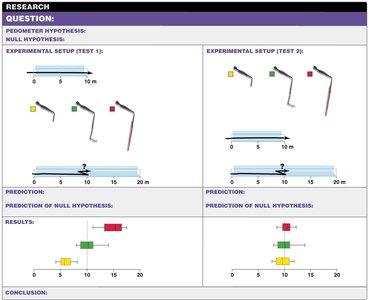
Hypothesis testing involves stating a hypothesis and its predictions, then designing experiments to test them.
A null hypothesis specifies what should be observed if the tested hypothesis is not correct.
Experimental Design
Experiments are used to test the effect of a single variable. A controlled experiment compares an experimental group with a control group, ideally differing only in the variable of interest.
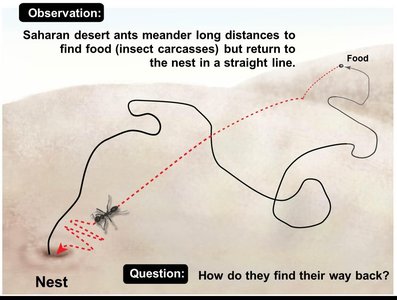
Example: Wittlinger et al. studied how desert ants navigate by manipulating their leg length and observing their ability to return to the nest.
Variables in Experiments
Independent variable: The proposed cause being tested.
Dependent variable: The measured effect or outcome.
Principles of Experimental Design
Test a single independent variable while controlling others.
Include a control group to check for other factors.
Repeat tests to reduce the effects of small sample size.
Science, Technology, and Society
Relationship Between Science and Technology
The goal of science is to understand natural phenomena.
The goal of technology is to apply scientific knowledge for specific purposes.
Science and technology are interdependent; discoveries in one often lead to advances in the other.
