Indietro
Introduction to Biology: Unifying Themes, Properties of Life, and Scientific Inquiry
Guida di studio - Note intelligenti
 Appunti personalizzati basati sui tuoi materiali, ampliati con definizioni chiave, esempi e contesto.
Introduction to Biology
The Scope and Themes of Biology
Biology is the scientific study of life, encompassing a vast range of topics from molecular mechanisms to the interactions of organisms within ecosystems. Despite this diversity, several unifying themes connect all biological study.
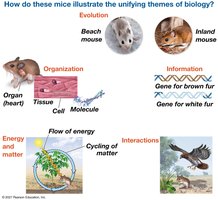
Organization: Life is structured in a hierarchy from molecules to the biosphere.
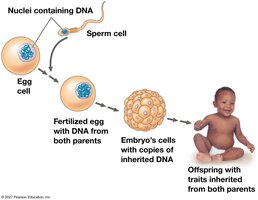
Information: Genetic information is stored, expressed, and transmitted primarily through DNA.
Energy and Matter: Living organisms transform energy and cycle matter to sustain life.
Interactions: Organisms interact with each other and their environment, affecting both.
Evolution: Evolution explains both the unity and diversity of life.
Properties of Life
Characteristics Shared by All Living Things
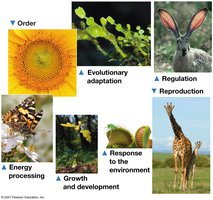
Living organisms share a set of fundamental properties that distinguish them from nonliving matter:
Order: Highly ordered structure, such as the arrangement of cells in tissues.
Evolutionary Adaptation: Populations evolve over generations through adaptations.
Response to Environment: Organisms respond to environmental stimuli.
Reproduction: Organisms reproduce, passing genetic information to offspring.
Growth and Development: Organisms grow and develop according to inherited instructions.
Energy Processing: Organisms obtain and use energy to power activities.
Regulation: Organisms regulate internal conditions (homeostasis).
Organization: Levels of Biological Organization
Emergent Properties and Biological Hierarchy
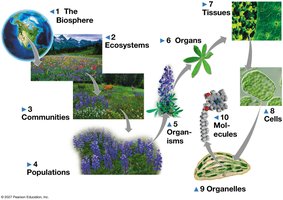
Life can be studied at different levels, from molecules to the entire biosphere. Each level exhibits emergent properties—new characteristics that arise from the arrangement and interaction of parts.
Reductionism: Breaking complex systems into simpler components for study.
Systems Biology: Examining interactions among parts of a system to understand emergent properties.


Levels of Organization
Biosphere
Ecosystems
Communities
Populations
Organisms
Organs and Organ Systems
Tissues
Cells
Organelles
Molecules
Structure and Function
Correlation Between Structure and Function
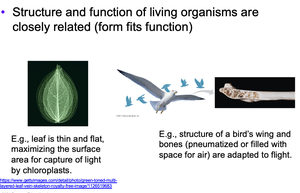
At every level of the biological hierarchy, structure and function are closely related. For example, the thin, flat shape of a leaf maximizes light capture for photosynthesis, and the structure of a bird's wing is adapted for flight.
The Cell: Basic Unit of Life
Cell Theory and Types of Cells
The cell is the fundamental unit of structure and function in living organisms. All cells are enclosed by a membrane and use DNA as genetic information. There are two main types of cells:
Eukaryotic cells: Have membrane-bound organelles, including a nucleus (e.g., animals, plants, fungi, protists).
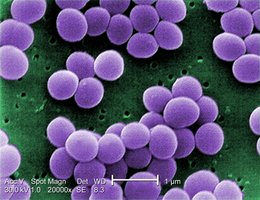
Prokaryotic cells: Lack a nucleus and membrane-bound organelles (e.g., bacteria, archaea).
Genetic Information: DNA and Gene Expression
DNA as the Genetic Material
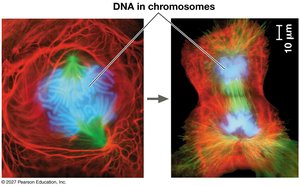
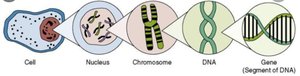
Chromosomes contain most of a cell’s genetic material in the form of DNA. Genes are units of inheritance that encode information for building proteins. An organism’s genome is its entire set of genetic instructions.
Gene Expression
Gene expression involves two main processes:
Transcription: DNA is transcribed into RNA.
Translation: RNA is translated into protein.
Proteins carry out most cellular functions and determine an organism’s traits.
Genomics and Proteomics
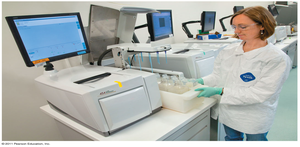
Genomics is the study of whole sets of genes, while proteomics is the study of all proteins expressed by a cell, tissue, or organism. Advances in technology and bioinformatics have enabled large-scale analysis of DNA and proteins.
Energy and Matter
Transformation and Flow in Biological Systems
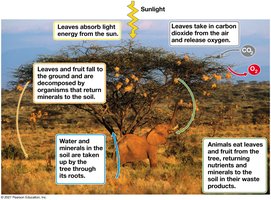
Living organisms require energy to perform work, such as movement, growth, and reproduction. Energy flows through ecosystems, typically entering as sunlight and exiting as heat, while matter cycles between organisms and the environment.
Interactions and Regulation
Feedback Mechanisms
Biological processes are often regulated by feedback mechanisms:
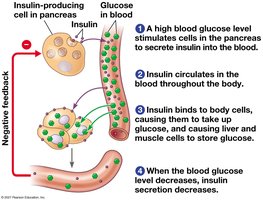
Negative feedback: The response reduces the initial stimulus (e.g., regulation of blood glucose by insulin).
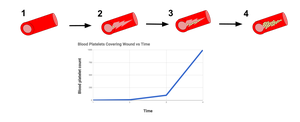
Positive feedback: The response amplifies the initial stimulus (e.g., blood clotting).
Interactions in Ecosystems
Organisms interact with each other and with nonliving components of their environment. These interactions can be beneficial, harmful, or neutral, and they drive the cycling of matter and flow of energy in ecosystems.
Evolution: The Overarching Theme of Biology
Unity and Diversity of Life
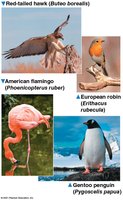
Evolution is the process by which species change over time through adaptations and mutations. It explains both the unity (shared characteristics) and diversity (variety of forms) of life. Evidence for evolution includes anatomical similarities, fossil records, and the universal genetic code.
Charles Darwin and Natural Selection
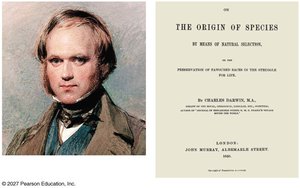
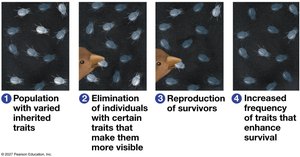
Charles Darwin proposed that natural selection is the mechanism of evolution. Individuals with advantageous traits are more likely to survive and reproduce, leading to the accumulation of beneficial traits in populations over generations.
The Tree of Life and Classification
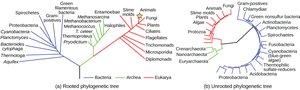
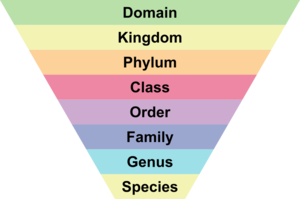
Evolutionary relationships among species are depicted as branching trees. Taxonomy is the science of classifying organisms, using a hierarchy from domain to species.
Scientific Inquiry
The Process of Science
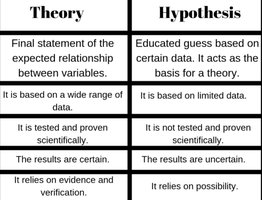
Science is a process of inquiry involving observation, hypothesis formation, and experimentation. A hypothesis is a tentative explanation that can be tested, while a theory is a broader, well-supported explanation.
Experimental Design
Experiments involve variables:
Independent variable: Manipulated by the researcher (cause).
Dependent variable: Measured response (effect).
Control group: Serves as a baseline for comparison.
Data can be qualitative (descriptive) or quantitative (numerical). Scientific explanations must be testable and repeatable.