 Indietro
Introduction to Carbohydrates: Structure, Function, and Biological Roles
Guida di studio - Note intelligenti
 Appunti personalizzati basati sui tuoi materiali, ampliati con definizioni chiave, esempi e contesto.
Introduction to Carbohydrates
Overview of Carbohydrates
Carbohydrates are essential biomolecules that play critical roles in energy storage, cell structure, and cell recognition. Their biological function is determined by their structure and the way their monomers are linked together.
Monosaccharides: Simple sugars, the basic monomer units.
Oligosaccharides: Short chains of monosaccharide units.
Polysaccharides: Long chains (polymers) of monosaccharide units.
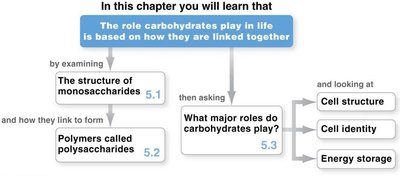
Monosaccharide Structure and Diversity
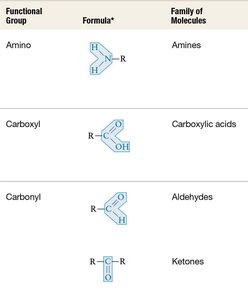
Key Functional Groups in Carbohydrates
Monosaccharides contain several important functional groups that determine their chemical properties and reactivity:
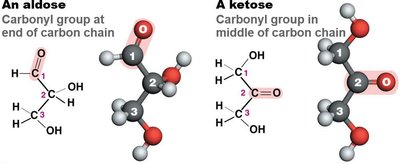
Carbonyl group (C=O): Can be at the end (aldose) or within the carbon chain (ketose).
Hydroxyl groups (C–OH): Multiple per molecule, contribute to polarity and solubility.
C–H bonds: Provide energy when oxidized.
General Formula and Polarity
The general formula for carbohydrates is , where n is the number of carbon atoms. For example, is a triose sugar. Due to the presence of oxygen atoms in carbonyl and hydroxyl groups, carbohydrates are polar and hydrophilic.
Structural Variations in Monosaccharides
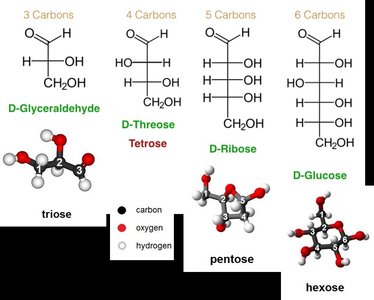
Monosaccharides vary in four main ways:
Number of carbon atoms: trioses (3C), tetroses (4C), pentoses (5C), hexoses (6C).
Location of the carbonyl group: Aldose (end of chain), Ketose (within chain).
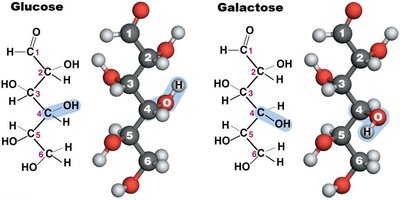
Arrangement of hydroxyl groups: Isomers differ in the spatial arrangement of –OH groups.
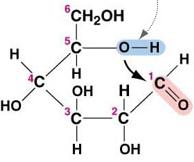
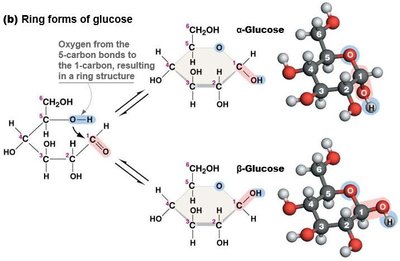
Linear vs. ring forms: In aqueous solutions, most monosaccharides form rings.
Ring Formation of Monosaccharides
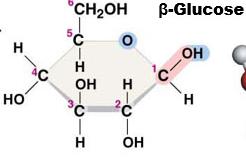
Monosaccharides with five or more carbons typically form ring structures in aqueous solutions. The ring can form in different orientations, leading to α (alpha) and β (beta) anomers, depending on the position of the hydroxyl group at the anomeric carbon (carbon 1).
Monosaccharides in Chemical Evolution
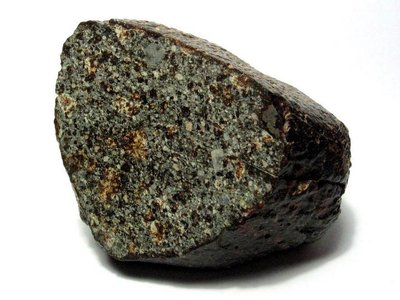
Monosaccharides can be synthesized under prebiotic conditions and have been found on meteorites, suggesting a possible extraterrestrial origin for some biological molecules.
Polysaccharides: Structure and Formation
Polymerization of Monosaccharides
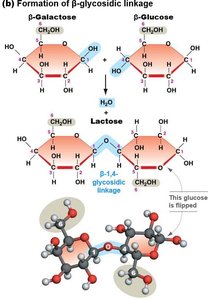
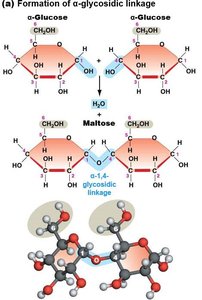
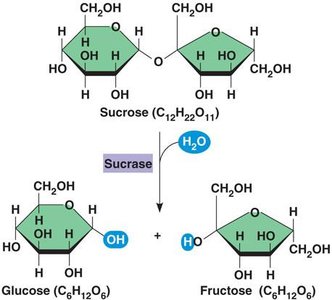
Polysaccharides are formed by linking monosaccharide monomers through glycosidic linkages, which are covalent bonds formed via condensation (dehydration synthesis) reactions between hydroxyl groups. The reverse process, hydrolysis, breaks these bonds.
α-1,4-glycosidic linkage: Both monomers oriented the same way; common in energy storage polysaccharides.
β-1,4-glycosidic linkage: Monomers alternate orientation; common in structural polysaccharides.
Major Functions of Polysaccharides
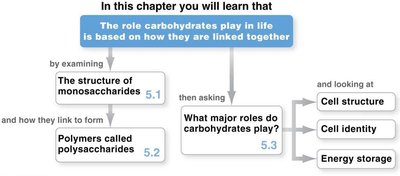
Polysaccharides serve three primary biological functions:
Energy storage: Starch (plants) and glycogen (animals) are polymers of α-glucose, easily hydrolyzed for energy.
Structural support: Cellulose (plants), chitin (fungi and arthropods), and peptidoglycan (bacteria) are polymers with β-linkages, forming strong fibers or sheets.
Cell identity and signaling: Oligosaccharides attached to proteins (glycoproteins) or lipids (glycolipids) on cell surfaces are key for cell recognition and communication.
Polysaccharides for Energy Storage
Starch and Glycogen
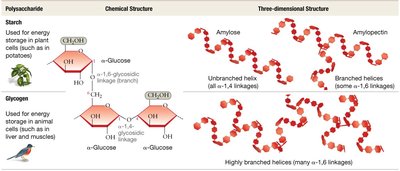
Starch (plants) and glycogen (animals) are energy storage polysaccharides composed of α-glucose units. Their helical structure and branching (via α-1,6 linkages) allow rapid mobilization of glucose when energy is needed.
Starch: Unbranched (amylose) and branched (amylopectin) forms.
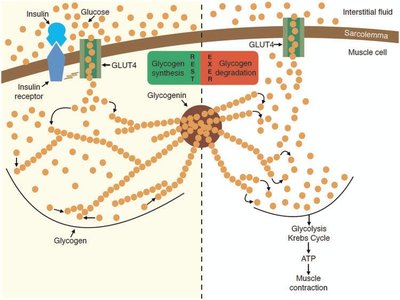
Glycogen: Highly branched, stored in liver and muscle cells.
Enzymatic Hydrolysis and ATP Production
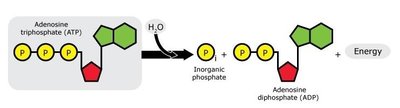
Enzymes such as amylase (for starch) and phosphorylase (for glycogen) hydrolyze these polysaccharides to release glucose, which is then used in cellular respiration to produce ATP.
Polysaccharides for Structural Support
Cellulose, Chitin, and Peptidoglycan
Structural polysaccharides are composed of β-linked monosaccharides, forming long, straight fibers that provide rigidity and resistance to hydrolysis.
Cellulose: Main component of plant cell walls; made of β-glucose.
Chitin: Found in fungal cell walls and arthropod exoskeletons; contains N-acetylglucosamine.
Peptidoglycan: Bacterial cell wall component; includes short peptide chains.
Carbohydrates and Cell Identity
Glycoproteins and Glycolipids
Carbohydrates attached to proteins (glycoproteins) and lipids (glycolipids) on the cell surface are crucial for cell-cell recognition and signaling. These molecules act as identification badges, allowing cells to distinguish self from non-self and to communicate with each other.
Case Study: Fertilization
During fertilization, sperm recognize and bind to specific glycoproteins on the surface of egg cells, ensuring species-specific fertilization. Experimental evidence shows that blocking these glycoproteins prevents sperm from binding to eggs.
Summary Table: Macromolecule Comparison
The following table summarizes the key features of proteins, nucleic acids, and carbohydrates:
Macromolecule | Monomers | Bonds | Structural Levels | Examples/Types | Functional Groups |
|---|---|---|---|---|---|
Proteins | Amino acids | Peptide bonds | Primary, secondary, tertiary, quaternary | Enzymes, antibodies | Amino, carboxyl |
Nucleic Acids | Nucleotides | Phosphodiester bonds | Primary, secondary, tertiary | DNA, RNA | Phosphate, hydroxyl |
Carbohydrates | Monosaccharides | Glycosidic linkages | Primary, secondary (branching) | Starch, cellulose, glycogen | Carbonyl, hydroxyl |
Additional info: This table is inferred from the context and standard biology curriculum.
