 Indietro
Introduction to Cellular and Molecular Biology: Models, Principles, and Scale
Guida di studio - Note intelligenti
 Appunti personalizzati basati sui tuoi materiali, ampliati con definizioni chiave, esempi e contesto.
Introduction to Biology
What is Life?
Living organisms are composed of non-living matter that obeys physical and chemical laws. The diversity and abundance of life on Earth are enabled by specific factors and structures in both living systems and the physical universe. - Key Point: Life exists, persists, and multiplies through the organization of matter and energy. - Key Point: Cells are dynamic, capable of responding, moving, and replicating.
What is a Cell?
A cell is the smallest unit capable of carrying out all activities of life. Cells are not static; they change, respond, move, and replicate. - Key Point: Cells are the basic unit of life, not molecules or organelles. - Key Point: Mitochondria and other organelles actively move within cells, demonstrating cellular dynamism.
How to Science: Models and Scientific Process
Perception and Models
Our brains simplify reality into models to help us survive and reproduce. Science formalizes this process by building explicit models and testing them against the world. - Key Point: Perception is a refined model, not a direct readout of reality. - Key Point: Scientific models are simplified representations that retain features relevant to a question and omit others.
Electromagnetic Spectrum and Perception
The human eye detects only a narrow band of the electromagnetic spectrum (visible light: ~400–700 nm). Other organisms perceive different parts of the spectrum, such as ultraviolet or infrared. 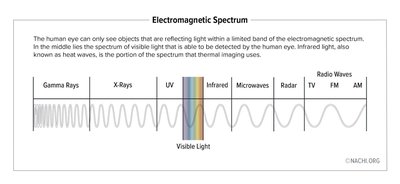 - Example: Bees see ultraviolet; pit vipers sense infrared. - Additional info: Perception evolved for survival, not for a complete picture of reality.
Scientific Models: Hypotheses, Theories, and Laws
- Model: A simplified representation of part of reality. - Hypothesis: A testable explanation for a specific observation or question. - Theory: A broad explanation supported by multiple lines of evidence, unifying many observations. - Law: A description of a regular pattern, often mathematical, describing what happens but not why. - Example: Cell theory states all organisms are made of cells and all cells come from pre-existing cells.
Scientific Method: The Loop
Science is a loop: observe, hypothesize, test, revise, and repeat. Failed tests provide valuable data. - Observe: Notice a pattern or puzzle. - Hypothesize: Propose a testable explanation. - Test: Predict and check with experiments or observations. - Revise: Refine or reject the model based on results.
Worked Example: Tree Mass
Where does a tree’s mass come from? Early hypotheses suggested soil, but experiments showed most mass comes from carbon dioxide in the air and water, via photosynthesis. 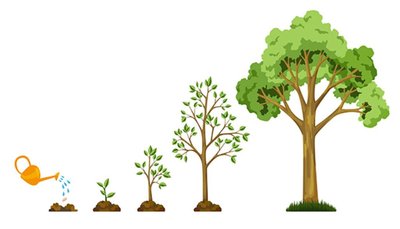 - Example: Jan Baptist van Helmont’s experiment rejected the soil hypothesis, leading to the discovery of photosynthesis.
First Principles: Atoms, Molecules, and Cells
Levels of Biological Organization
Atoms combine to form molecules, which organize into cells—the smallest living unit. - Key Point: Three kinds of subatomic particles (protons, neutrons, electrons) build every element. - Key Point: Six elements (C, H, N, O, P, S) make up about 98% of human body mass.
Table: Major Elements in the Human Body
Element | % of Body Mass | Group |
|---|---|---|
Oxygen (O) | 65.0 | CHNOPS |
Carbon (C) | 18.5 | CHNOPS |
Hydrogen (H) | 9.5 | CHNOPS |
Nitrogen (N) | 3.3 | CHNOPS |
Phosphorus (P) | 1.0 | CHNOPS |
Sulfur (S) | 0.3 | CHNOPS |
CHNOPS total | 97.6 | |
Other essential elements | 2.4 | Calcium, potassium, sodium, chlorine, magnesium |
Trace elements | <0.01 each | Iron, iodine, zinc, copper, and others |
Emergent Properties
Emergent properties arise from the arrangement and interaction of parts, not from any part alone. - Example: Sodium (Na) and chlorine (Cl₂) are hazardous alone, but together form table salt (NaCl), a stable compound. - Key Point: Life emerges from the organization of molecules within cells.
Self-Similarity and Patterns Across Scales
Biological systems often display self-similar patterns, such as branching in vasculature, roots, and neural networks. 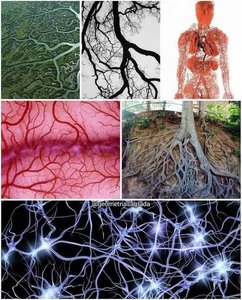
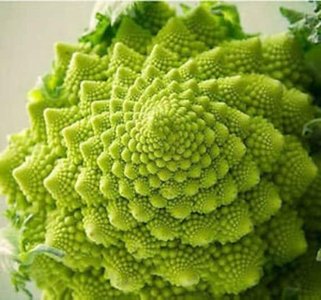
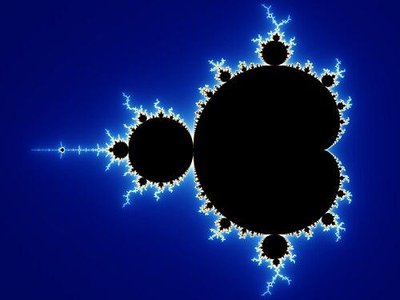 - Example: Romanesco broccoli and the Mandelbrot set illustrate repeating patterns at different scales. - Additional info: Biological repetition spans a limited range of scales; mathematical fractals can repeat infinitely.
Size and Scale in Biology
Orders of Magnitude
Biological structures range from atoms (~0.1 nm) to humans (~1.7 m), spanning about ten orders of magnitude. - Key Point: 1 m = 1,000 mm = 1,000,000 µm = 1,000,000,000 nm. - Key Point: Always convert to the same unit before comparing sizes.
Table: Typical Sizes of Biological Structures
Object | Typical Size |
|---|---|
Atom | ~0.1 nm |
Water molecule | ~0.3 nm |
Glucose molecule | ~1 nm |
Protein (hemoglobin) | ~5 nm |
Ribosome | ~20–30 nm |
Influenza virus | ~100 nm |
E. coli bacterium | ~1–2 µm |
Red blood cell | ~7.5 µm |
Human cell | ~10–30 µm |
Human egg cell | ~0.1 mm |
Human | ~1.7 m |
Comparing Sizes: Worked Example
- Example: A red blood cell (~7.5 µm) is about 75 times wider than an influenza virus (~100 nm).
Ranking Biological Structures by Size
- Order: Water molecule < Glucose < Virus < Bacterium < Red blood cell - Key Point: Viruses are smaller than bacteria, but there are exceptions (giant viruses, tiny bacteria).
Scaling Up: Visualizing Size Differences
Scaling everything up a millionfold, a bacterium becomes person-sized, and molecules become grains of sand. - Key Point: Cells pack enormous amounts of material into tiny spaces; organization is critical.
Summary and Key Terms
Four Core Ideas
1. Minds and science both build simplified models. 2. Science is a loop: observe, hypothesize, test, revise. 3. Simple units combine into levels with new properties. 4. Life spans about ten powers of ten in size.
Key Terms Defined
- Model: Simplified representation of part of reality - Hypothesis: Testable proposed explanation; a model that makes predictions - Theory: Broad, well-supported explanation that unifies many observations - Law: Description of a regular pattern (what happens, not why) - Variable: Anything that can take different values - Correlation: Two variables tend to change together - Causation: Changing one variable, all else equal, changes another - Confound: A third variable that causes both of two correlated variables - Element: Substance defined by its number of protons; cannot be chemically broken down - Atom: Smallest unit of an element that keeps its chemical properties - Molecule: Two or more atoms joined by covalent bonds - Cell: Smallest unit that can carry out all activities of life - Emergent property: Arises from parts’ arrangement and interaction, not any part alone - Order of magnitude: A factor of 10 - Resolution: Smallest separation at which two points appear distinct
Practice Questions
What strategies do our minds use to navigate reality? Answer: Filtering and modeling.
How many times wider is a red blood cell (~7.5 µm) than an influenza virus (~100 nm)? Answer: 75 times.
True or false: once a theory has enough evidence, it becomes a law. Answer: False. Theories explain; laws describe patterns. They are different kinds of claims.
