 Indietro
Introduction to General Biology: Foundations, Diversity, and Scientific Inquiry
Guida di studio - Note intelligenti
 Appunti personalizzati basati sui tuoi materiali, ampliati con definizioni chiave, esempi e contesto.
Introduction to Biology
Definition and Scope of Biology
Biology is the scientific study of life, encompassing a vast array of disciplines and subfields. The term derives from Greek: BIO (life) and LOGIA (study). Modern biology is a quest for understanding the nature of living organisms and their interactions with the environment.
Historical Subdivisions: Botany, Zoology, Microbiology
Current Subdivisions: Pathology, Hematology, Immunology, Ecology, Histology, Oncology, Ornithology, Ichthyology, Entomology, Herpetology, Mammalogy, Carcinology, and more
Importance of Terminology
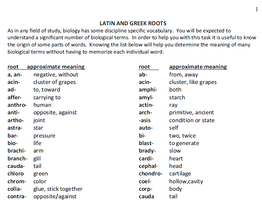
Biological terminology is largely based on Greek and Latin roots, which helps in understanding and memorizing scientific vocabulary. Familiarity with these roots is essential for interpreting biological terms.
Interdisciplinary Foundations
Modern biology is built upon principles from physics, chemistry, and mathematics, integrating these sciences to explain biological phenomena.
Why Study Biology?
Improving Human Condition: Advances in biology contribute to medicine, agriculture, and environmental conservation.
Ethical Decision-Making: Understanding biology aids in making informed and ethical choices.
Curiosity: Humans are naturally curious about the living world.
Characteristics of Life
Properties of Living Organisms
Living organisms share several fundamental properties that distinguish them from non-living matter.
Complex Organization: Living things are highly organized at molecular, cellular, and organismal levels.
Growth and Development: Organisms grow and undergo development, often following a specific life cycle.
Energy Utilization: Living organisms require energy to carry out metabolic processes.
Reproduction: All living things produce offspring, ensuring the continuation of their species.
Response to Stimuli: Organisms can respond to environmental changes.
Adaptation: Living things adapt to their environment through evolution.
Intraspecific Variation: Variation exists within species.
Homeostasis: Organisms maintain stable internal conditions.

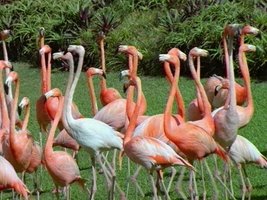

Organization and Classification of Living Things
Biological Hierarchy
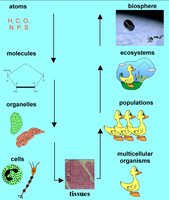
Living organisms are organized in a hierarchical structure, from atoms to the biosphere.
Atoms → Molecules → Organelles → Cells → Tissues → Organs → Organ Systems → Organisms → Populations → Ecosystems → Biosphere
Classification Hierarchy
Organisms are classified into a hierarchy of taxa, from most-inclusive to least-inclusive:
Domain → Kingdom → Phylum → Class → Order → Family → Genus → Species
Example: Panthera pardus (Leopard)
Taxonomic Rank | Example |
|---|---|
Domain | Eukarya |
Kingdom | Animalia |
Phylum | Chordata |
Class | Mammalia |
Order | Carnivora |
Family | Felidae |
Genus | Panthera |
Species | Panthera pardus |
Diversity of Life
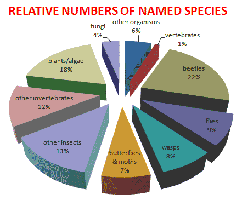
The diversity of life is immense, with millions of species named and many more yet to be discovered.
Named species: About 2.3 million
Estimated total: 10 to 20 million
The Three Domains of Life
All living organisms are classified into three domains: Bacteria, Archaea, and Eukarya.
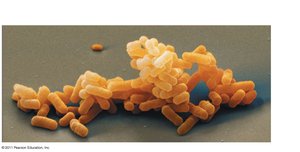
Bacteria: Unicellular, prokaryotic organisms. Examples include E. coli and Streptococcus.
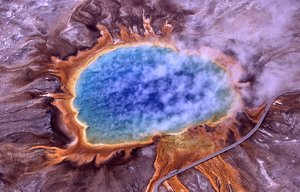
Archaea: Unicellular, prokaryotic organisms often found in extreme environments. Examples include thermophiles, halophiles, acidophiles, and methanogens.
Eukarya: Organisms with a nucleus, including animals, plants, fungi, and protists. Can be unicellular or multicellular.
The Process of Science
Nature of Science
Science is a systematic way of knowing about the natural world, involving curiosity, observation, and experimentation. It is based on Latin "scientia" meaning knowledge.
Science involves: Asking questions, making careful observations, and attempting to answer questions about the physical world.
Natural phenomena: Science studies phenomena that can be observed and measured.
Skepticism: Scientists require rigorous evidence before accepting claims.
Reasoning in Science
Scientific knowledge is built using two main types of reasoning:
Inductive Reasoning: Deriving generalizations from specific observations. Example: Observing that several hymenopterans sting and generalizing that all hymenopterans sting.
Deductive Reasoning: Using general principles to make specific predictions. Example: If all hymenopterans sting, then a specific hymenopteran will sting.
The Scientific Method
The scientific method is a standard approach to understanding the natural world, combining inductive and deductive reasoning.
Make Observations
Formulate a Hypothesis: A testable statement or prediction
Design an Experiment
Conduct the Experiment
Analyze Results
Draw Conclusions
Communicate Findings
Repeat for Verification
Theory and Proof in Science
A theory is a concept strongly supported by scientific evidence and widely accepted by the scientific community. Examples include the Theory of Gravity, Atomic Theory, Cell Theory, and Plate Tectonics Theory. Science does not "prove" anything absolutely; it supports hypotheses and theories with evidence.
Limitations of the Scientific Method
Science is limited to studying detectable, natural phenomena. Ethical issues, human error, and deliberate fraud can affect scientific research, but science is a self-correcting process through replication, peer review, and public data.
Ethical Issues: Stem cell research, organ transplantation, and other controversial topics
Human Error: Mistakes in data collection or interpretation
Fraud: Deliberate falsification of data
Self-Correction: Replication, peer review, and statistical analysis help correct errors
Additional info: The notes provide a foundational overview suitable for the first chapter of a General Biology course, covering the nature of biology, characteristics of life, classification, and the scientific method.
