 Indietro
Introduction to Metabolism: Energy, Thermodynamics, and Enzyme Function
Guida di studio - Note intelligenti
 Appunti personalizzati basati sui tuoi materiali, ampliati con definizioni chiave, esempi e contesto.
Introduction to Metabolism
Energy: Forms and Definitions
Energy is defined as the capacity to cause change and exists in various forms, some of which can perform work. In biological systems, energy is essential for driving cellular processes and maintaining life.
Potential Energy: Stored energy due to an object's location or structure. Examples include chemical gradients, electrical gradients, and chemical energy stored in molecular bonds.
Kinetic Energy: Energy of motion. Examples include mechanical energy (movement due to muscle contraction), thermal energy (heat), and light energy (photons).
Chemical Energy: Energy stored in the bonds of molecules, available for release during chemical reactions.
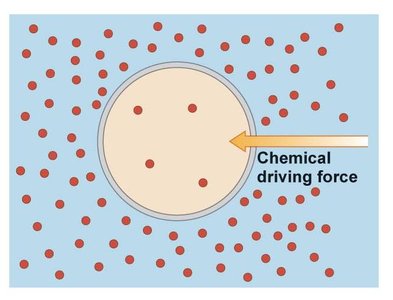
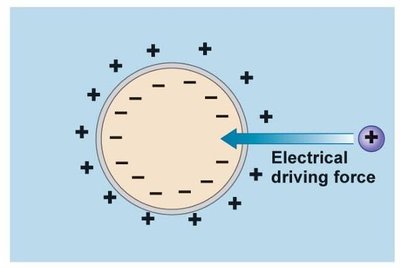
Example: A chemical gradient across a membrane represents potential energy, while muscle contraction is an example of kinetic energy.
Laws of Thermodynamics in Biology
Thermodynamics is the study of energy transfers and transformations. Biological processes obey these laws, which govern how energy is used and transformed in living organisms.
First Law: Energy can be transferred or transformed, but not created or destroyed. The energy of the universe is constant.
Second Law: Every energy transfer or transformation increases the entropy (disorder) of the universe. Some energy is always lost as heat, increasing randomness.
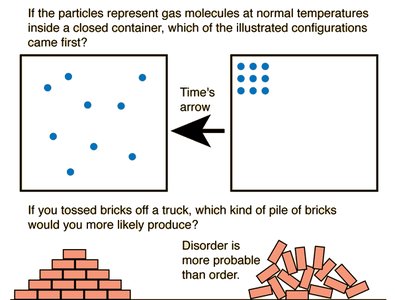
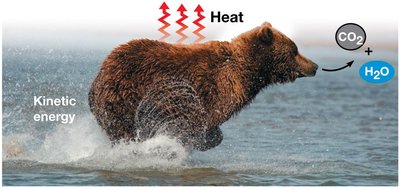
Example: When a bear runs, chemical energy from food is converted to kinetic energy and heat, demonstrating both laws.
Biological Order and Disorder
Cells and organisms create ordered structures from less organized materials, but this does not violate the second law of thermodynamics. Entropy may decrease locally, but the total entropy of the universe increases.
Organisms are islands of low entropy in an increasingly random universe.
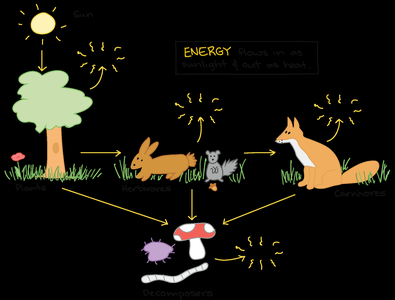
Example: Energy flows from sunlight to plants, then to animals and decomposers, with heat lost at each step.
Free Energy and Spontaneous Change
Gibbs Free Energy (G)
Free energy is the portion of a system’s energy that can do work under uniform temperature and pressure. The change in free energy () during a reaction determines whether the reaction is spontaneous.
A negative indicates a spontaneous reaction.
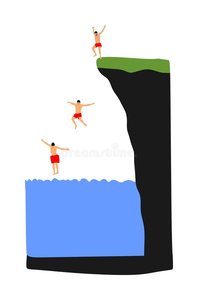
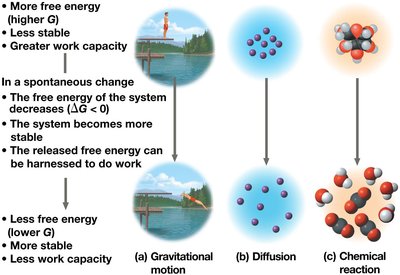
Example: Diffusion, gravitational motion, and chemical reactions can all be spontaneous if free energy decreases.
Metabolism: Catabolism and Anabolism
Overview of Metabolism
Metabolism encompasses all chemical reactions in a living organism. It is divided into two main types: catabolic (exergonic) and anabolic (endergonic) reactions.
Catabolism: Breakdown of molecules, releasing energy (exergonic, ).
Anabolism: Building of molecules, requiring energy input (endergonic, ).
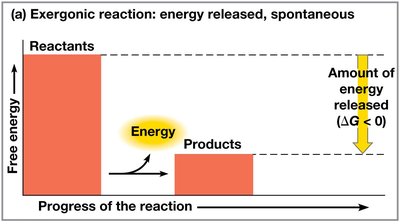

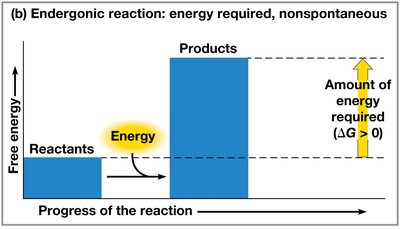

Example: Hydrolysis of ATP is catabolic and releases energy; synthesis of proteins is anabolic and requires energy.
ATP: The Energy Currency of the Cell
ATP (adenosine triphosphate) stores and releases energy for cellular work. Hydrolysis of ATP to ADP and inorganic phosphate releases energy.
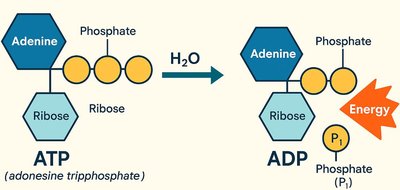
Example: ATP hydrolysis powers muscle contraction and active transport.
Activation Energy and Enzyme Function
Activation Energy (EA)
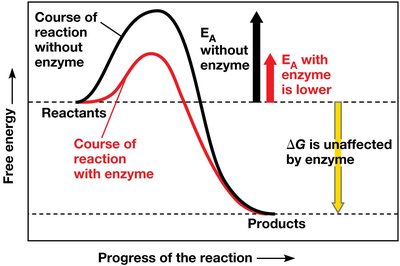
Activation energy is the initial input required to start a reaction. It allows reactants to reach a transition state where bonds are broken and formed.
EA determines the rate of reaction.
Spontaneous reactions may occur slowly without a catalyst.
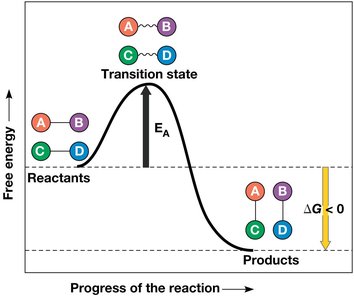

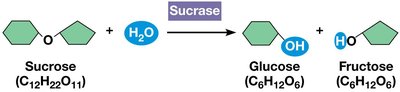
Example: Hydrolysis of sucrose is spontaneous but slow without an enzyme.
Enzymes: Biological Catalysts
Enzymes are macromolecules (usually proteins) that speed up reactions by lowering activation energy. They are highly specific for their substrates and are not consumed in the reaction.
Enzymes do not change ; they only increase reaction rate.
Each enzyme catalyzes a specific reaction.
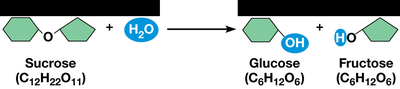
Example: Sucrase catalyzes the hydrolysis of sucrose to glucose and fructose.
Enzyme Structure and Specificity
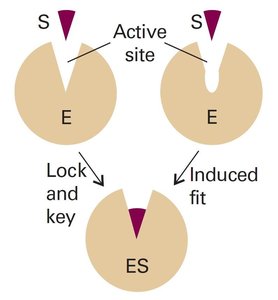
The substrate binds to the enzyme's active site, forming an enzyme-substrate complex. Enzyme specificity arises from the fit between the active site and substrate.
Lock and Key Model: Active site and substrate fit perfectly.
Induced Fit Model: Active site changes shape to fit substrate upon binding.
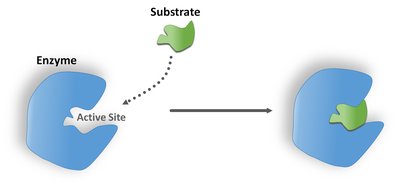
Example: Induced fit is more accurate for most enzymes.
Mechanisms of Enzyme Action
Enzymes facilitate reactions by straining substrate bonds, changing local environment, and positioning reactants together.
Enzymes lower activation energy by stabilizing the transition state.
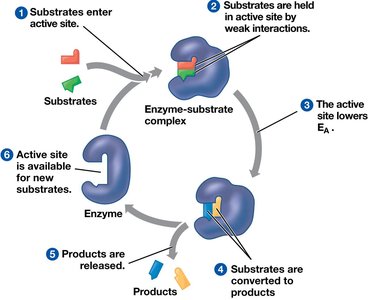
Example: Enzyme catalysis increases the probability of reactants interacting.
Enzyme Nomenclature and Examples
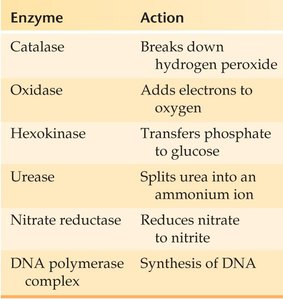
Enzyme names often reflect their function. For example, catalase breaks down hydrogen peroxide, and DNA polymerase synthesizes DNA.
Enzyme | Action |
|---|---|
Catalase | Breaks down hydrogen peroxide |
Oxidase | Adds electrons to oxygen |
Hexokinase | Transfers phosphate to glucose |
Urease | Splits urea into ammonium ion |
Nitrate reductase | Reduces nitrate to nitrite |
DNA polymerase complex | Synthesis of DNA |
Enzyme Regulation
Mechanisms of Regulation
Enzyme activity is regulated by various mechanisms, including synthesis/destruction, competitive and non-competitive inhibition, allosteric regulation, cofactors, phosphate groups, proteolytic activation, environmental conditions, and feedback inhibition.
Competitive Inhibition: Inhibitor binds to active site, blocking substrate.
Non-competitive (Allosteric) Inhibition: Inhibitor binds to allosteric site, changing enzyme shape and reducing activity.
Allosteric Activation: Activator binds to allosteric site, increasing enzyme activity.
Cofactors: Nonprotein molecules required for enzyme activity; can be inorganic (minerals) or organic (coenzymes, e.g., vitamins).
Phosphate Groups: Addition/removal of phosphate can activate or inhibit enzymes.
Proteolytic Activation: Irreversible activation by cleavage of covalent bonds.
Environmental Conditions: Each enzyme has optimal conditions; changes can cause denaturation.
Feedback Inhibition: End product of pathway inhibits key enzyme, preventing overproduction.
Example: Carbon monoxide competitively inhibits hemoglobin, preventing oxygen transport.
Additional info: Most regulatory mechanisms are reversible, allowing cells to respond dynamically to changing conditions.
