 Indietro
Introduction to Science, Scientific Method, and Biology
Guida di studio - Note intelligenti
 Appunti personalizzati basati sui tuoi materiali, ampliati con definizioni chiave, esempi e contesto.
Science and Scientific Thinking
What is Science?
Science is a systematic process of discovery that links isolated facts into a coherent understanding of the natural world. It involves methodical, objective observation, description, experimentation, and explanation of natural phenomena. Scientific inquiry requires curiosity, careful observation, and the ability to connect information logically.
Empiricism: Reliance on empirical evidence that is testable and repeatable.
Rationalism: Logical reasoning based on evidence.
Skepticism: Constant questioning and self-correction.
Scientific (Critical) Thinking
Scientific thinking is not limited to the study of the natural world. It is characterized by empiricism, rationalism, and skepticism, which together foster a fact-based, logical approach to understanding and problem-solving.
Logical Reasoning in Science
Science utilizes two main methods of logical reasoning:
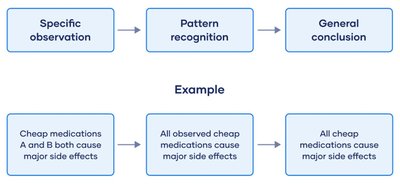
Inductive Reasoning: Uses specific observations to arrive at general conclusions. This is the basis of descriptive science, which involves observing, exploring, and discovering.
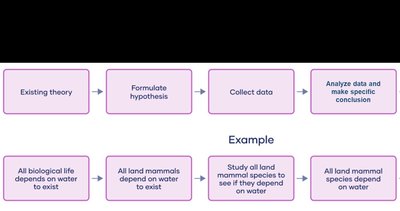
Deductive Reasoning: Uses general principles or laws to forecast specific results. This is the basis of hypothesis-based science, which starts with a specific question and potential answer.
Comparison: Inductive reasoning moves from individual observations to broad generalizations, while deductive reasoning moves from general principles to specific predictions.
The Scientific Method
Steps of the Scientific Method
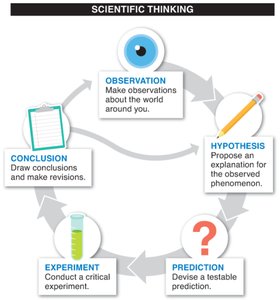
The scientific method is a structured approach to investigating questions about the natural world. It consists of the following steps:
Observation: Noting patterns and phenomena in the world.
Hypothesis: Proposing a testable explanation for the observation.
Prediction: Suggesting a specific outcome if the hypothesis is true.
Experiment: Conducting tests to gather evidence.
Conclusion: Analyzing results and revising the hypothesis as needed.
Well-Designed Scientific Experiment
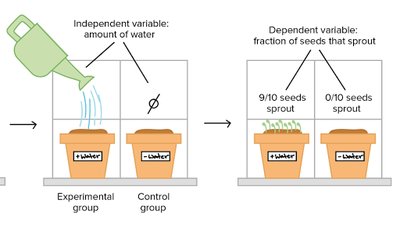
A well-designed experiment includes variables and controls to ensure reliable results:
Variable: The part of the experiment subject to change. Includes independent (cause) and dependent (effect) variables.
Control: The part of the experiment that does not change, used for comparison.
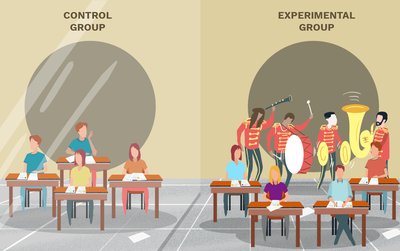
Experimental Group: Receives the treatment or intervention.
Control Group: Does not receive the treatment (may receive a placebo).
Differences in outcomes between groups are attributed to the variable being tested.
Scientific Theory
A scientific theory is an explanatory hypothesis for natural phenomena that is exceptionally well-supported by empirical data. It is testable, generates predictions, and has withstood repeated testing without contradiction. Examples include the Cell Theory and Theory of Relativity.
Advantages of Scientific Thinking
Dispels myths, half-truths, and superstitions.
Prevents being misled by pseudoscience and anecdotal evidence.
Leads to inventions and technological innovations.
Promotes scientific literacy, which is essential in modern society.
Ethical Dimensions of Science
Science depends on truthfulness and clear communication.
Scientists face societal and political issues (e.g., stem cell research, climate change).
Scientists must educate the public and avoid bias.
Biology: The Science of Life
Definition and Importance
Biology is the science of life. Biologists acquire knowledge about millions of organisms, including humans, impacting every aspect of life and society.
Characteristics of Life
Living things are defined by several key traits:
Organization: Higher level of organization than nonliving things.
Cellular Composition: Living matter is compartmentalized into one or more cells.
Metabolism: Sum of all internal chemical changes, including anabolism (synthesis) and catabolism (breakdown).
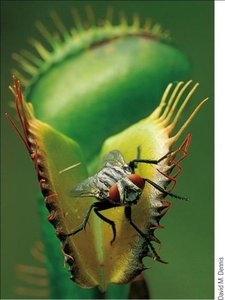
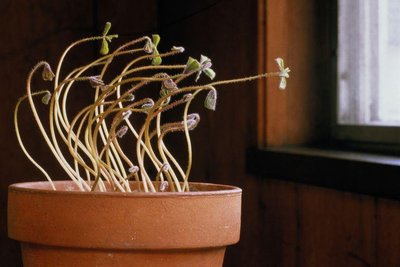
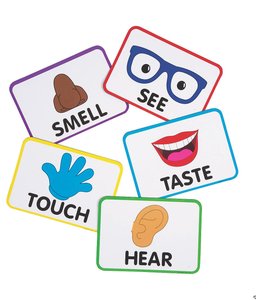
Responsiveness: Ability to sense and react to stimuli (irritability or excitability).
Homeostasis: Maintaining stable internal conditions.
Growth and Development: Increase in size and complexity.
Reproduction: Producing copies of themselves and passing genes to offspring.
Evolution and Adaptation: Changes in genes (mutations) resulting in structural and functional changes over generations.

Adaptation and Evolution
Adaptations are inherited characteristics that enhance survival in a particular environment. These may be structural, physiological, biochemical, behavioral, or a combination.
Review Questions
What is science? What are the hallmarks of a “scientist”?
What are the two methods of scientific reasoning? How are they similar and how are they different?
How do we do science? Or What is the scientific method?
What is a hypothesis? How is it different from a superstition?
How will you design a good scientific experiment?
What is a control and variable in a scientific experiment?
What is the difference between dependent and independent variable?
What is a scientific theory? How is it established? How is it different from a hypothesis?
List the advantages of thinking like a scientist.
Name some of the fundamental questions in biology.
What are the traits that define life?
Additional info: The notes above expand on brief points from the original material, providing definitions, examples, and academic context for clarity and completeness.
