 Indietro
Invertebrate Diversity: Annelids, Arthropods, Echinoderms, and Chordates
Guida di studio - Note intelligenti
 Appunti personalizzati basati sui tuoi materiali, ampliati con definizioni chiave, esempi e contesto.
Invertebrate Diversity
Annelids: Segmented Worms
Annelids (phylum Annelida) are segmented worms characterized by a body divided into repeated segments. This segmentation allows for specialization of body regions and efficient movement.
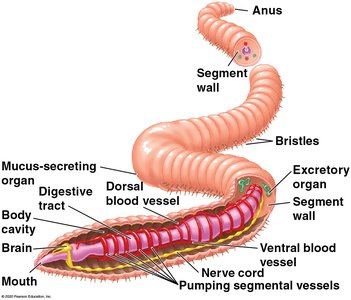
Segmentation: The body is divided into a series of repeated parts, each containing similar sets of organs and structures.
Nervous System: Annelids possess a simple nervous system with a ventral nerve cord and segmental ganglia.
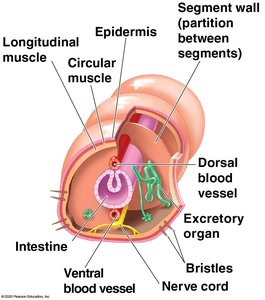
Body Cavity: The coelom (body cavity) is partitioned by membrane walls, with repeated structures in each segment.
Digestive System: A one-way digestive tract runs through the body, not segmented, passing through segment walls.
Circulatory System: Annelids have a closed circulatory system, where blood remains enclosed in vessels. The dorsal and ventral blood vessels are connected by segmental vessels, and the 'heart' consists of enlarged regions of these vessels.
Movement: Coordinated contractions of circular and longitudinal muscles enable movement.
Major Clades:
Errantians: Mostly mobile marine worms.
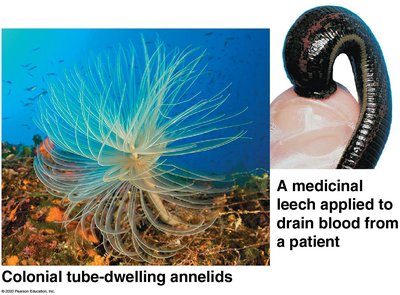
Sedentarians: Less mobile, including earthworms, leeches, and tube-dwellers.
Comparison: Many invertebrates such as molluscs and arthropods have an open circulatory system, unlike annelids.
Arthropods: Segmented Animals with Jointed Appendages and an Exoskeleton
Arthropods (phylum Arthropoda) are the most diverse group of animals, including insects, crustaceans, arachnids, and myriapods. Their evolutionary success is attributed to several key features.
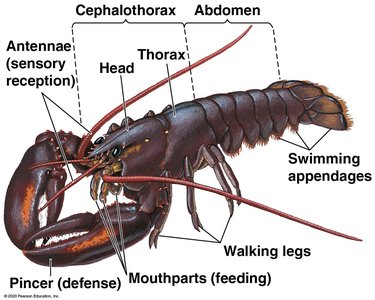
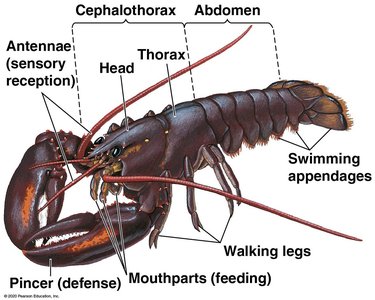
Segmentation: The body is divided into segments, often grouped into functional regions (e.g., head, thorax, abdomen).
Exoskeleton: A hard, chitinous covering provides protection and support. Arthropods must molt (ecdysis) to grow.
Jointed Appendages: Specialized for various functions such as locomotion, feeding, and sensory perception.
Open Circulatory System: Blood is pumped by a tube-like heart into open body cavities.
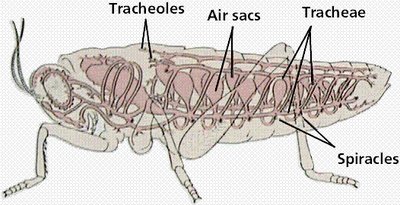
Gas Exchange: Gills in aquatic species; internal air sacs and tracheal systems in terrestrial insects.
Digestive System: Complete, running from mouth to anus.
Major Arthropod Lineages
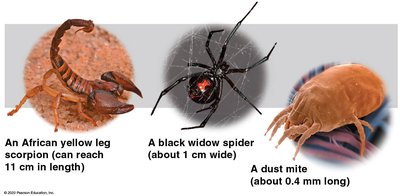
Chelicerates: Claw-like feeding appendages; includes arachnids (scorpions, spiders, ticks, mites).
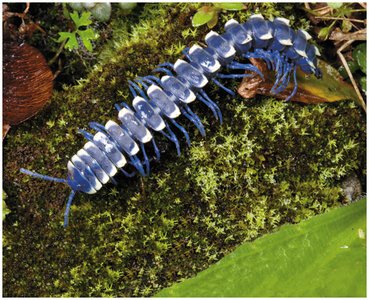
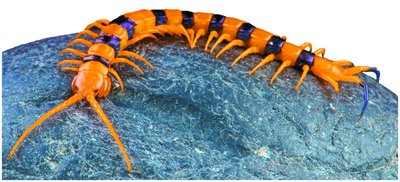
Myriapods: Segmented bodies with jointed legs; includes millipedes (two pairs of legs per segment) and centipedes (one pair per segment).
Pancrustaceans: Includes crustaceans (lobsters, crabs, barnacles, crayfish) and insects.
Insects: The Most Successful Group of Animals
Insects are the most diverse and abundant group of animals, occupying nearly every terrestrial habitat and many freshwater environments.
Body Plan: Divided into head (sensory organs, feeding appendages), thorax (movement), and abdomen (vital organs).
Appendages: Three pairs of legs and usually one or two pairs of wings.
Modular Development: Each segment develops independently, allowing for evolutionary flexibility.
Success Factors: Segmentation, exoskeleton, jointed appendages, flight, waterproof cuticle, complex life cycles, and high reproductive rates.
Metamorphosis: Many insects undergo complete metamorphosis, with distinct larval, pupal, and adult stages.
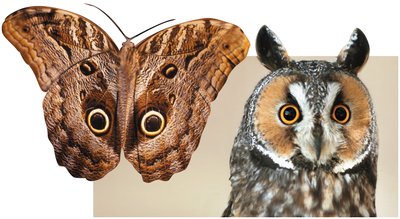
Specialized Adaptations: Protective coloration and specialized appendages, often resulting from changes in homeotic gene expression.
Echinoderms: Spiny-Skinned Marine Animals
Echinoderms (phylum Echinodermata) are exclusively marine animals such as sea stars, sea urchins, and sand dollars. They are notable for their unique body plan and water vascular system.
Symmetry: Radially symmetrical as adults.
Endoskeleton: Composed of hard calcium-containing plates beneath the skin.
Water Vascular System: A network of water-filled canals branching into tube feet, used for movement, feeding, and gas exchange.
Regeneration: Many echinoderms can regenerate lost arms.
Deuterostomes: Along with chordates, echinoderms develop the anus from the blastopore during embryonic development.
Functions of the Water Vascular System: Locomotion, feeding, and respiration.
Chordates: Our Own Phylum
Chordates (phylum Chordata) are defined by four key features present at some stage in their life cycle.
Dorsal, Hollow Nerve Cord: Runs along the back, develops into the central nervous system.
Notochord: A flexible, supportive rod running the length of the body.
Pharyngeal Slits: Openings in the pharynx used for suspension feeding or respiration.
Muscular Post-Anal Tail: Extends beyond the anus, used for movement in many species.
Invertebrate Chordates: Tunicates and lancelets lack a backbone and use pharyngeal slits for suspension feeding. Adult tunicates are sessile, while larvae are free-swimming and tadpole-like.
Summary Table: Major Animal Phyla and Key Traits
Phylum | True Tissues | Embryonic Layers | Symmetry | Development | Circulatory System |
|---|---|---|---|---|---|
Annelida | Yes | Three | Bilateral | Protostome | Closed |
Arthropoda | Yes | Three | Bilateral | Protostome | Open |
Echinodermata | Yes | Three | Radial (adult) | Deuterostome | Water vascular |
Chordata | Yes | Three | Bilateral | Deuterostome | Closed (in vertebrates) |
Key Terms and Concepts
Segmentation: Division of the body into repeated segments, seen in annelids, arthropods, and chordates.
Molting (Ecdysis): Shedding of the exoskeleton to allow growth in arthropods.
Metamorphosis: Developmental process in insects involving distinct larval, pupal, and adult stages.
Water Vascular System: Unique to echinoderms, used for movement and feeding.
Homeotic Genes: Genes that control the development of anatomical structures in various organisms.
Sample Exam Preparation Questions
Describe the defining characteristics of annelids, arthropods, echinoderms, and chordates.
Compare the circulatory systems of annelids and arthropods.
Explain the significance of segmentation in animal evolution.
What are the functions of the water vascular system in echinoderms?
List and describe the four key features of chordates.
