 Indietro
Ch. 31 Kingdom Fungi: Structure, Diversity, and Life Cycles
Guida di studio - Note intelligenti
 Appunti personalizzati basati sui tuoi materiali, ampliati con definizioni chiave, esempi e contesto.
Kingdom Fungi
Defining Features and Ecological Roles
The Kingdom Fungi is a diverse group of eukaryotic organisms unified by several key features and important ecological roles. Fungi are essential decomposers, mutualists, and pathogens in ecosystems.
Eukaryotic: Fungi possess membrane-bound organelles and a true nucleus.
Multicellular: Most fungi are multicellular, though some (like yeasts) are unicellular.
Heterotrophic: Fungi obtain nutrients by absorbing organic material from their environment.
Absorptive Nutrition: Fungi secrete exoenzymes to break down complex molecules, then absorb the resulting smaller molecules.
Ecological Roles: Fungi act as decomposers (saprotrophs), parasites, mutualists (e.g., mycorrhizae, lichens), and even predators.
Importance: Fungi recycle nutrients, form symbiotic relationships with plants, and can cause diseases in plants and animals.
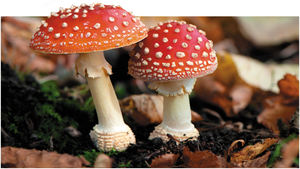
Fungal Structure
Fungi are primarily composed of thin, tubular threads called hyphae. Hyphae are usually haploid and collectively form a mat known as a mycelium, which is the main body of the fungus.
Hyphae: The basic structural unit; can be divided by septa (cross-walls) with pores for organelle movement.
Mycelium: A network of hyphae that increases surface area for absorption.
Septa: Structures that divide hyphae into cells, but allow cytoplasmic streaming.
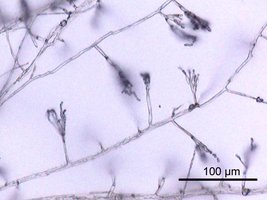
Fungal Nutrition
Fungi are heterotrophs that absorb nutrients from their surroundings. They do not ingest food but rely on external digestion.
Exoenzymes: Secreted to break down complex molecules outside the cell.
Absorption: Smaller molecules are absorbed through the cell wall and membrane.
Fungal Diversity and Phylogeny
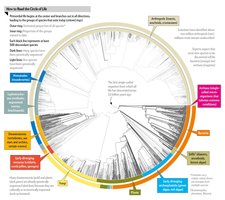
Fungi are classified into several major groups based on their reproductive structures and genetic relationships. The superphylogeny of eukaryotes places fungi within the Unikonta supergroup, alongside animals.
Major Groups: Cryptomycetes, Microsporidians, Chytrids, Zoopagomycetes, Mucoromycetes, Ascomycetes, Basidiomycetes.
Phylogeny: Fungi are monophyletic, sharing a common ancestor with animals.
Major Fungal Groups
Cryptomycetes (Phylum Cryptomycota): Unicellular, flagellated spores, chitin-rich cell wall, mostly parasitic.
Microsporidians (Phylum Microsporidia): Unicellular, highly reduced mitochondria, harpoon-like organelle, parasitic.
Chytrids (Phylum Chytridiomycota): Flagellated zoospores, unicellular and multicellular, decomposers, mutualists, parasites.
Zoopagomycetes (Phylum Zoopagomycota): Zygosporangium in sexual reproduction, nonflagellated spores, parasitic or commensal.
Mucoromycetes (Phylum Mucoromycota): Multicellular, zygosporangium, pathogens, decomposers, mutualists.
Ascomycetes (Phylum Ascomycota): Ascocarps, asci, conidia, unicellular and multicellular, pathogens, decomposers, mutualists.
Basidiomycetes (Phylum Basidiomycota): Basidiocarps, basidia, unicellular and multicellular, pathogens, decomposers, mutualists.
Fungal Life Cycle
Fungi exhibit complex life cycles, often involving both sexual and asexual reproduction. The generalized fungal life cycle includes haploid, heterokaryotic, and diploid stages.
Plasmogamy: Fusion of cytoplasm from two parent mycelia.
Heterokaryotic Stage: Cells contain nuclei from both parents (haploid).
Karyogamy: Fusion of nuclei to form a diploid zygote.
Meiosis: Diploid zygote undergoes meiosis to produce haploid spores.
Asexual Reproduction: Haploid spores are produced by mitosis.
Key Stages:
Haploid: Most of the fungal life cycle; spores and hyphae are haploid.
Heterokaryotic: After plasmogamy, before karyogamy.
Diploid: Brief stage after karyogamy (zygote).
Generalized Fungal Life Cycle Equation:
Fungal Reproduction
Sexual reproduction in fungi begins with the fusion of hyphae (plasmogamy), followed by a heterokaryotic stage, and then nuclear fusion (karyogamy). The diploid zygote quickly undergoes meiosis to produce haploid spores.
Fungal Nutrition and Lifestyles
Fungi exhibit a variety of lifestyles, each contributing to their ecological significance.
Decomposers (Saprotrophs): Break down dead organic matter.
Parasites: Infect living hosts, causing disease.
Mutualistic Symbionts: Form beneficial relationships (e.g., mycorrhizae with plants, lichens with algae).
Predators: Some fungi trap and consume small organisms.
Examples and Applications
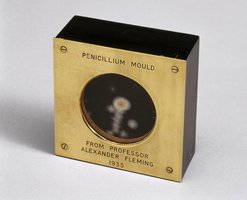
Penicillium: Source of the antibiotic penicillin, a major medical breakthrough.
Mushrooms: Basidiomycetes, important decomposers and food sources.
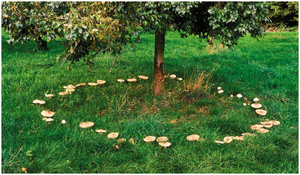
Fairy Rings: Circular growth pattern of mushrooms, illustrating fungal mycelium expansion.
Summary Table: Major Fungal Groups
Group | Key Features | Ecological Role |
|---|---|---|
Cryptomycetes | Unicellular, flagellated spores, chitin wall | Parasitic |
Microsporidians | Reduced mitochondria, harpoon organelle | Parasitic |
Chytrids | Flagellated zoospores, chitin wall | Decomposers, mutualists, parasites |
Zoopagomycetes | Zygosporangium, nonflagellated spores | Parasitic, commensal |
Mucoromycetes | Zygosporangium, multicellular | Pathogens, decomposers, mutualists |
Ascomycetes | Ascocarps, asci, conidia | Pathogens, decomposers, mutualists |
Basidiomycetes | Basidiocarps, basidia | Pathogens, decomposers, mutualists |
Fungal Phylogeny and Evolution
Fungi are closely related to animals and are part of the Unikonta supergroup. Their evolutionary history is traced through molecular and morphological data.
Conclusion
Fungi are a diverse and ecologically vital kingdom, characterized by unique structural features, complex life cycles, and a wide range of ecological roles. Understanding their biology is essential for appreciating their impact on ecosystems and human society.
