 Indietro
Kingdom Fungi: Structure, Function, and Classification
Guida di studio - Note intelligenti
 Appunti personalizzati basati sui tuoi materiali, ampliati con definizioni chiave, esempi e contesto.
Kingdom Fungi
Fungal Nutrition and Ecological Roles
Fungi are heterotrophic organisms that acquire nutrients by absorption, playing essential roles in ecosystems as decomposers, mutualists, and pathogens.
Absorptive Nutrition: Fungi secrete exoenzymes that digest food outside their bodies, breaking down complex molecules into simpler compounds for absorption.
Ecological Groups:
Saprobic fungi: Decompose nonliving organic matter, recycling nutrients.
Parasitic fungi: Absorb nutrients from living hosts, sometimes causing disease.
Mutualistic fungi: Form beneficial associations with other organisms, such as mycorrhizae and lichens.
Fungal Morphology
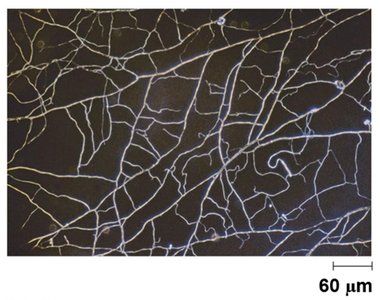
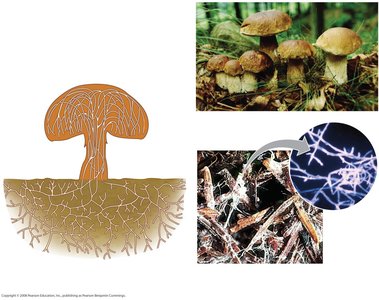
The vegetative body of most fungi consists of hyphae, which form a mycelium, providing a large surface area for nutrient absorption.
Hyphae: Tiny filaments that make up the fungal body.
Mycelium: Interwoven mat of hyphae, often subterranean and extensive.
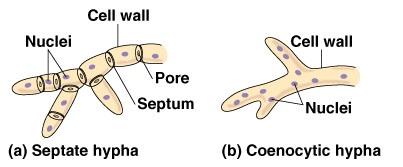
Cell Walls: Composed mainly of chitin, a strong, flexible polysaccharide.
Septate Hyphae: Divided by cross walls (septa) with pores for cytoplasmic streaming.
Coenocytic Hyphae: Lack septa, forming a continuous cytoplasmic mass with many nuclei.
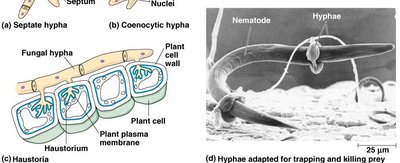
Specialized Hyphae:
Haustoria: Nutrient-absorbing tips in parasitic fungi.
Predatory Hyphae: Adapted for trapping and killing prey.
Fungal Growth and Size
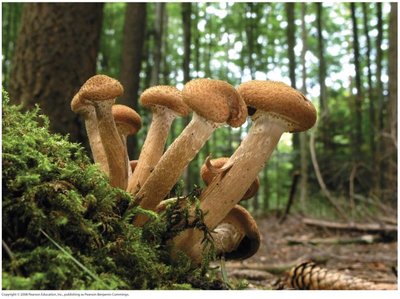
Fungal mycelia can be enormous, growing rapidly and often unnoticed underground.
Example: Armillaria ostoyae in Oregon covers 2,200 acres and is at least 2,400 years old.
Mycelia can add up to a kilometer of hyphae per day.
Fungal Reproduction
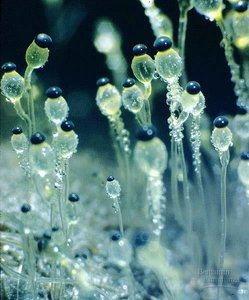
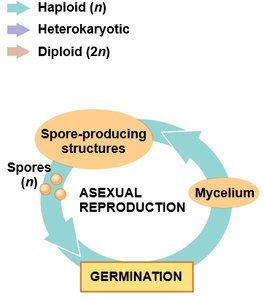
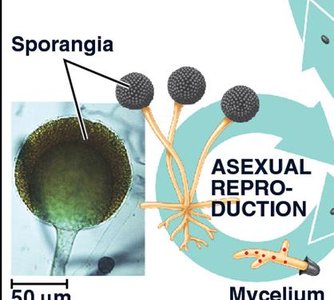
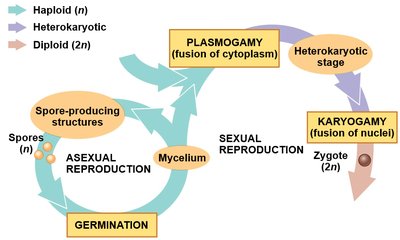
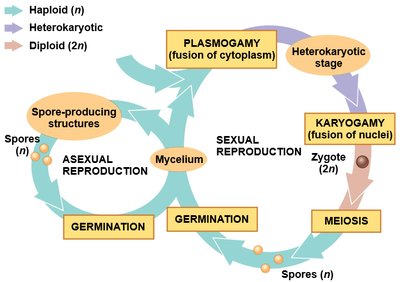
Fungi reproduce by releasing spores, which can be produced sexually or asexually.
Asexual Reproduction: Spores are produced on structures such as sporangia or conidiophores.
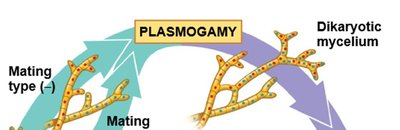
Sexual Reproduction: Involves plasmogamy (fusion of cytoplasm), followed by karyogamy (fusion of nuclei), and often a heterokaryotic stage.
Enormous numbers of spores are produced and dispersed by wind or water.
Fungal Classification
Major Phyla of Fungi
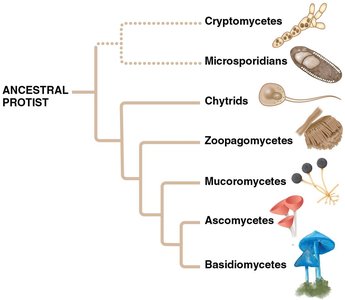
Fungi are classified into several phyla based on molecular and morphological characteristics.
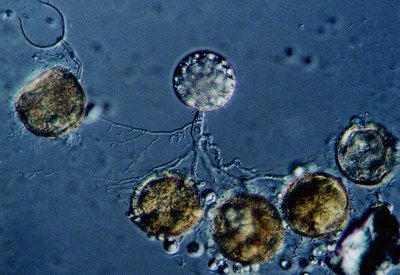
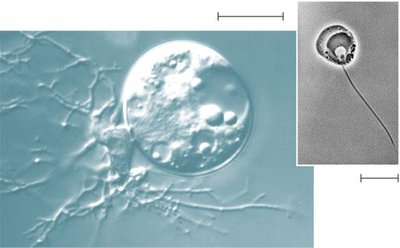
Chytridiomycota (Chytrids): Mainly aquatic, with flagellated zoospores. Some are saprobes, others are parasites. Cell walls contain chitin.
Zoopagomycetes: Parasites or commensals of animals, fungi, or protists. Form filamentous hyphae and reproduce asexually via nonflagellated spores.
Mucoromycetes: Terrestrial, often form mycorrhizae. Hyphae are coenocytic except in reproductive structures. Can reproduce sexually via zygosporangia.
Ascomycota (Sac Fungi): Includes yeasts, cup fungi, and morels. Characterized by ascocarps and an extensive heterokaryotic stage. Many are saprobes or plant pathogens; some form lichens or mycorrhizae.
Basidiomycota (Club Fungi): Includes mushrooms, shelf fungi, puffballs, rusts, and smuts. Important decomposers, especially of lignin. Life cycle includes basidiocarps and dikaryotic mycelium.
Fungal Diversity and Examples
Fungi display a wide range of forms and ecological roles.
Molds: Rapidly growing, asexually reproducing fungi. May later reproduce sexually.
Deuteromycetes (Imperfect Fungi): Fungi with no known sexual stage, reproduce asexually by haploid spores.
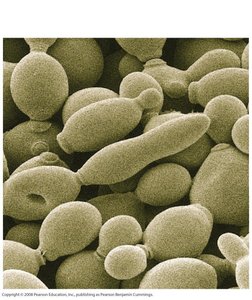
Yeasts: Unicellular fungi inhabiting moist environments. Reproduce asexually by budding or cell division; some reproduce sexually.
Lichens: Symbiotic associations of fungi and photosynthetic microorganisms, often mistaken for simple plants.
Mycorrhizae: Mutualistic associations between fungi and plant roots, crucial for plant nutrient uptake.
Fungi and Humans
Fungi in Medicine and Agriculture
Fungi have significant impacts on human health and agriculture, both beneficial and harmful.
Antibiotics: Fungi produce antibiotics, such as penicillin, used to treat bacterial infections.
Food Production: Yeasts are used in baking and brewing.
Pathogens: Many fungi are plant pathogens, causing crop losses and producing toxins harmful to humans.
Ergotism: Caused by ascomycete Claviceps purpurea on rye, leading to severe symptoms and historical epidemics.
Animal Pathogens: Some fungi, such as Batrachochytrium dendrobatidis, have caused declines in amphibian populations.
Summary Table: Major Fungal Groups
Phylum | Key Features | Ecological Role |
|---|---|---|
Chytridiomycota | Flagellated zoospores, chitin cell walls | Aquatic saprobes, parasites |
Zoopagomycetes | Filamentous hyphae, asexual spores | Animal/fungal/protist parasites |
Mucoromycetes | Coenocytic hyphae, zygosporangia | Soil decomposers, mycorrhizae |
Ascomycota | Ascocarps, heterokaryotic stage | Saprobes, pathogens, lichens |
Basidiomycota | Basidiocarps, dikaryotic mycelium | Wood decomposers, plant parasites |
Key Terms and Concepts
Hyphae: Filamentous structures forming the fungal body.
Mycelium: Network of hyphae.
Chitin: Structural polysaccharide in fungal cell walls.
Plasmogamy: Fusion of cytoplasm from two parent fungi.
Karyogamy: Fusion of nuclei from two parent fungi.
Dikaryotic: Cells with two distinct nuclei.
Ascocarp: Fruiting body of ascomycetes.
Basidiocarp: Fruiting body of basidiomycetes.
Mycorrhizae: Mutualistic association between fungi and plant roots.
Lichen: Symbiotic association of fungi and photosynthetic organisms.
Equations and Formulas
Surface Area Calculation: *Additional info: This formula is used to estimate the absorptive surface area of fungal mycelium.*
