 Indietro
Life Cycles and Meiosis: Structure, Function, and Genetic Variation
Guida di studio - Note intelligenti
 Appunti personalizzati basati sui tuoi materiali, ampliati con definizioni chiave, esempi e contesto.
Life Cycles and Meiosis
Overview of Life Cycles
The life cycle of an organism refers to the generation-to-generation sequence of stages in its reproductive history, from conception to the production of offspring. In sexually reproducing organisms, the life cycle alternates between haploid and diploid states, ensuring chromosome numbers remain constant across generations.
Haploid (n): A cell with one set of chromosomes.
Diploid (2n): A cell with two sets of chromosomes.
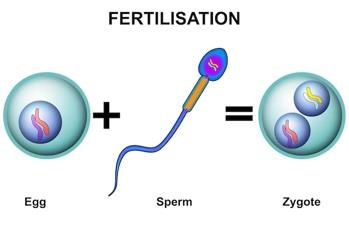
Fertilization: Fusion of two haploid gametes to form a diploid zygote.
Gametes: Sperm and egg cells produced in gonads (testes/ovaries).
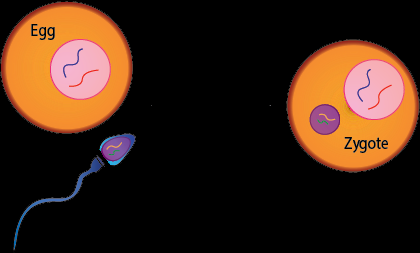
Human Life Cycle
Humans alternate between diploid and haploid states to maintain chromosome number. Gametes (n=23) fuse during fertilization to form a zygote (2n=46), which develops into a multicellular adult through mitosis.
Gamete formation: Occurs in gonads via meiosis.
Zygote: Result of fertilization, diploid.
Development: Zygote undergoes mitosis to become an adult.
Meiosis: Reduction Division
Purpose and Process of Meiosis
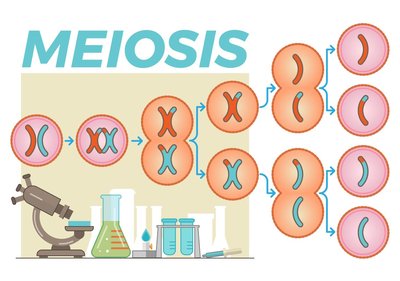
Meiosis is a specialized type of cell division that reduces chromosome number by half, producing haploid gametes. It counterbalances the doubling of chromosomes during fertilization and ensures genetic diversity.
Two rounds of cell division: Meiosis I and Meiosis II.
One round of DNA replication: Occurs before Meiosis I.
Result: Four haploid, genetically unique daughter cells.
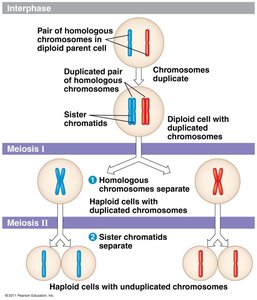
Terminology: Homologous Chromosomes
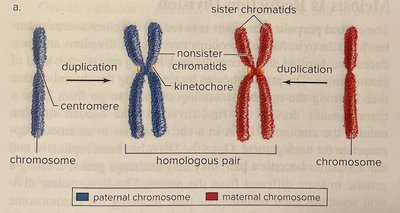
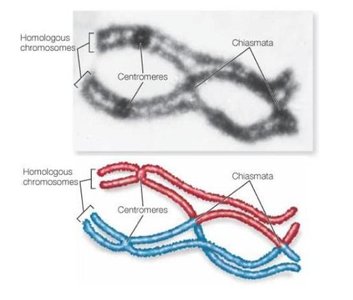
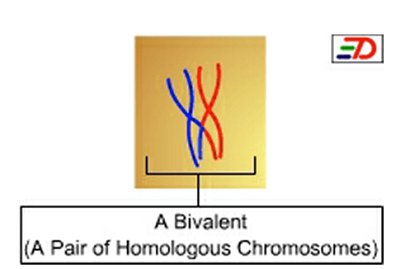
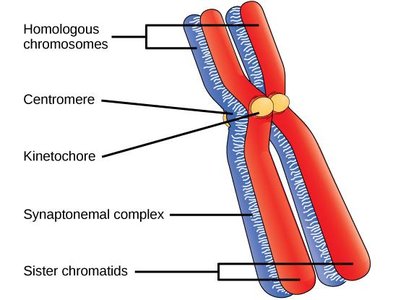
Homologous chromosomes are pairs of chromosomes (one from each parent) that are similar in size, shape, and gene content. Before meiosis, each chromosome is duplicated, forming sister chromatids.
Homologous chromosomes: Same genes, different parental origin.
Sister chromatids: Identical copies formed by DNA replication.
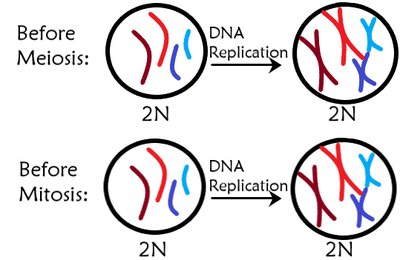
Stages of Meiosis
Meiosis I: Reduction Division
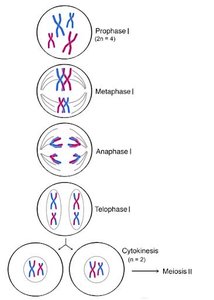
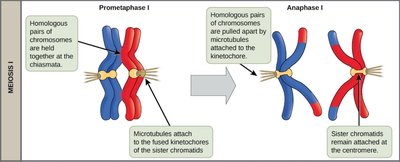
Meiosis I separates homologous chromosomes, reducing the chromosome number by half. It consists of four main stages: Prophase I, Metaphase I, Anaphase I, and Telophase I.
Prophase I: Chromosomes condense, nuclear envelope breaks down, homologous chromosomes pair (synapsis), crossing over occurs.
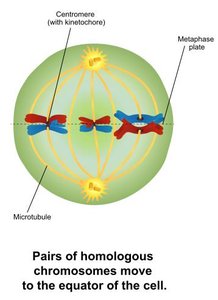
Metaphase I: Tetrads (homologous pairs) align at the metaphase plate.
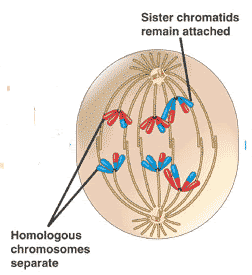
Anaphase I: Homologous chromosomes separate, sister chromatids remain attached.
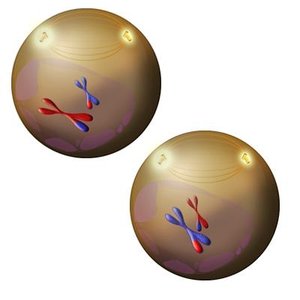
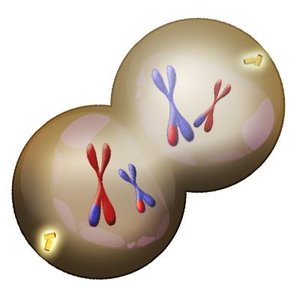
Telophase I/Cytokinesis: Two haploid cells form, each with duplicated chromosomes.
Meiosis II: Separation of Sister Chromatids
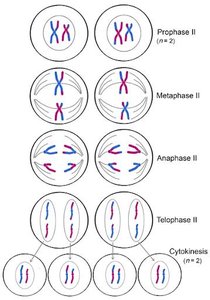
Meiosis II resembles mitosis, separating sister chromatids in each haploid cell. The stages are Prophase II, Metaphase II, Anaphase II, and Telophase II.
Prophase II: Chromosomes condense, spindle forms.
Metaphase II: Chromosomes align single file at the metaphase plate.
Anaphase II: Sister chromatids separate.
Telophase II/Cytokinesis: Four haploid, genetically unique cells are produced.
Genetic Variation in Meiosis
Crossing Over and Synapsis
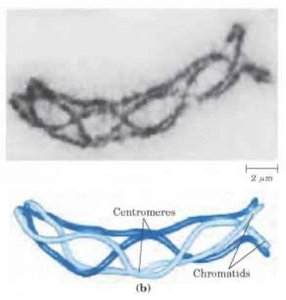
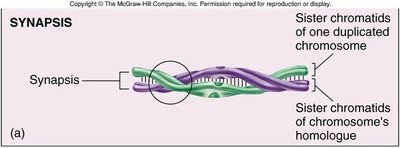
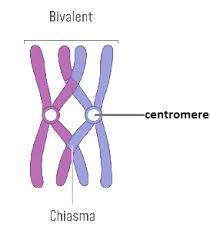
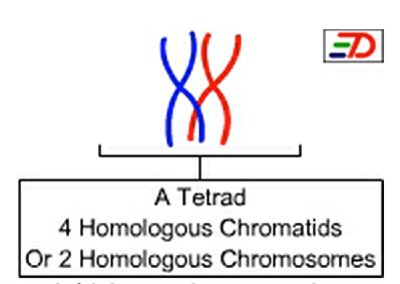
During Prophase I, homologous chromosomes pair up (synapsis) and exchange genetic material (crossing over), increasing genetic diversity. The synaptonemal complex holds homologs together, and crossing over occurs at chiasmata.
Synapsis: Physical pairing of homologous chromosomes.
Crossing over: Exchange of DNA between non-sister chromatids.
Chiasma: Site of crossing over, forms an X shape.
Comparing Mitosis and Meiosis
Key Differences
Mitosis and meiosis are both forms of cell division, but they serve different purposes and produce different outcomes.
Mitosis: Produces two identical diploid cells for growth and repair.
Meiosis: Produces four genetically unique haploid cells for sexual reproduction.
Genetic variation: Meiosis introduces variation via crossing over and independent assortment.
Feature | Mitosis | Meiosis |
|---|---|---|
Number of divisions | 1 | 2 |
Number of daughter cells | 2 | 4 |
Chromosome number | Diploid | Haploid |
Genetic identity | Identical | Unique |
Gametogenesis
Oogenesis and Spermatogenesis
Gametogenesis is the process of forming gametes. In females, oogenesis produces eggs, while in males, spermatogenesis produces sperm. Only one of the four daughter cells in oogenesis becomes an egg; the others are polar bodies.
Oogenesis: Begins before birth, eggs released monthly from puberty to menopause.
Spermatogenesis: Begins at puberty, continues daily.
Polar bodies: Non-functional cells produced during oogenesis.
Nondisjunction and Chromosomal Mutations
Nondisjunction
Nondisjunction is the improper segregation of chromosomes during meiosis, leading to aneuploidy (abnormal chromosome number). It can occur in Anaphase I or II, resulting in gametes with too many or too few chromosomes. Down syndrome (Trisomy 21) is a common example.
Euploidy: Correct chromosome number.
Aneuploidy: Incorrect chromosome number due to nondisjunction.
Trisomy 21: Three copies of chromosome 21.
Chromosomal Mutations
Chromosomal mutations can occur during meiosis, leading to structural changes in chromosomes. Students should understand that these mutations happen, but memorization of specific types is not required at this stage.
Types: Deletions, duplications, inversions, translocations.
Summary Table: Meiosis vs. Mitosis
Process | Purpose | Outcome |
|---|---|---|
Mitosis | Growth, repair | 2 identical diploid cells |
Meiosis | Sexual reproduction | 4 unique haploid cells |
Key Equations
Chromosome number after fertilization:
Chromosome number in gametes:
References
Openstax Ch. 13.2
Campbell Ch. 15.4
