Indietro
Linkage, Recombination, and Sex Chromosome Inheritance in Genetics
Guida di studio - Note intelligenti
 Appunti personalizzati basati sui tuoi materiali, ampliati con definizioni chiave, esempi e contesto.
Genetic Linkage and Recombination
Linked Genes and Two-Locus Crosses
Genetic linkage occurs when genes are located close together on the same chromosome, resulting in their tendency to be inherited together. Recombination, caused by crossing over during meiosis, can separate linked genes, producing new allele combinations. In snapdragons, stem hair and flower color genes are 10 centimorgans (cM) apart, indicating a 10% recombination frequency.
Linked Genes: Genes located near each other on the same chromosome.
Recombination Frequency: The proportion of recombinant gametes produced; 10 cM = 10% recombination.
Parental vs. Recombinant Gametes: Parental gametes retain original allele combinations; recombinant gametes have new combinations due to crossing over.
Example: In a cross between two snapdragons (both Hh, RW), parental gametes are produced at 45% each, and recombinant gametes at 5% each.
Calculating Offspring Probabilities
To determine the probability of a specific phenotype, such as white-flowered, hairy-stemmed offspring, consider the gamete types and frequencies from each parent. Only gametes carrying the W allele from both parents produce white flowers, and the presence of H determines hairy stems.
Probability Calculation: Multiply the frequencies of relevant gametes from each parent.
Result: The probability of a white-flowered, hairy-stemmed offspring is 22.75% with linkage, higher than the 18.75% expected if the genes were unlinked.
Key Point: Linkage increases the likelihood of certain trait combinations compared to independent assortment.
Sex Chromosomes and Inheritance
Structure and Function of Sex Chromosomes
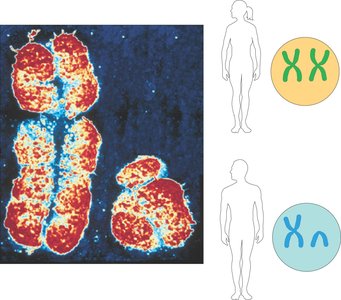
Sex chromosomes determine the biological sex of an organism. In humans, females have two X chromosomes (XX), while males have one X and one Y chromosome (XY). The X chromosome contains over 1500 genes, while the Y chromosome has fewer than 200 genes and includes the SRY gene, which triggers male development.
X Chromosome: Large, gene-rich chromosome present in both sexes.
Y Chromosome: Smaller, gene-poor chromosome present only in males; contains the SRY gene.
Homogametic Sex: Females (XX).
Heterogametic Sex: Males (XY).

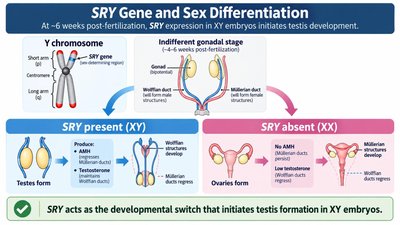
SRY Gene and Sex Differentiation
The SRY gene (Sex-determining Region Y) is a critical switch for male development in mammals. Its presence in XY embryos initiates testis formation, leading to male differentiation. In its absence (XX embryos), ovaries develop.
SRY Present (XY): Testes form, producing testosterone and anti-Müllerian hormone (AMH).
SRY Absent (XX): Ovaries form, and female development proceeds.
Key Point: SRY acts as the developmental switch for male sex determination.
Exceptions to SRY-Based Sex Determination
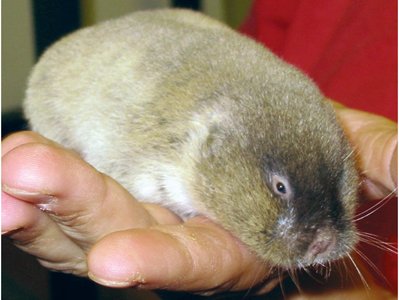
Some mammals, such as the mole vole, have lost the Y chromosome but still produce males. In these cases, other genetic switches replace the function of SRY, demonstrating the diversity of sex determination mechanisms.
Example: Mole vole males develop without a Y chromosome; a different switch near a key gene replaces SRY function.
Implication: Sex determination can evolve and adapt, even within mammals.
Evolution of the SRY Gene
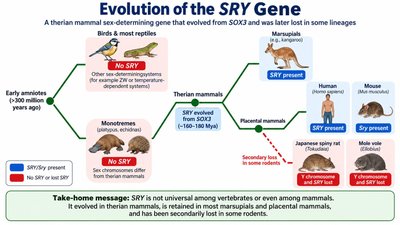
The SRY gene evolved in therian mammals from SOX3 and is not universal among vertebrates. It is retained in most marsupials and placental mammals but has been lost in some rodents.
Birds and Reptiles: Use other sex-determining genes.
Monotremes: Do not have SRY.
Therian Mammals: SRY present, but secondary loss in some rodents.
Sex Determination Systems Across Animals
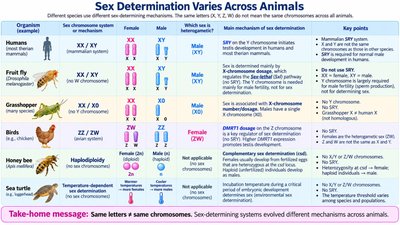
Sex determination mechanisms vary widely among animals. The same chromosome letters (X, Y, Z, W) do not always mean the same function or mechanism.
Humans: XX/XY system.
Fruit Flies: XX/XY, but sex determined by X chromosome number.
Birds: ZW system; females are ZW, males are ZZ.
Honey Bees: Haplodiploidy; males are haploid, females are diploid.
Key Point: Sex-determining systems evolved different mechanisms across animals.
Complex Sex Chromosome Systems
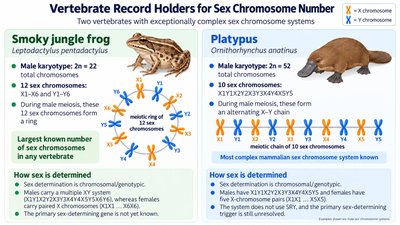
Some vertebrates have exceptionally complex sex chromosome systems, such as the smoky jungle frog and platypus, which possess multiple sex chromosomes and unique mechanisms for sex determination.
Smoky Jungle Frog: 12 sex chromosomes; largest known number in vertebrates.
Platypus: 10 sex chromosomes; alternating X and Y chain during meiosis.
Key Point: Sex chromosome systems can be highly variable and complex.
Pedigree Analysis of X-Linked Traits
X-Linked Recessive Inheritance
X-linked recessive traits are typically expressed in males, as they have only one X chromosome. Females must be homozygous for the recessive allele to express the trait. Pedigree analysis reveals characteristic patterns, such as more affected males, no father-to-son transmission, and the possibility of skipping generations.
Key Clues: More affected males, no father-to-son passage, can skip generations.
Carrier Mother × Unaffected Father: Sons have a 50% chance of being affected; daughters have a 50% chance of being carriers.
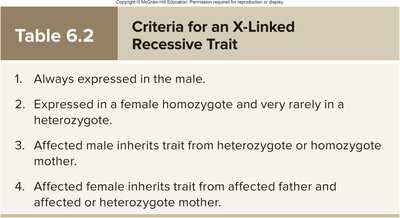
Criteria for X-Linked Recessive Trait |
|---|
1. Always expressed in the male. |
2. Expressed in a female homozygote and very rarely in a heterozygote. |
3. Affected male inherits trait from heterozygote or homozygote mother. |
4. Affected female inherits trait from affected father and affected or heterozygote mother. |
X-Linked Dominant Inheritance
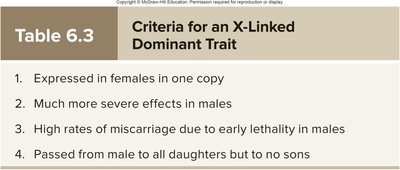
X-linked dominant traits are expressed in females with one copy of the allele and are often more severe in males. Affected fathers pass the trait to all daughters but not to sons, and affected individuals usually appear in every generation.
Key Clues: Affected in every generation, both sexes affected, no father-to-son transmission, all daughters of affected fathers inherit the trait.
Heterozygous Mother × Unaffected Father: Each child has a 50% chance of inheriting the trait.
Criteria for X-Linked Dominant Trait |
|---|
1. Expressed in females in one copy. |
2. Much more severe effects in males. |
3. High rates of miscarriage due to early lethality in males. |
4. Passed from male to all daughters but to no sons. |