Indietro
Lipids and Proteins: Structure, Function, and Biological Importance
Guida di studio - Note intelligenti
 Appunti personalizzati basati sui tuoi materiali, ampliati con definizioni chiave, esempi e contesto.
Lipids
Overview of Lipids
Lipids are a diverse group of hydrophobic molecules that play crucial roles in biological systems. Unlike other macromolecules, lipids do not form true polymers. Their defining characteristic is their poor solubility in water due to their extensive hydrocarbon regions. The most biologically significant lipids are fats, phospholipids, and steroids.
Hydrophobicity: Lipids are insoluble or only sparingly soluble in water.
Major Types: Fats, phospholipids, and steroids.
Structure: Composed mainly of hydrocarbon chains or rings.
Fats (Triacylglycerols)
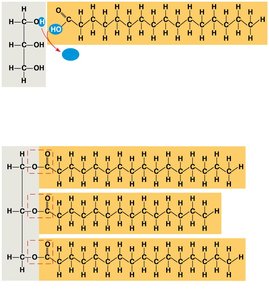
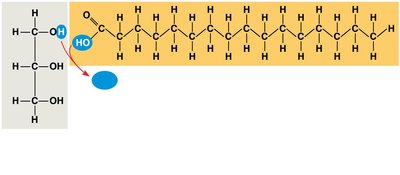
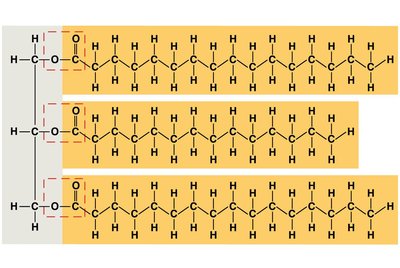
Fats are constructed from two types of smaller molecules: glycerol and fatty acids. Glycerol is a three-carbon alcohol, each carbon bearing a hydroxyl group. Fatty acids consist of a carboxyl group attached to a long hydrocarbon skeleton. Fats are formed by the esterification of three fatty acids to one glycerol molecule, resulting in a triacylglycerol (triglyceride).
Glycerol: Three-carbon alcohol with hydroxyl groups.
Fatty Acid: Carboxyl group attached to a long carbon chain.
Ester Linkage: Bond formed between glycerol and fatty acids via dehydration synthesis.
Triacylglycerol: Three fatty acids linked to one glycerol.
Saturated vs. Unsaturated Fatty Acids
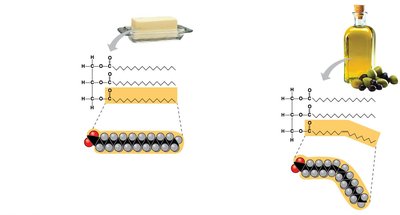
Fatty acids vary in length and in the number and location of double bonds. Saturated fatty acids have no double bonds and are fully saturated with hydrogen atoms, making them solid at room temperature (e.g., animal fats). Unsaturated fatty acids contain one or more double bonds, causing kinks in the chain and making them liquid at room temperature (e.g., plant and fish oils).
Saturated Fat: No double bonds, straight chains, solid at room temperature.
Unsaturated Fat: One or more double bonds, bent chains, liquid at room temperature.
Trans Fats: Produced by hydrogenation, associated with health risks.
Biological Functions of Fats
The primary function of fats is energy storage. Fats store more than twice as much energy as carbohydrates. In animals, fats are stored in adipose tissue, which also cushions organs and insulates the body.
Energy Storage: High energy yield per gram.
Insulation and Protection: Adipose tissue cushions organs and maintains body temperature.
Phospholipids
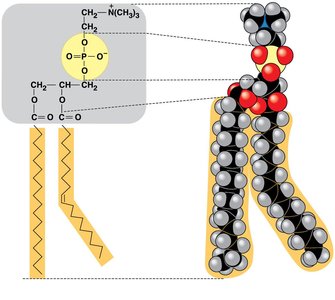
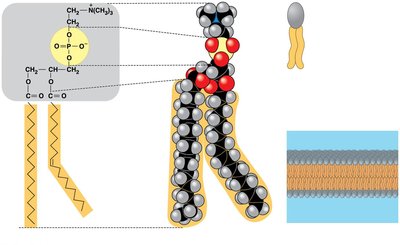
Phospholipids are major components of cell membranes. Each phospholipid consists of two fatty acids and a phosphate group attached to glycerol. The fatty acid tails are hydrophobic, while the phosphate group forms a hydrophilic head. In water, phospholipids self-assemble into bilayers, forming the structural basis of biological membranes.
Structure: Glycerol backbone, two fatty acids, one phosphate group.
Amphipathic Nature: Hydrophobic tails and hydrophilic head.
Bilayer Formation: Spontaneously forms bilayers in aqueous environments.
Steroids
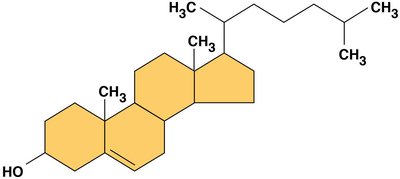
Steroids are lipids with a structure consisting of four fused carbon rings. Cholesterol is a key steroid, essential for animal cell membranes and as a precursor for other steroids, including hormones. High cholesterol levels are associated with cardiovascular disease.
Structure: Four fused carbon rings.
Cholesterol: Component of cell membranes, precursor for steroid hormones.
Proteins
Overview and Functions of Proteins
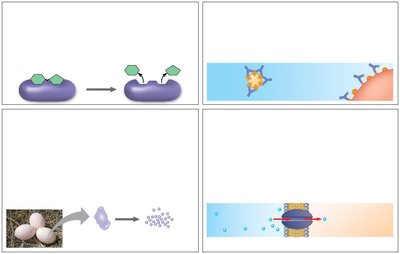
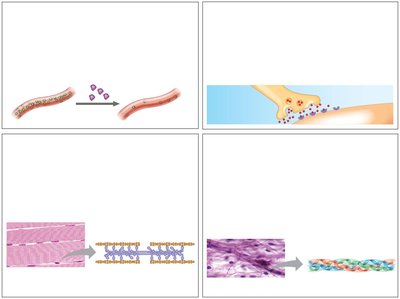
Proteins are the most diverse macromolecules, accounting for more than 50% of the dry mass of most cells. They perform a wide range of functions, including catalysis, defense, storage, transport, cellular communication, movement, and structural support.
Enzymatic Proteins: Catalyze biochemical reactions (e.g., digestive enzymes).
Defensive Proteins: Protect against disease (e.g., antibodies).
Storage Proteins: Store amino acids (e.g., casein in milk).
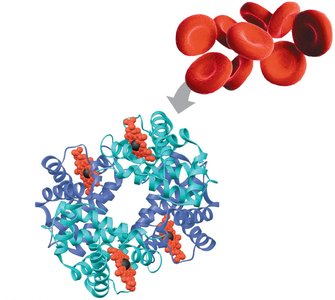
Transport Proteins: Transport substances (e.g., hemoglobin).
Hormonal Proteins: Coordinate organismal activities (e.g., insulin).
Receptor Proteins: Respond to chemical stimuli.
Contractile and Motor Proteins: Movement (e.g., actin, myosin).
Structural Proteins: Support (e.g., collagen, keratin).
Amino Acids: The Building Blocks of Proteins
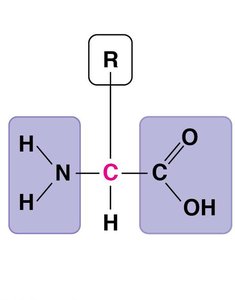
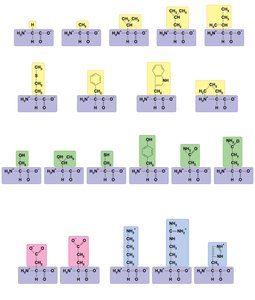
Amino acids are organic molecules with both amino and carboxyl functional groups. They differ in their side chains (R groups), which determine their properties and roles in proteins. There are 20 standard amino acids, classified by the nature of their side chains: nonpolar, polar, acidic, or basic.
Structure: Central (α) carbon, amino group, carboxyl group, hydrogen atom, and R group.
Classification: Nonpolar (hydrophobic), polar (hydrophilic), acidic (negatively charged), basic (positively charged).
Polypeptides and Peptide Bonds
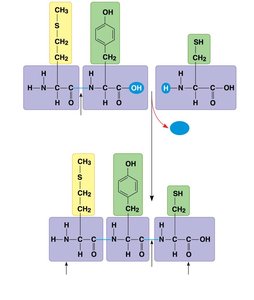
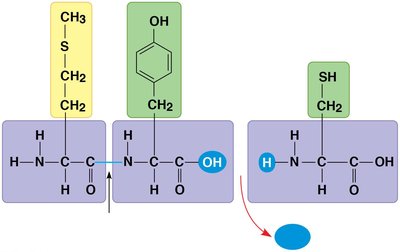
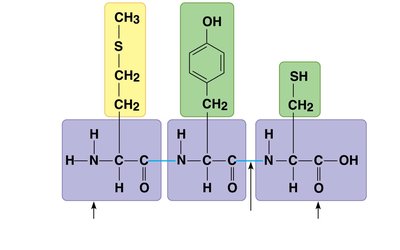
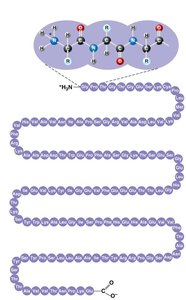
Amino acids are linked by peptide bonds, forming polypeptides. Each polypeptide has a unique linear sequence of amino acids, with an amino (N) terminus and a carboxyl (C) terminus. The sequence determines the protein's structure and function.
Peptide Bond: Covalent bond formed by dehydration synthesis between amino acids.
Polypeptide: Polymer of amino acids.
Protein Structure and Function
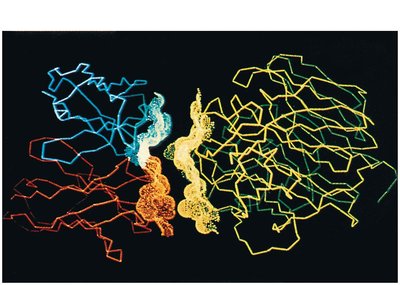
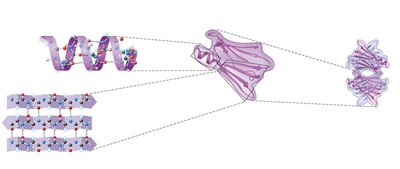
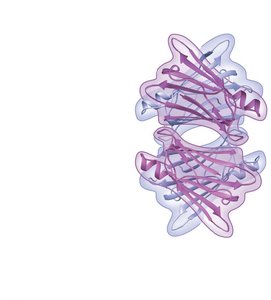
The function of a protein is determined by its three-dimensional structure, which is specified by the sequence of amino acids. Proteins must fold into specific shapes to function properly, and their structure enables them to interact with other molecules.
Primary Structure: Linear sequence of amino acids.
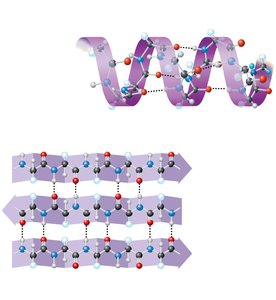
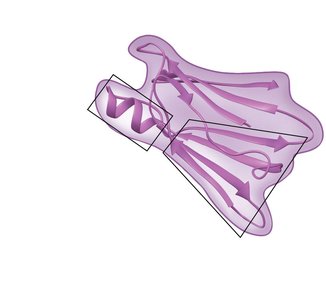
Secondary Structure: Coils (α helix) and folds (β pleated sheet) stabilized by hydrogen bonds.
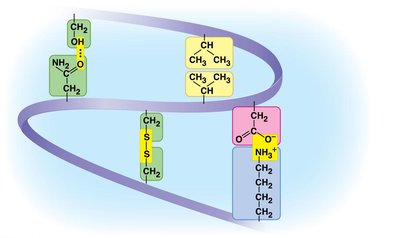
Tertiary Structure: Overall 3D shape formed by interactions among R groups (hydrogen bonds, ionic bonds, hydrophobic interactions, van der Waals forces, disulfide bridges).
Quaternary Structure: Association of multiple polypeptide chains.

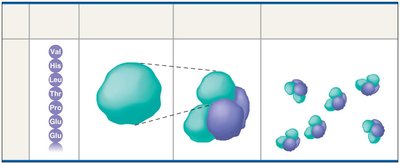
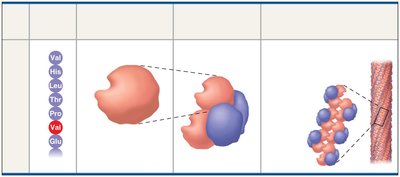
Sickle-Cell Disease: A Change in Primary Structure
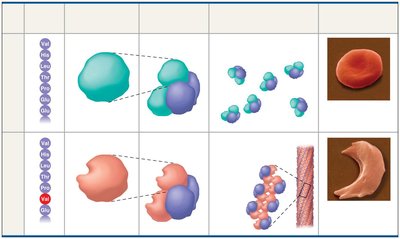
A single amino acid substitution in the primary structure of hemoglobin leads to sickle-cell disease. This change alters the protein's structure and function, causing red blood cells to deform and aggregate, reducing their oxygen-carrying capacity.
Mutation: Substitution of valine for glutamic acid in hemoglobin β chain.
Effect: Abnormal hemoglobin aggregates, distorting red blood cells.
Protein Denaturation and Folding
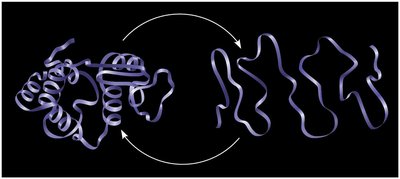
Protein structure can be affected by environmental factors such as pH, temperature, and salt concentration. Denaturation is the loss of a protein's native structure, rendering it biologically inactive. Proper folding is essential for function, and misfolded proteins are associated with diseases such as Alzheimer's and Parkinson's.
Denaturation: Unfolding of proteins due to environmental changes.
Folding Diseases: Misfolded proteins can cause neurodegenerative diseases.