 Indietro
Lipids: Structure, Function, and Biological Importance
Guida di studio - Note intelligenti
 Appunti personalizzati basati sui tuoi materiali, ampliati con definizioni chiave, esempi e contesto.
Lipids: Structure, Function, and Biological Importance
Types of Lipids
Lipids are a diverse group of hydrophobic molecules essential for energy storage, membrane structure, and signaling in biological systems. The main types discussed here are saturated fats, unsaturated fats, cholesterol, and phospholipids.
Saturated Fat: Lipids with no double bonds between carbon atoms in their fatty acid chains. They are fully saturated with hydrogen atoms, making them solid at room temperature.
Unsaturated Fat: Lipids with one or more double bonds (usually cis) in their fatty acid chains. These double bonds introduce kinks, preventing tight packing and resulting in a liquid state at room temperature.
Cholesterol: A steroid molecule that serves as a precursor for all other steroids and is crucial for animal cell membranes.
Phospholipid: Molecules with a hydrophilic phosphate head and hydrophobic fatty acid tails, forming the basis of cell membranes.
Functions of Lipids
Energy Storage: Both saturated and unsaturated fats are efficient energy storage molecules.
Membrane Structure: Phospholipids form the structural foundation of cell membranes.
Signaling and Precursor Roles: Cholesterol is a precursor for steroid hormones and is vital for membrane fluidity.
Chemical Properties of Lipids
Saturated Fat: Nonpolar, hydrophobic.
Unsaturated Fat: Nonpolar, hydrophobic.
Cholesterol: Nonpolar, hydrophobic.
Phospholipid: Amphipathic (both polar and nonpolar regions).
Examples of Lipids
Saturated Fat: Butter
Unsaturated Fat: Olive oil
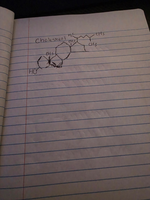
Cholesterol: Steroid molecule (see image below)
Phospholipid: Soy lecithin
Comparison: Saturated vs. Unsaturated Fats
Saturated and unsaturated fats differ in their chemical structure and physical properties:
Saturated Fats: Have no double bonds, are tightly packed, and solid at room temperature.
Unsaturated Fats: Have one or more cis double bonds, are less tightly packed, and liquid at room temperature.
Example: Butter (saturated fat) vs. olive oil (unsaturated fat).
Phospholipids: Structure and Function
Phospholipids are composed of three main components:
Glycerol backbone
Fatty acid chains (usually two)
Phosphate group (often with an additional polar group attached)
The amphipathic nature of phospholipids (hydrophilic head and hydrophobic tails) is crucial for forming biological membranes.
Phospholipid Bilayer and Cell Membranes
The phospholipid bilayer is a two-layered structure where hydrophobic tails face inward and hydrophilic heads face outward. This arrangement forms the basis of cell membranes, providing a selective barrier and enabling compartmentalization within cells.
Importance: The bilayer allows cells to maintain internal environments distinct from the external surroundings.
Structural Formula Identification
Recognizing lipid structures is important for understanding their function. For example, cholesterol has a characteristic four-ring steroid structure.
Summary Table: Lipid Types and Properties
Lipid Type | Structure | Function | Chemistry | Example |
|---|---|---|---|---|
Saturated Fat | No double bonds, straight chains | Energy storage | Nonpolar | Butter |
Unsaturated Fat | One or more cis double bonds, kinked chains | Energy storage | Nonpolar | Olive oil |
Cholesterol | Four-ring steroid structure | Precursor for steroids, membrane fluidity | Nonpolar | Steroid |
Phospholipid | Glycerol, fatty acids, phosphate group | Membrane structure | Both (amphipathic) | Soy lecithin |
Key Equations and Concepts
General formula for a triglyceride:
Phospholipid structure:
Cholesterol structure:
Additional info: The amphipathic nature of phospholipids is essential for the self-assembly of membranes, a fundamental process in all living cells.
