Indietro
Liver Functions and Carbohydrate Metabolism
Guida di studio - Note intelligenti
 Appunti personalizzati basati sui tuoi materiali, ampliati con definizioni chiave, esempi e contesto.
General Functions of the Liver
Overview of Liver Functions
The liver is a vital organ responsible for multiple metabolic and regulatory functions essential for maintaining homeostasis in the body. It acts as a central hub for processing nutrients, detoxifying harmful substances, and synthesizing important biomolecules.
Metabolic Fuel Supply: The liver provides metabolic fuels such as glucose, amino acids, and ketone bodies to various tissues, especially during fasting.
Waste Removal: It removes metabolic waste products from the blood, converting them into excretable compounds or other metabolic fuels.
Synthesis of Structural Components: The liver synthesizes compounds used as structural elements in other tissues.
Detoxification: It detoxifies biologically active compounds, including drugs, hormones, and poisons.
Metabolism
Carbohydrate Metabolism
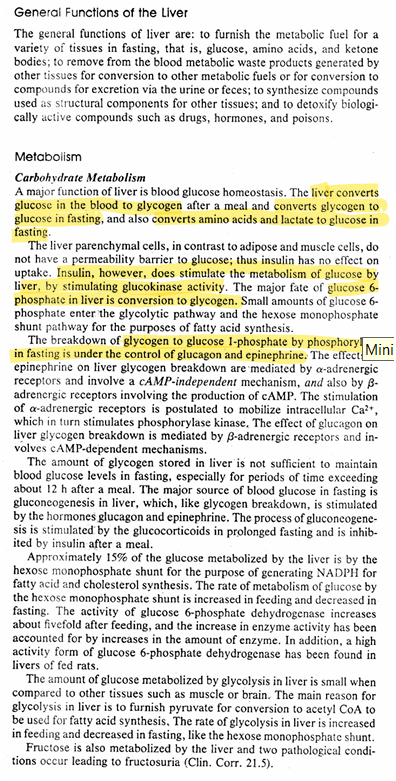
One of the major functions of the liver is to maintain blood glucose homeostasis. The liver regulates blood glucose levels through several metabolic pathways, adapting to the body's nutritional state (fed or fasting).
Glycogen Storage and Conversion: The liver converts glucose in the blood to glycogen after a meal (glycogenesis) and converts glycogen to glucose during fasting (glycogenolysis). It also converts amino acids and lactate to glucose in fasting (gluconeogenesis).
Insulin Regulation: Insulin stimulates the metabolism of glucose by the liver, primarily by increasing glucokinase activity, which promotes the conversion of glucose to glycogen.
Hormonal Control: The breakdown of glycogen to glucose 1-phosphate in fasting is regulated by glucagon and epinephrine. Glucagon acts via β-adrenergic receptors and involves cAMP-dependent mechanisms, while epinephrine can act through cAMP-independent pathways.
Gluconeogenesis: When glycogen stores are insufficient (typically after 12 hours of fasting), the liver produces glucose from non-carbohydrate sources (amino acids, lactate) via gluconeogenesis. This process is stimulated by glucagon and epinephrine, and by glucocorticoids during prolonged fasting, but inhibited by insulin after a meal.
Hexose Monophosphate Shunt: About 15% of glucose metabolized by the liver enters the hexose monophosphate shunt, generating NADPH for fatty acid and cholesterol synthesis. The activity of glucose 6-phosphate dehydrogenase increases after feeding, supporting biosynthetic processes.
Glycolysis: The liver metabolizes a small amount of glucose via glycolysis, mainly to produce pyruvate for conversion to acetyl CoA, which is used for fatty acid synthesis. Glycolysis is more active during feeding.
Fructose Metabolism: The liver also metabolizes fructose; pathological conditions can lead to fructosuria.
Key Terms and Definitions
Glycogenesis: The synthesis of glycogen from glucose.
Glycogenolysis: The breakdown of glycogen to glucose.
Gluconeogenesis: The synthesis of glucose from non-carbohydrate precursors.
Hexose Monophosphate Shunt (Pentose Phosphate Pathway): A pathway that generates NADPH and ribose-5-phosphate from glucose 6-phosphate.
Glucokinase: An enzyme that catalyzes the phosphorylation of glucose to glucose 6-phosphate in the liver.
Relevant Equations
Glycogenolysis:
Gluconeogenesis (overall reaction):
Hexose Monophosphate Shunt:
Example: Hormonal Regulation of Blood Glucose
After a meal, insulin promotes glycogenesis in the liver, lowering blood glucose. During fasting, glucagon and epinephrine stimulate glycogenolysis and gluconeogenesis, raising blood glucose to supply energy to tissues.
Additional info:
In prolonged fasting, glucocorticoids further stimulate gluconeogenesis. The liver's ability to switch between these pathways is essential for maintaining energy balance and preventing hypoglycemia.