 Indietro
Major Events in the History of Life, Phylogeny, and the Fossil Record
Guida di studio - Note intelligenti
 Appunti personalizzati basati sui tuoi materiali, ampliati con definizioni chiave, esempi e contesto.
Relationship of Phylogeny to Classification
Phylogeny and Classification
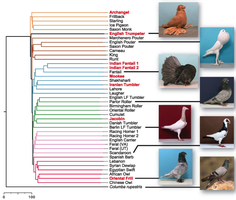
Phylogeny refers to the evolutionary history and relationships among organisms. Classification is the systematic arrangement of organisms into groups based on similarities and differences. Modern biological classification aims to reflect phylogenetic relationships, grouping organisms into monophyletic groups (those that include a common ancestor and all its descendants).
Monophyletic groups: Include all descendants of a common ancestor.
Paraphyletic groups: Include some, but not all, descendants of a common ancestor.
Polyphyletic groups: Include organisms from different ancestors.
Linnaean hierarchy: Kingdom, Phylum, Class, Order, Family, Genus, Species.
Example: Accurate classification helps scientists understand evolutionary relationships and predict characteristics shared among related organisms.
The Fossil Record: Formation and Use
Formation of Fossils and Sedimentary Rocks
The fossil record is a primary source of information about the history of life. Fossils form when organisms are buried in sediment, which accumulates in layers at the bottom of bodies of water. Over time, pressure solidifies these layers into sedimentary rock, preserving remains as fossils.
Sedimentary rocks: Formed from accumulated sediment; contain distinct layers called strata.
Stratigraphy: The study of rock layers and their fossil content.
Relative dating: Fossils in lower strata are older than those in upper strata.
Example: Similar fossils found in strata of the same age worldwide support the concept of global evolutionary patterns.
Radiometric Dating and Absolute Ages
Radiometric dating allows scientists to assign absolute ages to rocks and fossils by measuring the decay of radioactive isotopes.
Radioactive isotopes: Atoms that decay at a constant rate (e.g., carbon-14, potassium-40, uranium-238).
Half-life: The time required for half of the radioactive isotope to decay.
Carbon dating: Useful for dating materials up to ~50,000 years old.
Potassium and uranium dating: Used for older rocks and events.
Equation: The age of a sample can be calculated using the formula: where is the age, is the decay constant, is the initial amount, and is the remaining amount.
Major Events in the History of Life
Timeline of Major Events
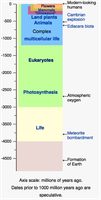
The history of life on Earth spans billions of years and includes several key transitions:
Origin of life/prokaryotic cells: ~3.5-4 billion years ago (bya)
Photosynthesis: ~2.7 bya
Eukaryotic cells: ~1.8 bya
Multicellularity: ~1.2 bya
Cambrian explosion: 535-525 million years ago (mya)
Colonization of land: ~450 mya
Origin of Life
The origin of life likely involved four key steps:
Abiotic synthesis of organic compounds: Formation of amino acids, nucleotides, and sugars from non-living sources.
Abiotic synthesis of macromolecules: Assembly of polymers such as RNA and proteins.
Formation of protocells: Self-assembly of lipids into vesicles, creating boundaries for primitive cells.
Formation of self-replicating, information-containing molecules: RNA molecules capable of storing information and catalyzing reactions (ribozymes).
Example: The Miller-Urey experiment demonstrated the abiotic synthesis of amino acids under simulated early Earth conditions.
Photosynthesis and the Oxygen Revolution
Photosynthesis evolved in prokaryotes, leading to the production of atmospheric oxygen. The rapid increase in oxygen levels around 2.4 bya, known as the oxygen revolution, had profound effects on life.
Oxygen toxicity: Many prokaryotes went extinct; others adapted to anaerobic environments.
Aerobic metabolism: Evolution of organisms capable of using oxygen for energy production.
Origin of Eukaryotes
Eukaryotic cells arose through endosymbiosis, where prokaryotic cells were incorporated into larger cells, forming organelles such as mitochondria and plastids.
Serial endosymbiosis: Multiple endosymbiotic events led to complex eukaryotic cells.
Nucleus: Originated from membrane infolding.
Multicellularity and the Ediacaran Biota
Multicellular eukaryotes appeared ~1.2 bya, with larger forms becoming common around 600 mya. The Ediacaran biota consisted of soft-bodied organisms.
Cambrian Explosion
The Cambrian explosion (~535-525 mya) saw the rapid appearance of most animal phyla, many with hard skeletons, indicating increased predation and defense mechanisms.
Colonization of Land
Multicellular eukaryotes colonized land around 450 mya, requiring adaptations to prevent dehydration and reproduce outside water.
Microevolution and Macroevolution
Definitions and Patterns
Microevolution refers to evolutionary changes within populations or species over short time scales. Macroevolution involves larger patterns and processes, such as the origin of major groups and mass extinctions, over long time scales. Macroevolution is essentially microevolution extended over millions of years.
Physical Context of the History of Life
Plate Tectonics and Continental Drift
The Earth's crust is divided into lithospheric plates that move over time, altering the distribution of continents and oceans. This movement, known as plate tectonics or continental drift, affects ocean circulation, climate, and sea level.
Pangaea: Supercontinent formed by continental collision.
Laurasia/Gondwana: Subsequent landmasses after Pangaea split.
Atmospheric Oxygen and Climate
Atmospheric oxygen concentrations and Earth's climate have changed dramatically, influencing the evolution and extinction of organisms.
Volcanoes and Meteorites
Volcanic eruptions and meteorite impacts have caused mass extinctions by altering climate and blocking sunlight.
End-Permian extinction: Linked to massive volcanic eruptions.
End-Cretaceous extinction: Associated with a large meteorite impact.
Essential Vocabulary
Stratigraphy
Radiometric dating
Half-life
Carbon, potassium, uranium dating
Eons, eras, periods
Abiotic synthesis
Protocell
Classification
Linnaean hierarchy
Monophyletic, paraphyletic, polyphyletic
Microevolution, macroevolution
Fossil record, sedimentary rock, fossils, strata
Ribozyme, RNA world
Stromatolite
Oxygen revolution
Serial endosymbiosis
Multicellularity
Cambrian explosion
Plate tectonics, continental drift, Pangaea, Laurasia/Gondwana
Pigeon Genetics: Example of Evolutionary Change
Genetic Basis of Head Crest in Pigeons
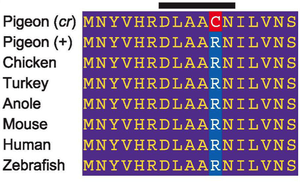
The evolution of the head crest in pigeons is a clear example of how a single genetic mutation can lead to a visible phenotypic change. All crested breeds share a single nucleotide change in the EphB2 gene, resulting in an amino acid substitution from arginine (R) to cysteine (C).
EphB2: A trans-membrane protein involved in developmental processes.
Mutation: G to T at position 600, leading to R to C change.
Phenotypic effect: Reversal of feather polarity on the head.
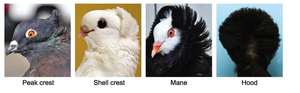
Example: This mutation is present in all crested breeds, demonstrating the power of genetic changes in evolution.
EphB2 Protein Structure and Function
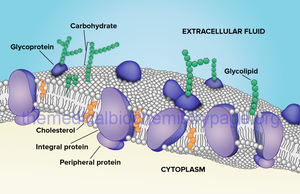
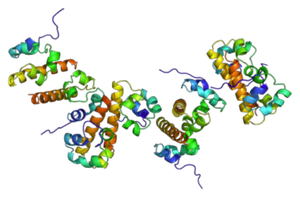
EphB2 is a trans-membrane protein embedded in the plasma membrane, with roles in cell signaling and development, especially in the nervous system.
Example: Mutations in EphB2 are also implicated in human diseases such as Alzheimer's.
Study Questions
Why would it be nice to have classification reflect phylogeny accurately – that is, to only name monophyletic groups?
How do fossils form? How can we figure out how old fossils are?
Briefly describe the eons, eras, and periods of the geologic time scale.
What four events likely happened in order for life to originate?
What caused the oxygen revolution, and what were some of its effects?
Name all the major events in the past 4 billion years of earth history, and their relative timing.
Briefly describe the history and mechanisms of continental drift, and some of its effects on earth’s conditions.
What other physical processes have had major effects on the history of life?
