 Indietro
Major Lineages and Evolutionary Traits of Mammals
Guida di studio - Note intelligenti
 Appunti personalizzati basati sui tuoi materiali, ampliati con definizioni chiave, esempi e contesto.
Major Lineages of Mammals
Overview of Mammalian Diversity
Mammals are a diverse class of vertebrates characterized by unique features such as mammary glands and hair. The evolutionary history of mammals is marked by the divergence of three main lineages: monotremes, marsupials, and placental mammals. Understanding these groups and their reproductive adaptations is essential for grasping the broader themes of mammalian evolution.
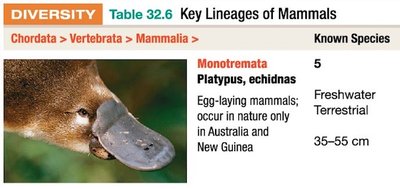
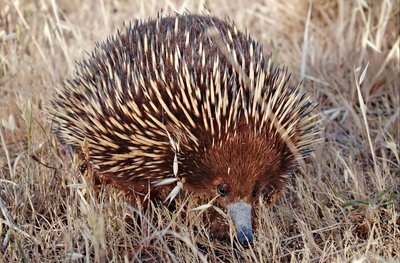
Monotremes: Egg-laying mammals, including the platypus and echidnas, found primarily in Australia and New Guinea.
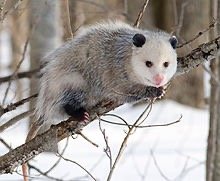
Marsupials: Mammals with short pregnancies and development in a pouch, such as kangaroos, koalas, and opossums.
Placentals: Mammals with long gestation periods and development within the uterus, including humans, rodents, and whales.
Taxonomic Classification and Clades
Traditional taxonomic ranks (such as order, family, genus) are often non-equivalent and do not accurately reflect evolutionary relationships. Modern biology emphasizes clades—monophyletic groups that share a common ancestor—over rigid ranks.
Key Lineages: Monotremes, marsupials, and placentals are considered major clades rather than strict taxonomic orders.
Phylogenetic Trees: These illustrate evolutionary relationships and divergence times among mammalian groups.
Reproductive Adaptations in Mammals
Monotremes
Monotremes are unique among mammals for their egg-laying reproductive strategy. Despite being often labeled as "primitive," monotremes possess both ancestral and derived traits.
Egg-laying: Retained ancestral characteristic.
Venom production: Male platypus can inject venom, a derived trait.
Rapid growth rates: Echidnas exhibit rapid juvenile development.
Marsupials
Marsupials are often mistakenly considered "primitive" due to their pouch-based development. However, this adaptation is highly successful and may be advantageous in unpredictable environments.
Pouch development: Most of the young's development occurs in the mother's pouch.
Short gestation: Pregnancy in the uterus is brief compared to placentals.
Adaptive significance: Pouch development may be beneficial in habitats with variable resources.
Placentals
Placentals are the most diverse group of mammals, characterized by long gestation periods and complex placental structures that facilitate nutrient exchange between mother and embryo.
Placenta: Specialized organ for nutrient and waste exchange.
Long gestation: Extended development within the uterus.
Diversity: Includes rodents, bats, primates, carnivores, and more.
Major Groups of Placental Mammals
Six Most Diverse Groups
Placental mammals underwent a rapid adaptive radiation after the extinction of non-avian dinosaurs (~66 MYA), resulting in the emergence of several major clades.
Rodents (Rodentia): 2000+ species, including rats, beavers, and mice.
Bats (Chiroptera): Insect-eating and fruit bats.
Moles & Shrews (Insectivora): Small, insectivorous mammals.
Primates (Primata): Monkeys, apes, and humans.
Even-toed hoofed mammals (Artiodactyla): Deer, sheep, hippos, whales.
Carnivores (Carnivora): Cats, wolves, seals, bears, pandas.
Misconceptions About "Primitive" Mammals
Primitive vs. Derived Traits
No extant mammal species should be considered "primitive." All living mammals have been evolving for millions of years and possess both ancestral and derived characteristics.
Ancestral traits: Egg-laying in monotremes, pouch development in marsupials.
Derived traits: Venom in platypus, rapid growth in echidnas, complex placenta in placentals.
Misleading terminology: The term "primitive" is often incorrectly applied to lineages with few species or unusual traits.
Phylogenetic Relationships and Evolutionary History
Chronogram of Mammalian Divergence
The divergence of monotremes, marsupials, and placentals occurred over 100 million years ago, with each lineage evolving independently since then.
Monotremes split: ~170 million years ago.
Marsupials and placentals split: ~160 million years ago.
Non-avian dinosaur extinction: ~66 million years ago, followed by adaptive radiation of placental mammals.
Practice and Review Questions
Groups of Primates
Students are often asked to identify the number of primate groups listed in class materials. The main groups typically include Old World monkeys, apes, New World monkeys, and lemurs.
Examples: Old World monkeys (Rhesus monkey), apes (humans, chimpanzees), New World monkeys (howler monkey), lemurs.

Summary Table: Key Lineages of Mammals
Lineage | Known Species | Reproductive Method | Distribution | Example |
|---|---|---|---|---|
Monotremes | 5 | Egg-laying | Australia & New Guinea | Platypus, Echidna |
Marsupials | 350 | Pouch development | Australia, Americas | Kangaroo, Opossum |
Placentals | 5000+ | Placental gestation | Worldwide | Human, Rodent, Whale |
Additional info:
Modern phylogenetic studies (e.g., Song et al., 2012) use genomic data to resolve relationships among placental mammals, emphasizing the importance of clades over traditional ranks.
Adaptive radiation refers to the rapid diversification of a lineage into multiple forms, often following environmental changes such as mass extinctions.
