 Indietro
Mechanisms of Evolution and the Origin of Species: Study Notes
Guida di studio - Note intelligenti
 Appunti personalizzati basati sui tuoi materiali, ampliati con definizioni chiave, esempi e contesto.
Mechanisms of Evolution and the Origin of Species
Introduction to Evolutionary Biology
Evolutionary biology explores how species change over time, the mechanisms driving these changes, and the origin of new species. The modern understanding of evolution is rooted in the work of Charles Darwin and subsequent scientific discoveries.
Descent with Modification: A Darwinian View of Life
The Darwinian Revolution
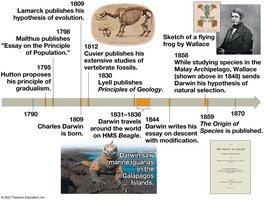
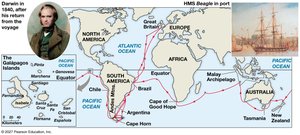
The publication of Darwin's On the Origin of Species in 1859 marked the beginning of evolutionary biology. Darwin's ideas were influenced by earlier thinkers and his observations during the voyage of the HMS Beagle.
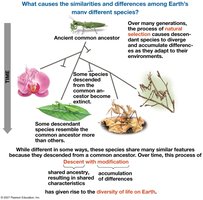
Descent with modification: All organisms are related through descent from a common ancestor, with modifications accumulating over time.
Natural selection: The process by which individuals with advantageous traits survive and reproduce more successfully.
Key Observations about Life
Adaptation: Organisms are suited to their environments.
Unity of life: Shared characteristics among species reflect common ancestry.
Diversity of life: Species differ due to adaptations to different environments.
Historical Perspectives on Species and Change
Scala naturae: Aristotle's concept of a fixed, ordered ladder of life.
Linnaean classification: Grouping organisms by shared characteristics; binomial nomenclature (e.g., Homo sapiens).
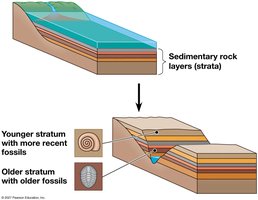
Paleontology: Study of fossils, pioneered by Georges Cuvier, revealing changes in species over time.
Gradualism: Hutton and Lyell proposed that geological and biological changes occur slowly over long periods.
Lamarck’s Hypothesis of Evolution
Use and disuse: Body parts used extensively become stronger; unused parts deteriorate.
Inheritance of acquired characteristics: Traits acquired during an organism’s life are passed to offspring (not supported by evidence).

Darwin’s Research and the Voyage of the Beagle
Darwin observed similarities between fossils and living species, and between island and mainland species.
He hypothesized that species from the mainland colonized islands and diversified.
Adaptation and Natural Selection
Adaptations: Inherited traits that enhance survival and reproduction.
Darwin proposed that natural selection explains adaptation and speciation.
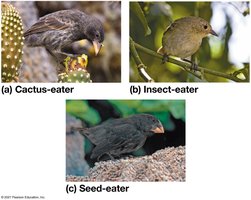
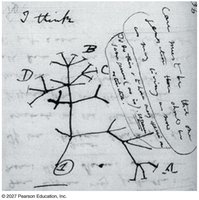
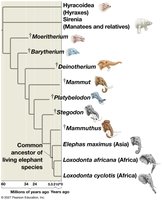
Descent with Modification and the Tree of Life
Darwin viewed evolution as a branching process, with species diverging from common ancestors.
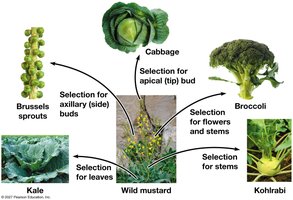
Artificial Selection and Natural Selection
Artificial selection: Humans breed organisms for desired traits (e.g., crops, livestock).
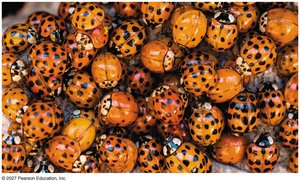
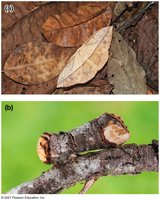
Natural selection acts on variation in populations, leading to adaptation.
Key Features of Natural Selection
Individuals with advantageous traits leave more offspring.
Populations, not individuals, evolve over time.
Natural selection acts only on heritable traits.
Evidence for Evolution
Direct Observations
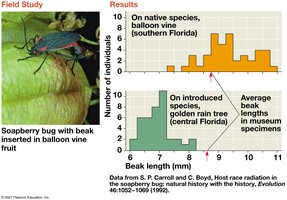
Evolution of beak size in soapberry bugs in response to introduced plants.
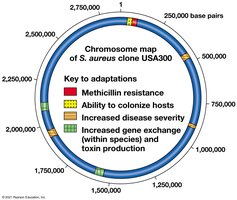
Rapid evolution of drug resistance in bacteria (e.g., MRSA).
Homology
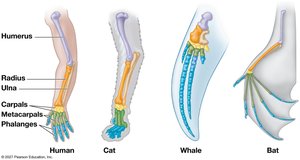
Homologous structures: Anatomical similarities due to common ancestry (e.g., mammalian forelimbs).
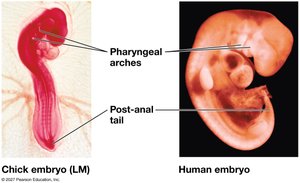
Comparative embryology: Reveals similarities in early development among vertebrates.
Vestigial structures: Remnants of features that served a function in ancestors.
Molecular homologies: Shared genes and genetic code among diverse organisms.
Convergent Evolution
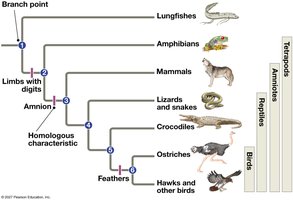
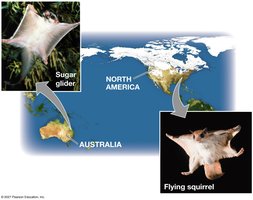
Analogous traits arise independently in distantly related groups due to similar environmental pressures (e.g., sugar glider and flying squirrel).
The Fossil Record
Fossils document the extinction, origin, and transformation of species.
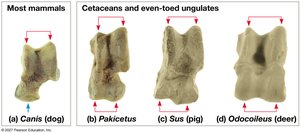
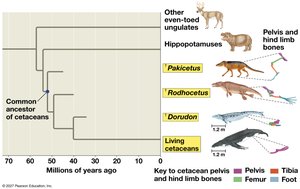
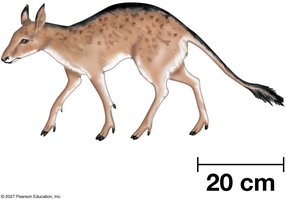
Transitional fossils illustrate evolutionary steps (e.g., cetacean evolution from land mammals).
Biogeography
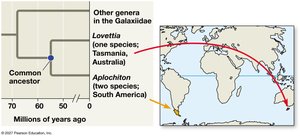
Geographic distribution of species supports evolution (e.g., continental drift, Pangaea).
Closely related species are often found in the same geographic region.
The Evolution of Populations
Microevolution and Mechanisms of Evolution
Microevolution is the change in allele frequencies in a population over generations. The three main mechanisms are:
Natural selection: Differential survival and reproduction.
Genetic drift: Random changes in allele frequencies, especially in small populations.
Gene flow: Movement of alleles between populations.
Genetic Variation
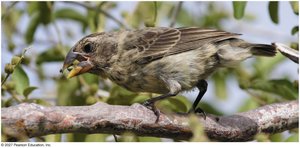
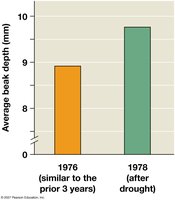
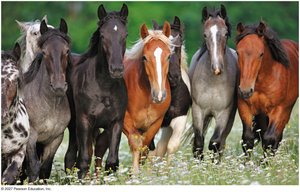
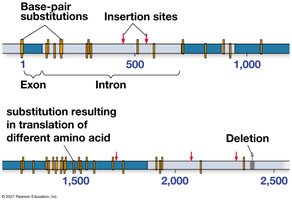
Genetic variation is the raw material for evolution and arises from mutations, gene duplication, and sexual reproduction.
Phenotypic variation can be discrete (single gene) or continuous (multiple genes).
The Hardy–Weinberg Principle
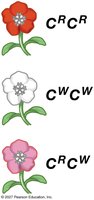
The Hardy–Weinberg equation models a non-evolving population. If allele and genotype frequencies deviate from expectations, evolution is occurring.
Equation: (allele frequencies), (genotype frequencies)
Assumptions: No mutation, random mating, no gene flow, infinite population size, no selection.
Genetic Drift and Its Effects
Founder effect: A few individuals establish a new population with different allele frequencies.
Bottleneck effect: A drastic reduction in population size alters allele frequencies.
Genetic drift reduces genetic variation and can fix harmful alleles.
Gene Flow
Gene flow reduces differences between populations and can introduce advantageous alleles.
Natural Selection and Adaptive Evolution
Natural selection is the only mechanism that consistently leads to adaptive evolution.
Relative fitness: Contribution to the next generation’s gene pool relative to others.
Modes of selection: Directional, disruptive, and stabilizing selection.
Sexual Selection
Sexual selection leads to differences between sexes (sexual dimorphism).
Intrasexual selection: Competition among one sex for mates.
Intersexual selection: Mate choice, often by females.
Balancing Selection
Maintains genetic diversity through frequency-dependent selection and heterozygote advantage.
Example: Sickle-cell allele is maintained where malaria is common due to heterozygote advantage.
Limits of Natural Selection
Selection can only act on existing variation.
Evolution is constrained by history and trade-offs.
Chance events and environmental changes also influence evolution.
The Origin of Species
Speciation: The Formation of New Species
Speciation: The process by which one species splits into two or more species.
Links microevolution (changes within populations) to macroevolution (broad patterns above the species level).
The Biological Species Concept
A species is a group of populations whose members can interbreed and produce viable, fertile offspring.
Reproductive isolation prevents gene flow between species.
Reproductive Barriers
Prezygotic barriers: Prevent mating or fertilization (habitat, temporal, behavioral, mechanical, gametic isolation).
Postzygotic barriers: Prevent hybrid offspring from developing into viable, fertile adults (reduced viability, reduced fertility, hybrid breakdown).
Other Species Concepts
Morphological species concept: Based on structural features.
Ecological species concept: Based on ecological niche.
Modes of Speciation
Allopatric speciation: Populations are geographically isolated, leading to divergence.
Sympatric speciation: Speciation occurs without geographic isolation, often via polyploidy, sexual selection, or habitat differentiation.
Hybrid Zones and Speciation Outcomes
Hybrid zones: Regions where different species meet and produce hybrids.
Possible outcomes: reinforcement (strengthening barriers), fusion (weakening barriers), stability (continued hybridization).
Tempo and Genetics of Speciation
Speciation can be rapid (punctuated equilibrium) or gradual.
Genetic changes may involve one or many genes.
Summary Table: Mechanisms of Evolution
Mechanism | Description | Effect on Genetic Variation |
|---|---|---|
Natural Selection | Favors traits that enhance survival and reproduction | Can increase or decrease variation |
Genetic Drift | Random changes in allele frequencies | Reduces variation, especially in small populations |
Gene Flow | Movement of alleles between populations | Reduces differences between populations |
Key Equations
Allele frequencies:
Genotype frequencies:
