 Indietro
Meiosis and Genetic Variation: Structure, Process, and Outcomes
Guida di studio - Note intelligenti
 Appunti personalizzati basati sui tuoi materiali, ampliati con definizioni chiave, esempi e contesto.
Meiosis and Chromosome Structure
Inheritance of Genes and Chromosome Sets
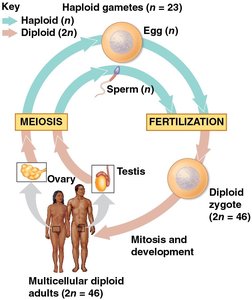
Genes are the fundamental units of heredity, composed of segments of DNA. They are transmitted from one generation to the next through reproductive cells called gametes (sperm and eggs). In humans, somatic cells are diploid (2n), containing two sets of chromosomes (totaling 46), while gametes are haploid (n), containing one set (23 chromosomes).
Diploid cells (2n): Two sets of chromosomes, one from each parent.
Haploid cells (n): One set of chromosomes, produced by meiosis.
Fertilization: Fusion of haploid gametes restores diploid chromosome number.
Multicellular diploid adults: Develop from diploid zygotes via mitosis.
Chromosome Structure: Chromosomes, Chromatids, and Homologous Pairs
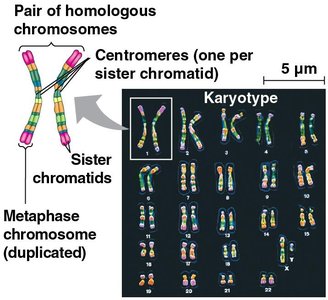
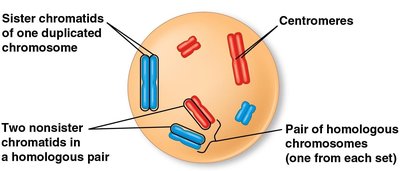
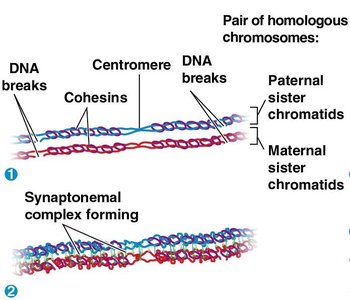
Chromosomes are thread-like structures made of DNA and proteins. Each chromosome consists of two sister chromatids joined at a centromere after DNA replication. Homologous chromosomes are pairs that carry the same genes but may have different alleles.
Sister chromatids: Identical copies of a chromosome, joined at the centromere.
Homologous chromosomes: Chromosome pairs, one from each parent, similar in shape and gene content.
Karyotype: The complete set of chromosomes in a cell, visualized during metaphase.
Meiosis: Process and Stages
Overview of Meiosis
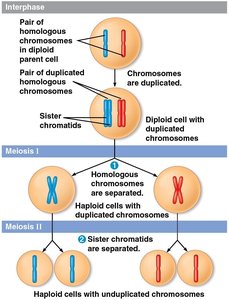
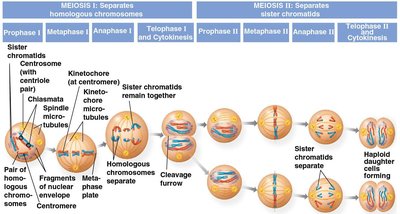
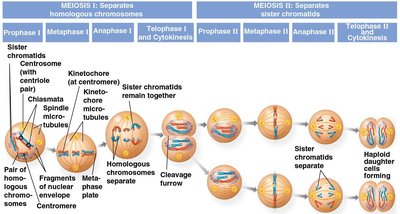
Meiosis is a specialized type of cell division that reduces the chromosome number by half, producing four genetically distinct haploid cells. It consists of two sequential divisions: Meiosis I and Meiosis II.
Meiosis I: Separates homologous chromosomes.
Meiosis II: Separates sister chromatids.
Result: Four haploid daughter cells, each genetically unique.
Meiosis I: Key Stages
Meiosis I is responsible for reducing the chromosome number and introducing genetic variation through crossing over and independent assortment.
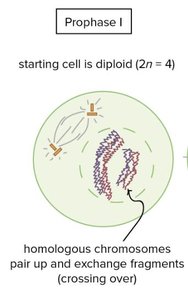
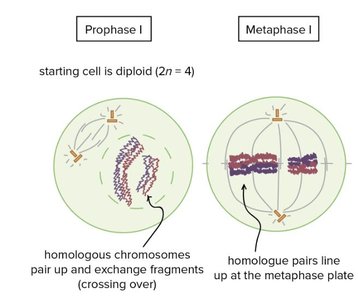
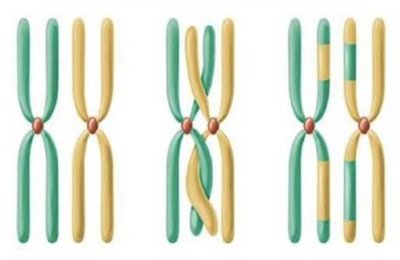
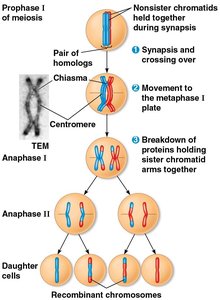
Prophase I: Chromosomes condense, homologous chromosomes pair up, and crossing over occurs at chiasmata.
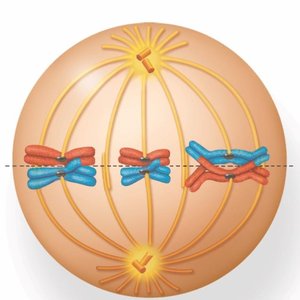
Metaphase I: Homologous pairs align at the metaphase plate.
Anaphase I: Homologous chromosomes separate to opposite poles.
Telophase I and Cytokinesis: Two haploid cells form, each with duplicated chromosomes.
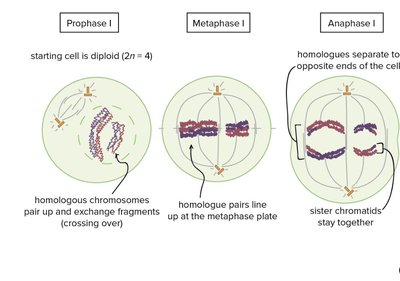
Crossing Over and Genetic Variation
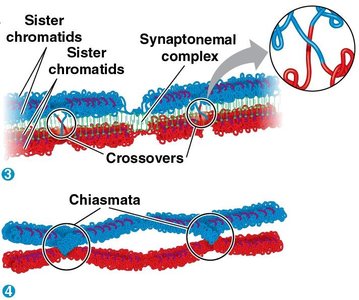
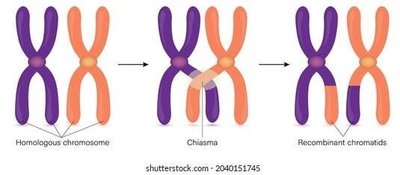
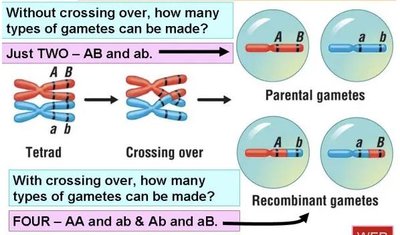
Crossing over occurs during Prophase I, where non-sister chromatids exchange DNA segments, resulting in recombinant chromosomes. This process increases genetic diversity among gametes.
Chiasmata: X-shaped regions where crossing over occurs.
Synaptonemal complex: Protein structure facilitating chromosome pairing and recombination.
Recombinant chromatids: Chromatids with new combinations of alleles.
Meiosis II: Key Stages
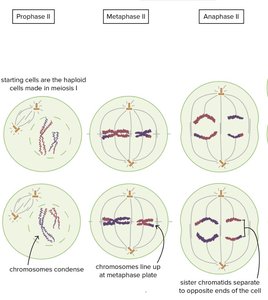
Meiosis II resembles mitosis, separating sister chromatids to produce haploid cells with unduplicated chromosomes.
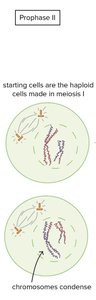
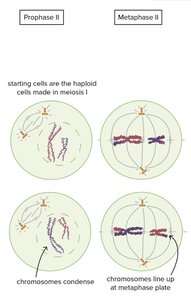
Prophase II: Chromosomes condense, spindle apparatus forms.
Metaphase II: Chromosomes align at the metaphase plate.
Anaphase II: Sister chromatids separate to opposite poles.
Telophase II and Cytokinesis: Four genetically distinct haploid cells are formed.
Genetic Variation: Mechanisms and Outcomes
Independent Assortment
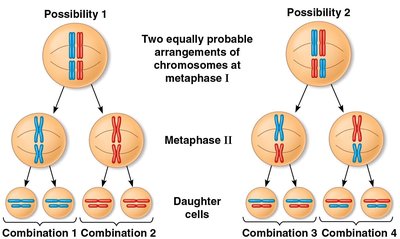
During Metaphase I, homologous chromosomes are randomly distributed to daughter cells, resulting in numerous possible combinations of chromosomes in gametes.
Independent assortment: Random orientation of chromosome pairs at metaphase plate.
Genetic diversity: Each gamete receives a unique set of chromosomes.
Comparison of Mitosis and Meiosis
Mitosis and meiosis are both forms of cell division, but they differ in their outcomes and roles in the organism.
Mitosis: Produces two identical diploid cells for growth and repair.
Meiosis: Produces four genetically distinct haploid cells for sexual reproduction.
Genetic variation: Meiosis introduces variation through crossing over and independent assortment.
Summary Table: Chromatid Types Entering Meiosis II
This table summarizes the frequency of parental and recombinant chromatids entering Meiosis II, reflecting the impact of crossing over.
Chromatid Type Entering Meiosis II | Frequency |
|---|---|
Parental combination | 60% |
Recombinant combination | 40% |
Key Terms and Concepts
Gamete: Haploid reproductive cell (sperm or egg).
Diploid (2n): Cell with two sets of chromosomes.
Haploid (n): Cell with one set of chromosomes.
Homologous chromosomes: Chromosome pairs with the same genes.
Sister chromatids: Identical copies of a chromosome.
Crossing over: Exchange of genetic material between non-sister chromatids.
Chiasmata: Sites of crossing over.
Independent assortment: Random distribution of chromosome pairs.
Equations and Formulas
The number of possible chromosome combinations due to independent assortment is given by:
where n is the haploid number of chromosomes.
Example: Human Chromosome Number
Humans have 23 pairs of chromosomes. The number of possible combinations due to independent assortment is:
This does not include additional variation from crossing over.
Additional info: Academic context was added to clarify the stages of meiosis, the mechanisms of genetic variation, and the comparison between mitosis and meiosis. Definitions and examples were expanded for completeness.
