 Indietro
17: Meiosis and Sexual Life Cycles: Foundations of Genetic Diversity
Guida di studio - Note intelligenti
 Appunti personalizzati basati sui tuoi materiali, ampliati con definizioni chiave, esempi e contesto.
Meiosis and Sexual Life Cycles
Introduction to Sexual and Asexual Reproduction
Reproduction is a defining characteristic of living organisms, allowing for the continuation of species. There are two main modes of reproduction: asexual and sexual. Each mode has distinct biological mechanisms and evolutionary implications.
Asexual reproduction: A single organism produces offspring genetically identical to itself, without the fusion of gametes.
Sexual reproduction: Two parents contribute genetic material to produce offspring with unique genetic combinations.
Clone: A group of genetically identical individuals derived from a single parent, typical in asexual reproduction.
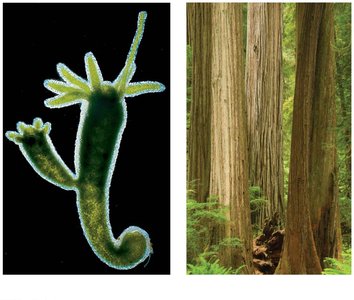
Example: Hydra reproduce asexually by budding, while redwoods can form clones through vegetative reproduction.
Comparison of Asexual and Sexual Reproduction
The primary difference between asexual and sexual reproduction lies in genetic variation. Asexual reproduction produces identical offspring, while sexual reproduction increases genetic diversity.
Asexual reproduction results in offspring that are genetic copies of the parent.
Sexual reproduction combines genetic material from two parents, resulting in variation among offspring.
Heredity, Variation, and Genetics
Heredity is the transmission of traits from parents to offspring, while variation refers to differences among individuals. Genetics is the scientific study of heredity and variation.
Heredity: Passing of traits from one generation to the next.
Variation: Differences in appearance or traits among individuals.
Genetics: The field that studies heredity and variation.

Genetics in Human Cells
Chromosomes and Genes
Genetic information is stored in DNA, which is organized into structures called chromosomes. Genes, the units of heredity, are specific DNA segments located on chromosomes.
Somatic cells: Non-reproductive cells; humans have 23 pairs (46 total).
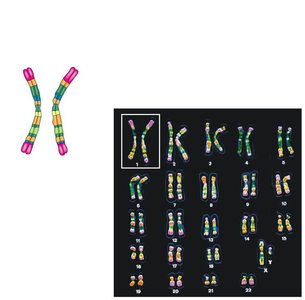
Karyotype: An ordered display of an individual's chromosomes.
Homologous chromosomes (homologs): Chromosome pairs of the same length, shape, and gene content, one from each parent.
Sex Chromosomes and Autosomes
Humans have two types of chromosomes: autosomes and sex chromosomes. Sex is determined by the combination of sex chromosomes inherited at conception.
Autosomes: Chromosomes not involved in sex determination (22 pairs in humans).
Sex chromosomes: X and Y chromosomes; determine biological sex (XX = female, XY = male).
Homologous vs. Non-Homologous Chromosomes
Each homologous chromosome pair consists of one chromosome from each parent. Non-homologous chromosomes do not share the same genes or structure.
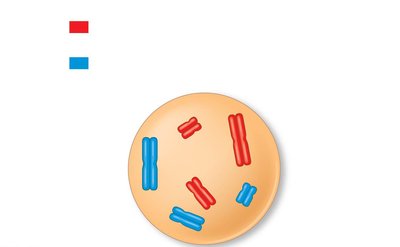
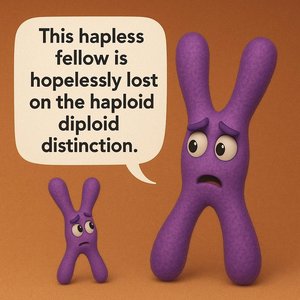
Diploid cell (2n): Contains two sets of chromosomes (one from each parent).
For humans, 2n = 46.


Haploid and Diploid Cells
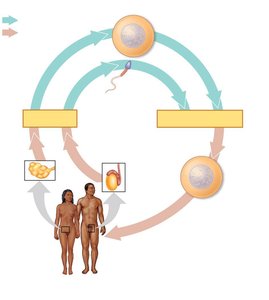
Organisms alternate between haploid and diploid stages in their life cycles. The diploid number is restored at fertilization and halved during meiosis.
Haploid cell (n): Contains a single set of chromosomes (gametes: sperm or egg).
For humans, n = 23.
Fertilization restores the diploid number (2n = 46 in humans).
Meiosis: The Basis of Sexual Reproduction
Overview of Meiosis
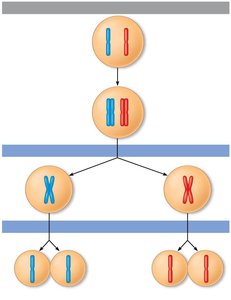
Meiosis is a specialized type of cell division that reduces the chromosome number by half, producing haploid gametes. This process ensures genetic diversity and maintains chromosome number across generations.
Meiosis consists of two consecutive divisions: meiosis I and meiosis II.
Results in four non-identical haploid cells.
Each gamete contains half the number of chromosomes as the original cell.
Phases of Meiosis
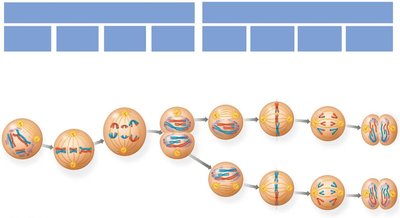
Meiosis is divided into two main stages, each with its own subphases:
Meiosis I: Homologous chromosomes separate, reducing chromosome number by half.
Meiosis II: Sister chromatids separate, similar to mitosis.
Key Steps in Meiosis
Interphase: Chromosomes replicate, forming sister chromatids.
Meiosis I: Homologous chromosomes pair and separate into two cells.
Meiosis II: Sister chromatids separate, resulting in four haploid cells.
Significance of Meiosis and Fertilization
Meiosis and fertilization alternate in sexual life cycles, maintaining a stable chromosome number and generating genetic diversity.
Fertilization: Fusion of haploid gametes to form a diploid zygote.
Genetic variation: Achieved through independent assortment and crossing over during meiosis.
Summary Table: Chromosome Sets in Human Cells
Cell Type | Chromosome Number | Designation |
|---|---|---|
Somatic cell | 46 | Diploid (2n) |
Gamete | 23 | Haploid (n) |
Zygote | 46 | Diploid (2n) |
Key Equations
Diploid number:
Haploid number:
For humans: ,
Additional info:
Genetic diversity is crucial for evolution and adaptation. Meiosis introduces variation through crossing over (exchange of genetic material between homologous chromosomes) and independent assortment (random distribution of maternal and paternal chromosomes).
