 Indietro
Meiosis and Sexual Life Cycles: Structure, Function, and Genetic Variation Part 1
Guida di studio - Note intelligenti
 Appunti personalizzati basati sui tuoi materiali, ampliati con definizioni chiave, esempi e contesto.
Meiosis and Sexual Life Cycles
Inheritance and Chromosomes
The transmission of traits from one generation to the next is called inheritance or heredity. Offspring inherit genes from their parents via chromosomes, but are not identical to either parent or their siblings, resulting in genetic variation. The study of heredity and inherited variation is known as genetics.
Genes are units of heredity made up of DNA segments.
Genes are passed to the next generation via gametes (sperm and eggs).
Most DNA is packaged into chromosomes.
Humans have 46 chromosomes in somatic cells (non-reproductive cells).
A gene’s specific position on a chromosome is called its locus.
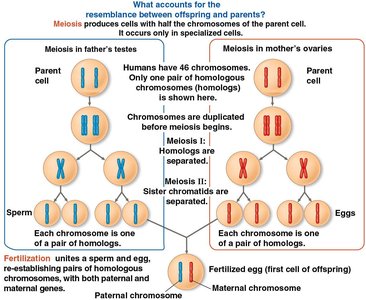
Asexual vs. Sexual Reproduction
Organisms reproduce either asexually or sexually, affecting the inheritance and variation of chromosomes in offspring.
Asexual reproduction: A single parent produces genetically identical offspring (clones) via mitosis. Variation may occur only through mutation.
Sexual reproduction: Two parents contribute genes, resulting in offspring with unique gene combinations and increased genetic diversity.
Example: Hydra reproduces asexually by budding, while redwoods can reproduce both sexually and asexually. 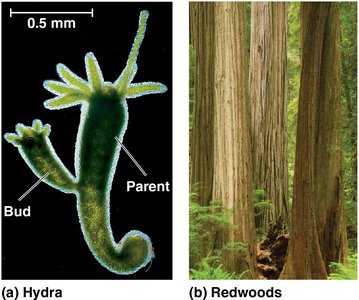
Chromosome Sets and Karyotypes
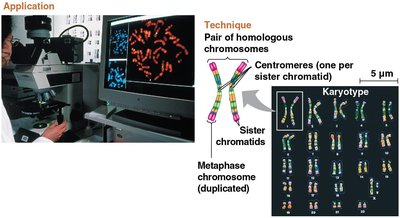
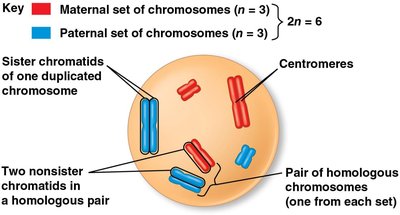
Human somatic cells contain 46 chromosomes arranged in 23 pairs. A karyotype is an image of all chromosomes arranged in pairs, used to visually display chromosomal composition.
Homologous chromosomes (homologs): Chromosomes in a pair with the same length, centromere position, and staining pattern, carrying genes for the same traits but possibly different alleles.
Sex chromosomes: X and Y chromosomes determine biological sex (XX for females, XY for males).
Autosomes: The other 22 pairs of chromosomes, identical in both sexes.
Diploid and Haploid Cells
The number of chromosomes in a single set is represented by n. Cells with two sets are diploid (2n), and those with one set are haploid (n).
Human diploid number: 46 (2n = 46)
Human haploid number: 23 (n = 23)
Gametes (sperm and eggs) are haploid, containing 22 autosomes and 1 sex chromosome.
Meiosis: Process and Stages
Overview of Meiosis
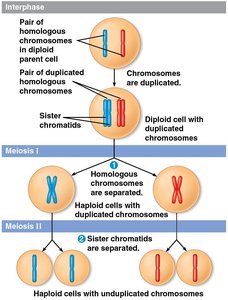
Meiosis is a type of cell division that reduces the chromosome number from diploid to haploid, producing four genetically distinct gametes. It consists of two consecutive divisions: meiosis I and meiosis II.
Meiosis I: Homologous chromosomes are separated.
Meiosis II: Sister chromatids are separated.
Each daughter cell has half the chromosome number of the parent cell.
Meiosis I: Separating Homologous Chromosomes
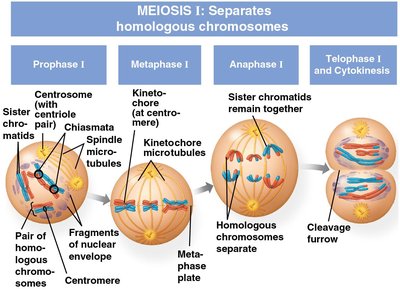
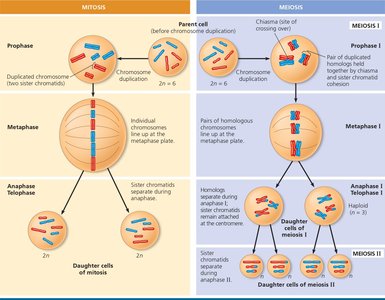
Meiosis I consists of four phases: Prophase I, Metaphase I, Anaphase I, and Telophase I with cytokinesis.
Prophase I: Homologous chromosomes pair and undergo crossing over, exchanging genetic material at chiasmata, resulting in genetic recombination.
Metaphase I: Homologous pairs align at the metaphase plate; microtubules attach to kinetochores.
Anaphase I: Homologous chromosomes separate and move to opposite poles; sister chromatids remain together.
Telophase I and Cytokinesis: Two haploid cells form, each with duplicated chromosomes.
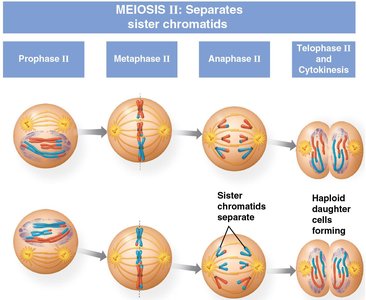
Meiosis II: Separating Sister Chromatids
Meiosis II is similar to mitosis and consists of four phases: Prophase II, Metaphase II, Anaphase II, and Telophase II with cytokinesis.
Prophase II: Spindle apparatus forms; chromosomes move toward the metaphase plate.
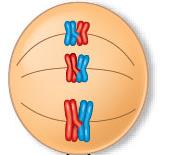
Metaphase II: Sister chromatids align at the metaphase plate; kinetochores attach to microtubules.
Anaphase II: Sister chromatids separate and move to opposite poles.
Telophase II and Cytokinesis: Four haploid daughter cells form, each genetically distinct.
Comparison of Mitosis and Meiosis
Key Differences
Mitosis and meiosis are both forms of cell division, but they differ in their outcomes and processes.
Mitosis: Produces two genetically identical diploid cells; occurs in somatic cells.
Meiosis: Produces four genetically distinct haploid cells; occurs in gamete-producing cells.
Meiosis includes crossing over and independent assortment, generating genetic variation.
Summary Table: Mitosis vs. Meiosis
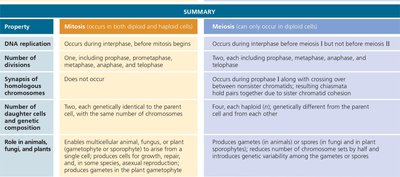
Property | Mitosis | Meiosis |
|---|---|---|
DNA Replication | Occurs during interphase, before mitosis begins | Occurs during interphase, before meiosis I |
Number of Divisions | One | Two |
Synapsis of Homologous Chromosomes | Does not occur | Occurs during prophase I |
Number of Daughter Cells | Two, genetically identical | Four, genetically distinct |
Role in Organism | Growth, repair, asexual reproduction | Gamete production, genetic variation |
Genetic Variation and Evolution
Sources of Genetic Variation
Sexual life cycles generate genetic variation through several mechanisms, contributing to evolution.
Crossing over: Exchange of genetic material between homologous chromosomes during prophase I.
Independent assortment: Random distribution of maternal and paternal chromosomes during metaphase I.
Random fertilization: Any sperm can fertilize any egg, increasing genetic diversity.
Example: These mechanisms ensure that each gamete and offspring is genetically unique.
Key Equations and Terms
Diploid number (2n): Total chromosome number in somatic cells.
Haploid number (n): Chromosome number in gametes.
Equation: for humans; for gametes.
Practice Questions
Normal gametes produced from one meiotic event each have the same chromosome number.
Sexual reproduction via meiosis increases genetic variation among offspring.
A human cell containing autosomes and a Y chromosome is a sperm.
Privet shrubs and humans have the same diploid number but different genes, explaining their dissimilarity.
Sperm or egg cells undergo meiosis.
If the diploid number in a liver cell is 52, the egg will have 26 chromosomes.
If the diploid number is 12, daughter cells after meiosis will have 6 chromosomes.
Additional info:
Meiosis I is a reductional division (halves chromosome sets); meiosis II is an equational division (separates sister chromatids).
The mechanism for separating sister chromatids is virtually identical in meiosis II and mitosis.
