 Indietro
Meiosis and Sexual Life Cycles: Study Guide for General Biology
Guida di studio - Note intelligenti
 Appunti personalizzati basati sui tuoi materiali, ampliati con definizioni chiave, esempi e contesto.
Meiosis and Sexual Life Cycles
Introduction to Meiosis and Heredity
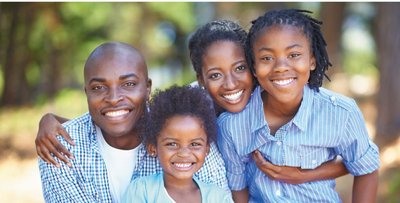
Meiosis is a specialized type of cell division that reduces the chromosome number by half, producing haploid gametes (sperm and eggs) for sexual reproduction. This process, along with fertilization, is fundamental to the transmission of genetic information from parents to offspring, resulting in both similarity and variation among individuals.
Inheritance (Heredity): The transmission of traits from parents to offspring.
Variation: Differences among offspring and between offspring and parents.
Genetics: The scientific study of heredity and variation.
Genes, Chromosomes, and Traits
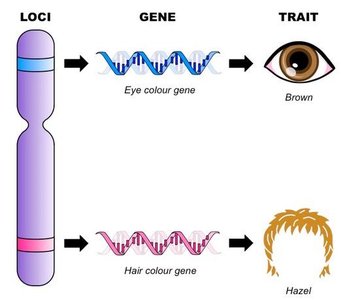
Genes are the basic units of heredity, composed of DNA segments located at specific positions (loci) on chromosomes. These genes determine traits such as eye color and hair color.
Gene: Segment of DNA that codes for a specific trait.
Locus: The physical location of a gene on a chromosome.
Trait: Observable characteristic determined by genes.
Chromosome Structure and Karyotype
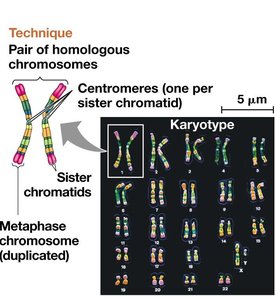
Chromosomes are thread-like structures composed of DNA and proteins. Each chromosome consists of two sister chromatids joined at a centromere. Homologous chromosomes are pairs that carry the same types of genes but may have different alleles.
Homologous Chromosomes: Chromosome pairs, one from each parent, with genes for the same traits.
Sister Chromatids: Identical copies of a chromosome connected by a centromere.
Karyotype: The complete set of chromosomes in a cell, organized by size and shape.
Sexual Life Cycles and Chromosome Sets
Human Chromosome Sets
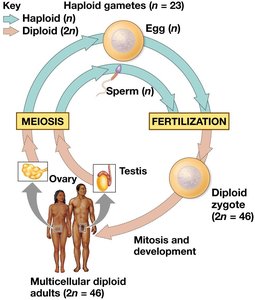
Humans have 46 chromosomes in somatic cells (diploid, 2n) and 23 chromosomes in gametes (haploid, n). Homologous chromosomes are organized into 22 pairs of autosomes and 1 pair of sex chromosomes (XX or XY).
Diploid (2n): Two sets of chromosomes, one from each parent.
Haploid (n): One set of chromosomes, found in gametes.
Meiosis and Fertilization in the Human Life Cycle
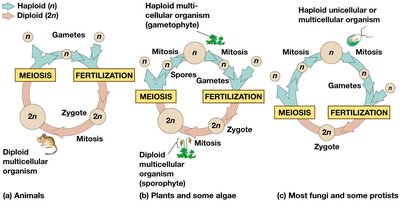
Meiosis produces haploid gametes, and fertilization restores the diploid state by combining two haploid cells. This alternation is central to the sexual life cycle.
Meiosis: 2n → n (diploid to haploid)
Fertilization: n + n → 2n (haploid to diploid)
Life Cycle: Sequence of stages from conception to production of offspring.
Types of Sexual Life Cycles
Different organisms exhibit distinct sexual life cycles, including diploid-dominant (animals), alternation of generations (plants and some algae), and haploid-dominant (fungi and some protists).
Diploid-dominant: Multicellular diploid stage is prominent (animals).
Alternation of generations: Both multicellular diploid and haploid stages (plants, algae).
Haploid-dominant: Multicellular haploid stage is prominent (fungi, protists).
Mechanisms and Stages of Meiosis
Overview of Meiosis
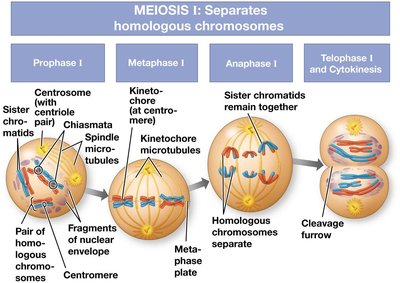
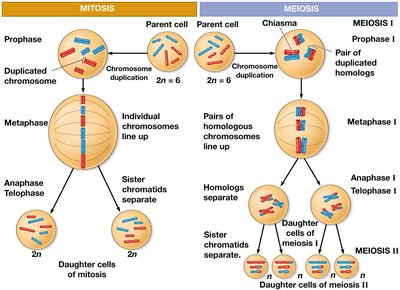
Meiosis consists of one round of DNA replication followed by two cell divisions: Meiosis I and Meiosis II. The result is four haploid cells from one diploid cell.
Meiosis I: Homologous chromosomes separate (reduction division).
Meiosis II: Sister chromatids separate (equational division).
Meiosis I: Separation of Homologous Chromosomes
Meiosis I is characterized by unique events such as synapsis and crossing over during Prophase I, random alignment of homologous pairs during Metaphase I, and separation of homologs during Anaphase I.
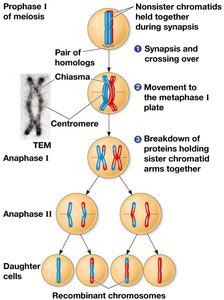
Prophase I: Homologous chromosomes pair and exchange genetic material (crossing over).
Metaphase I: Homologous pairs align at the metaphase plate.
Anaphase I: Homologous chromosomes move to opposite poles.
Telophase I & Cytokinesis: Two haploid cells form, chromosomes remain duplicated.
Crossing Over and Genetic Recombination
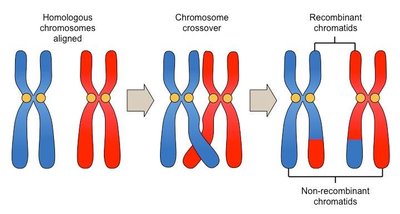
Crossing over occurs during Prophase I, where nonsister chromatids of homologous chromosomes exchange segments, resulting in recombinant chromosomes and increased genetic diversity.
Synapsis: Homologous chromosomes align and pair up.
Crossing Over: Exchange of genetic material between nonsister chromatids.
Recombinant Chromosomes: Chromosomes with new combinations of alleles.
Meiosis II: Separation of Sister Chromatids
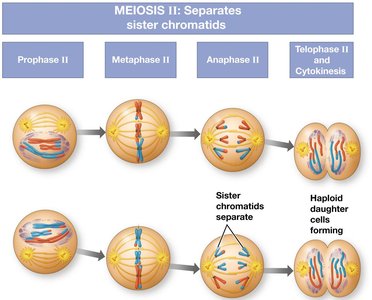
Meiosis II resembles mitosis, where sister chromatids are separated, resulting in four genetically distinct haploid cells.
Prophase II: Spindle forms in each haploid cell.
Metaphase II: Chromosomes align at the metaphase plate.
Anaphase II: Sister chromatids separate.
Telophase II & Cytokinesis: Four haploid daughter cells form.
Comparison of Mitosis and Meiosis
Key Differences Between Mitosis and Meiosis
Mitosis and meiosis are both forms of cell division, but they serve different purposes and produce different outcomes. Mitosis results in two genetically identical diploid cells, while meiosis produces four genetically unique haploid cells.
Mitosis: Growth and repair; occurs in somatic cells; maintains chromosome number.
Meiosis: Sexual reproduction; occurs in germline cells; reduces chromosome number.
Genetic Outcome: Mitosis produces identical cells; meiosis produces genetically diverse cells.
Genetic Variation and Evolution
Sources of Genetic Variation
Sexual reproduction generates genetic variation through independent assortment, crossing over, and random fertilization. These mechanisms provide the raw material for evolution.
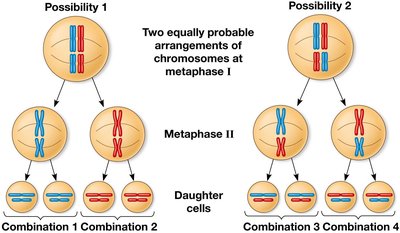
Independent Assortment: Random orientation of homologous chromosomes during Metaphase I.
Crossing Over: Exchange of genetic material between homologous chromosomes.
Random Fertilization: Any sperm can fuse with any egg, creating numerous possible combinations.
Mutation: Changes in DNA sequence create new alleles.
Independent Assortment Example
Each pair of chromosomes sorts independently during Metaphase I, resulting in a variety of possible gamete combinations. For humans, with 23 pairs of chromosomes, there are over 8 million possible combinations due to independent assortment alone.
Formula: possible combinations, where n is the haploid number.
Example: For humans, possible gamete combinations.
Summary Table: Mitosis vs. Meiosis
Property | Mitosis | Meiosis |
|---|---|---|
Main function | Growth and repair | Sexual reproduction |
Where does it occur? | Somatic cells | Germline cells |
DNA replication | 1 | 1 |
Divisions | 1 | 2 |
Daughter cells | 2 | 4 |
Ploidy | Maintained (2n → 2n) | Reduced (2n → n) |
Genetic outcome | Identical | Different |
What separates? | Sister chromatids | I: Homologs; II: Sister chromatids |
Big Picture: Meiosis and Genetic Diversity
Meiosis involves one round of DNA replication followed by two divisions, resulting in haploid cells and genetic variation. This variation is essential for evolution and the uniqueness of each individual.
Mutation: Creates new alleles.
Sexual Reproduction: Reshuffles alleles, producing genetically unique offspring.
Additional info: The study notes expand on brief points from the original materials, providing definitions, examples, and context for General Biology students.
